


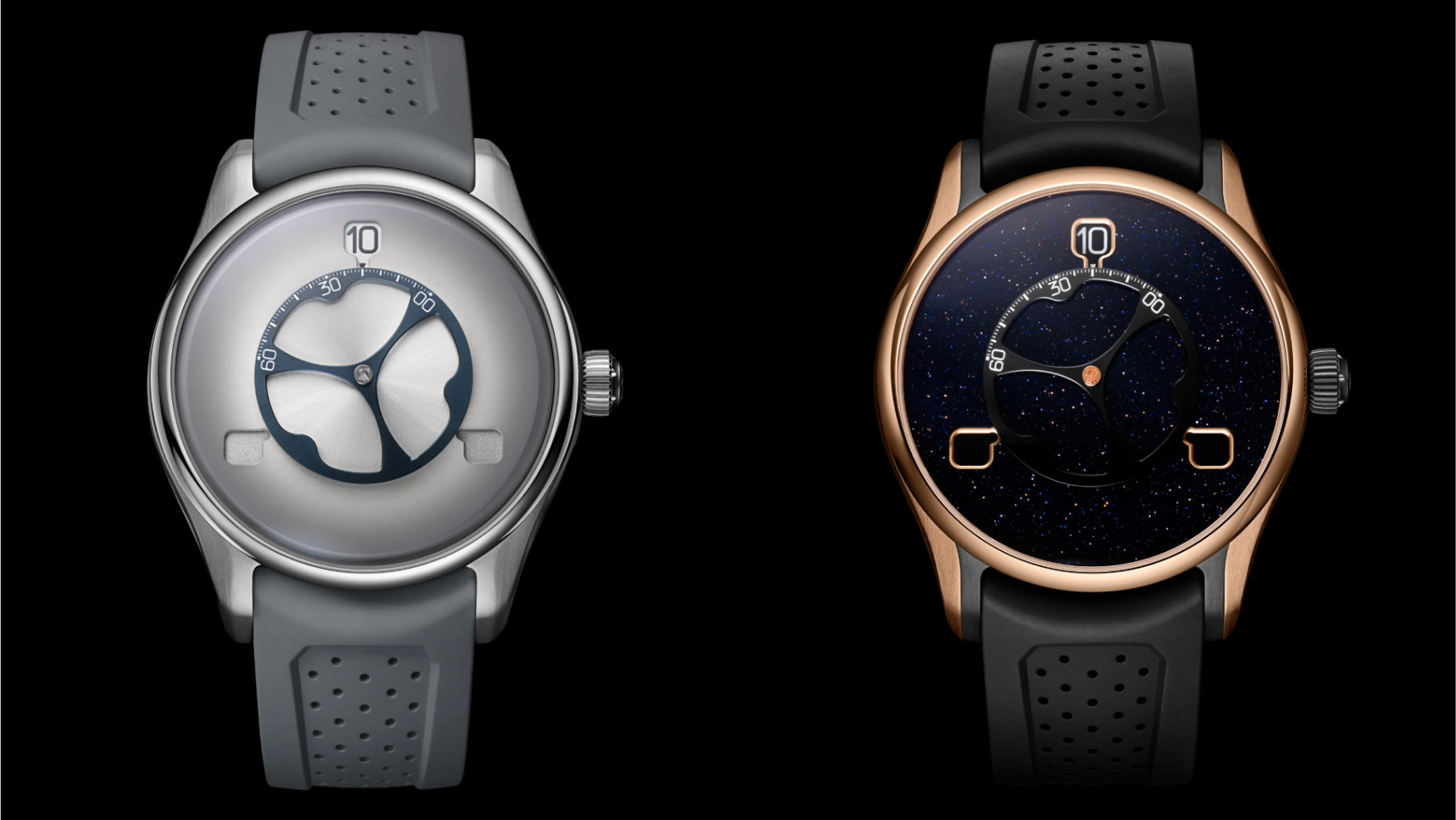
The Pioneer Flying Hours is a very H. Moser & Cie way of doing traditional complication
Borna Bošnjak- Moser has adapted the Flying Hours model from the Endeavour into the Pioneer collection, adding instantaneous jumps in the process.
- The hulking, 42.8mm cases are sporty in finish and water-resistance, with a classic Moser fumé or aventurine dial.
- Powered by the in-house HMC 240 calibre, the aventurine model is limited to 100 pieces, while the white model will see a wider release.
Of all the Swiss brands out there, I’m very comfortable in saying that H. Moser & Cie is far and away the cheekiest and takes itself the least seriously. But if you know Moser at all, you’ll know that this in no way detracts from the quality and execution of their watches. The debuting Pioneer Flying Hours renders a classical, if somewhat seldom used, complication in Moser’s recognisable, opulent style, and mechanically improves upon its predecessor in a notable way. It’s been seven years since Moser unveiled the Endeavour Flying Hours, with its intersecting discs telling the time with stencil typeface numerals on a blue fumé backdrop. If that’s the watch Moser used to learn to walk, then the new Pioneer Flying Hours is them learning how to jump. Instantaneously!
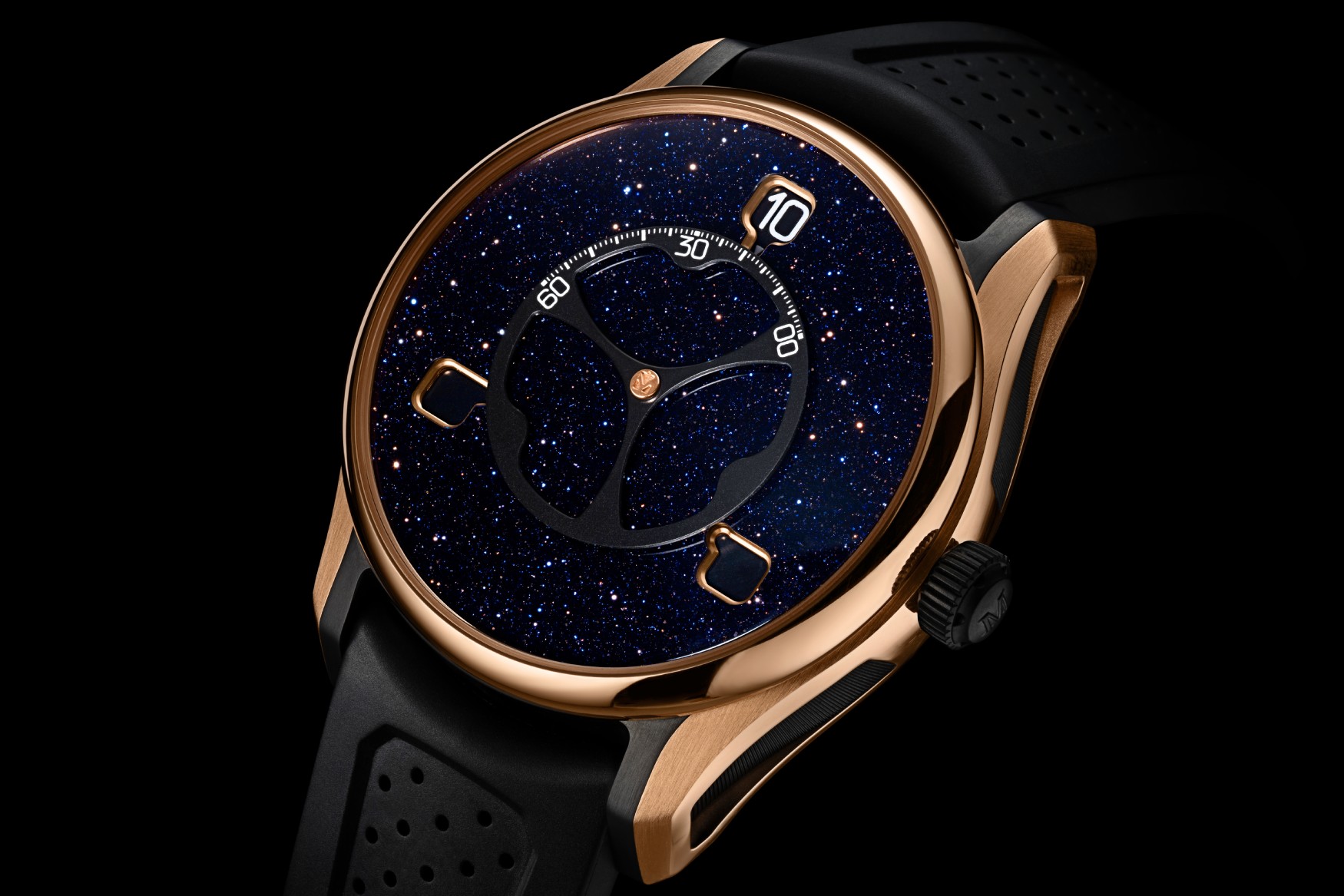
Rather than showing their work, Moser now hides the three hour satellite discs underneath a solid dial, while the central, tri-spoke minute wheel (could you call it a hand?) takes visual precedence, though it changes too, now displaying the minute arc on only a third of its circumference, having taken up double the space on the Endeavour. The hours are highlighted in three apertures where the usual 12, 4, and 8 o’clock would be. Aesthetically, I could see an argument going either way, though this change does indicate an update in the movement gearing that now rotates the central minute wheel more slowly.
As for how to read the watch – it’s actually quite intuitive. The rounded, rectangular hour apertures have tiny indents in them, allowing a small arrow to pop up beneath the printed number acting as a pointer to the minute wheel, allowing you to quickly align it with the correct time. On the example above, it’s currently 10:20.
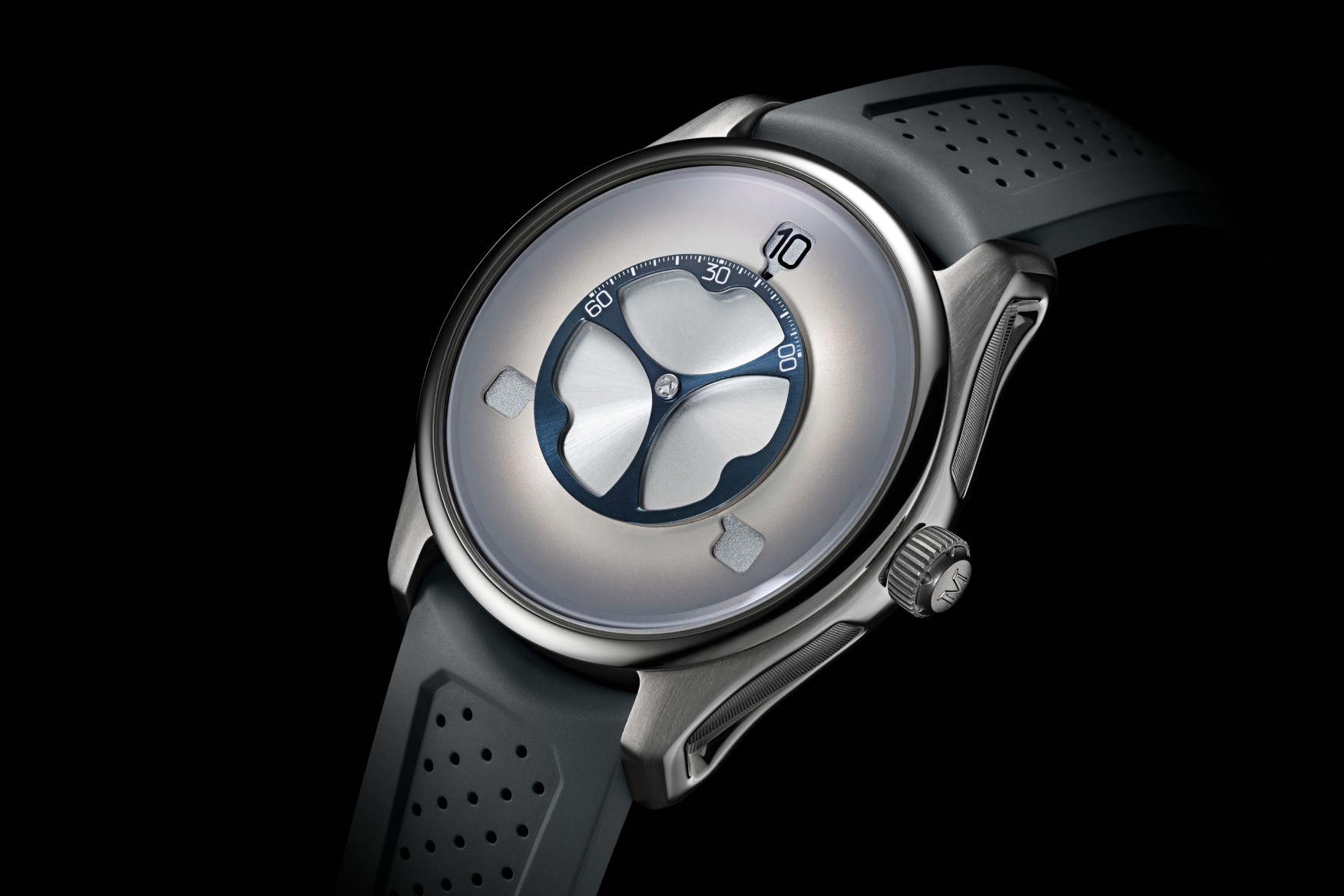
At launch, Moser is offering two colour variations – a 5N red gold and DLC titanium case fitted with a smoking hot aventurine featuring case-matching gold accents, and a way more minimal white fumé and steel combo that feels much more Moser. What is also very Moser-like is the sizing. The Pioneer Flying Hours comes in at 42.8mm in diameter, and if you’ve ever worn a Moser, you know those lugs won’t be keeping it in check either. What surprised me even more are the thickness measurements – 14.2mm for the titanium model, and a whopping 16.1mm for the 5N gold.
Granted, these are complicated watches with 120 metres of water-resistance, but if I’ve ever had an excuse to call a watch thicc, this is my time to shine. Truth be told, it’s one of the reasons why I feel many (like myself) have been hesitant to take interest in Moser, as all but a few of their pieces are unfriendly to the average wrist.
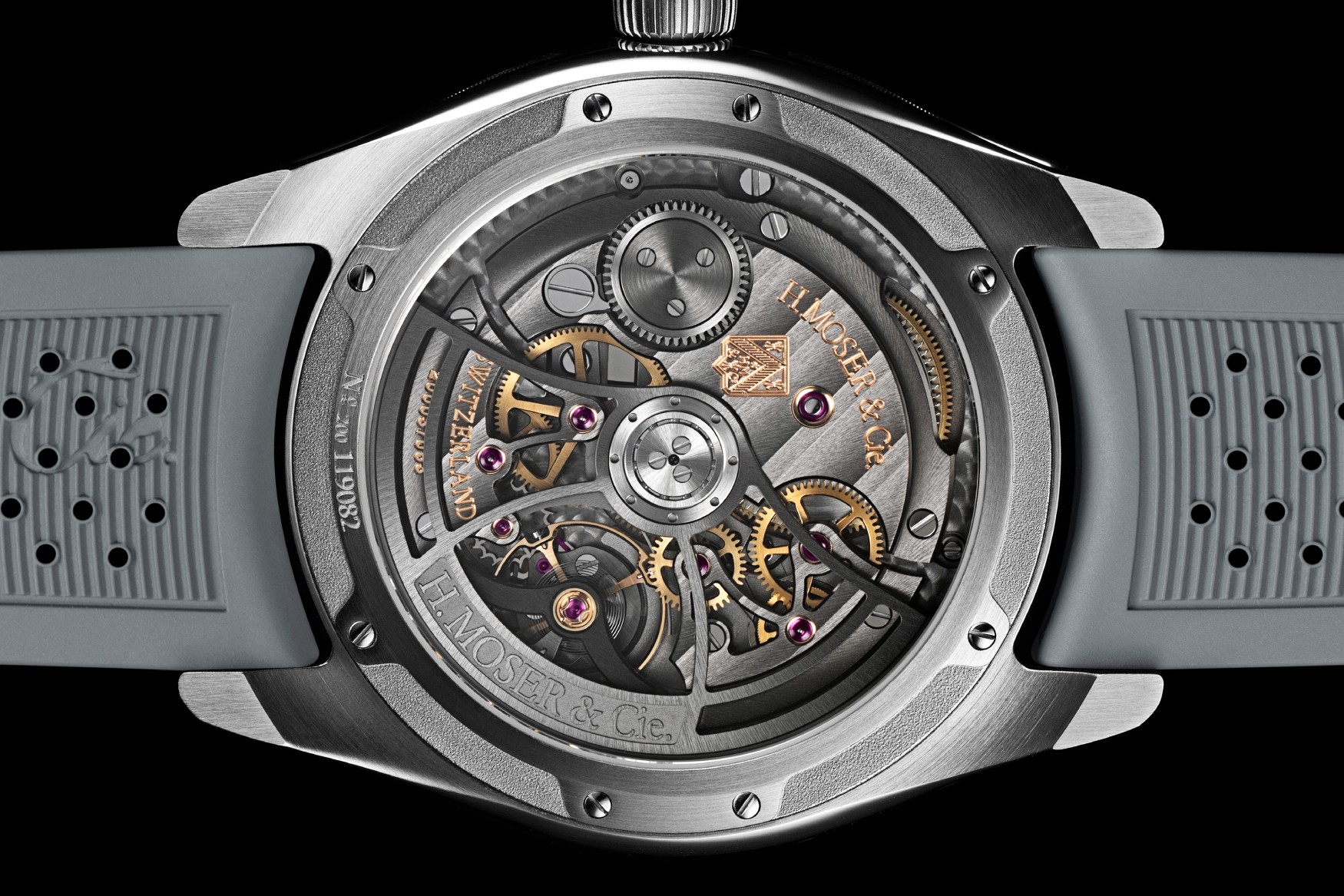
One thing you can’t accuse Moser of is not actually doing something with all that room. The brand has been making the most of its module-friendly HMC 200 calibre, this particular one getting the HMC 240 moniker. It’s a great example of what “modern” watch decoration should be like – rooted in tradition, but executed in a fresh and contemporary manner – one that’s usually not found on “base-level” HMC 200s. It’s specs are also impressive, sporting a three-day power reserve and a flat overcoil hairspring that, along with the escapement, is produced by a Moser-owned company, a rarity these days. For the 5N gold model, you’ll be treated to a red gold rotor, while the steel model comes with a tungsten number.
The big upgrade here is that instead of slowly crawling and potentially confusing the wearer by displaying two hours simultaneously pointing to the minutes as was the case with its predecessor, the Pioneer Flying Hours is able to instantly jump the hours as they pass. Knowing this, Moser’s choice to cover up the planetary hour discs makes all the more sense, making for a truly minimal dial that – in true Moser style – doesn’t feature the brand logo or name anywhere.
H. Moser & Cie Pioneer Flying Hours pricing and availability
The H. Moser & Cie. Pioneer Flying Hours is available in two different colourways, with the aventurine dial being a 100-piece limited edition. Price: TBC
| Brand | H. Moser & Cie |
| Model | Pioneer Flying Hours |
| Reference Number | 3240-0900 (aventurine) 3240-1200 (white) |
| Case Dimensions |
42.8mm (D) x 16.1mm (T) (aventurine)
42.8mm (D) x 14.2mm (T) (white) |
| Case Material | 5N red gold, DLC titanium (aventurine) Steel (white) |
| Water Resistance | 120 metres, screw-down crowns |
| Crystal(s) | Domed sapphire front, sapphire back |
| Dial | Aventurine or white gradient |
| Strap | Rubber, DLC titanium or steel pin buckle |
| Movement | HMC 240, in-house, automatic |
| Power Reserve | 72 hours |
| Functions | Flying hours, planetary hours and minutes |
| Availability | Aventurine model limited to 100 pieces |
| Price | TBC |