


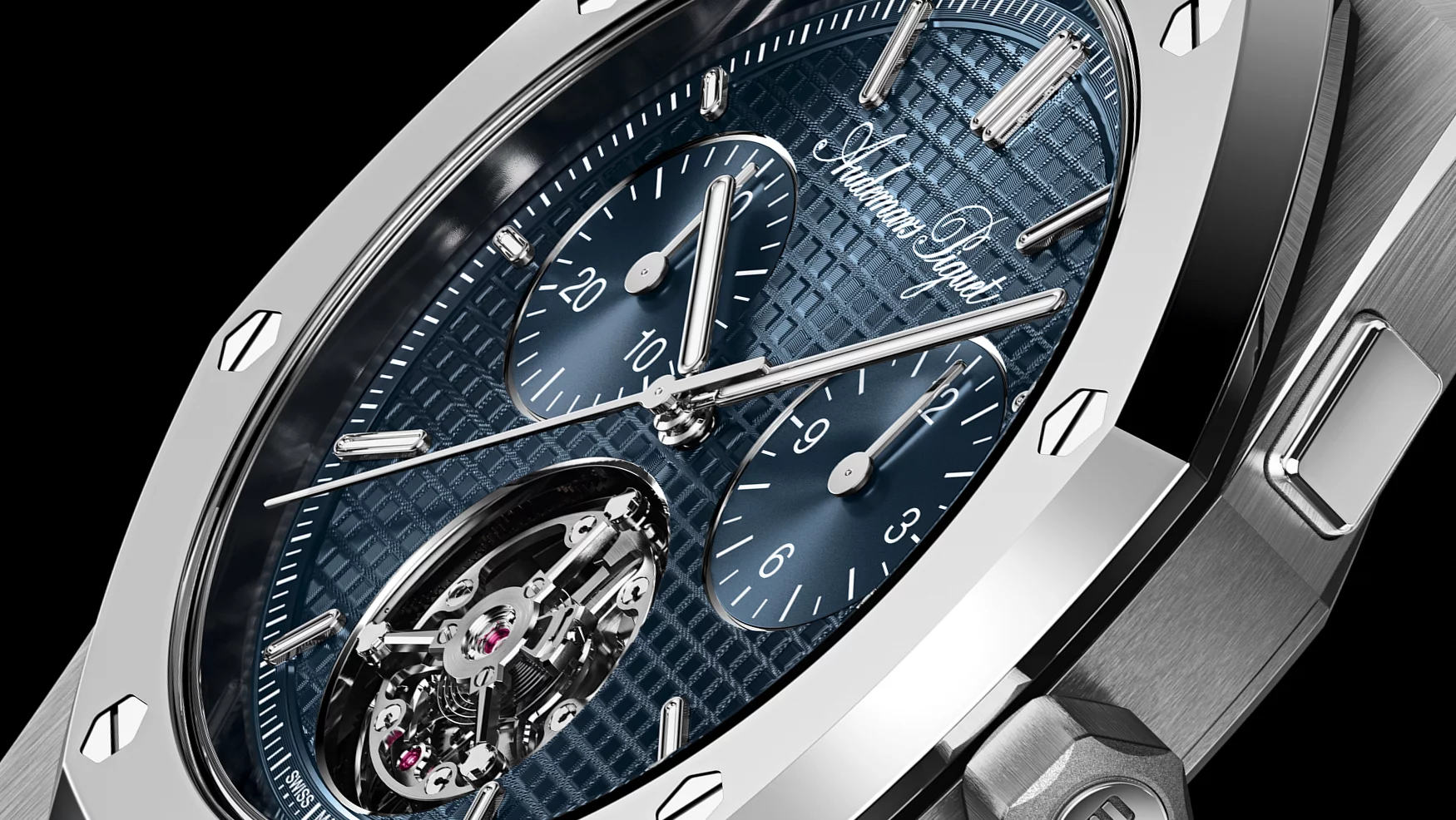
Audemars Piguet’s Royal Oak “Jumbo” RD#5 pairs a flyback chronograph with a flying tourbillon in an ultra-thin package
Jason Lee- Audemars Piguet marks its 150th anniversary by releasing the Royal Oak “Jumbo” RD#5, pairing a flyback chronograph with a flying tourbillon.
- This release notably debuts the calibre 8100, which features an innovative chronograph reset system.
- Its glassbox sapphire crystal allows the watch to remain a “Jumbo” even with two headline complications aboard.
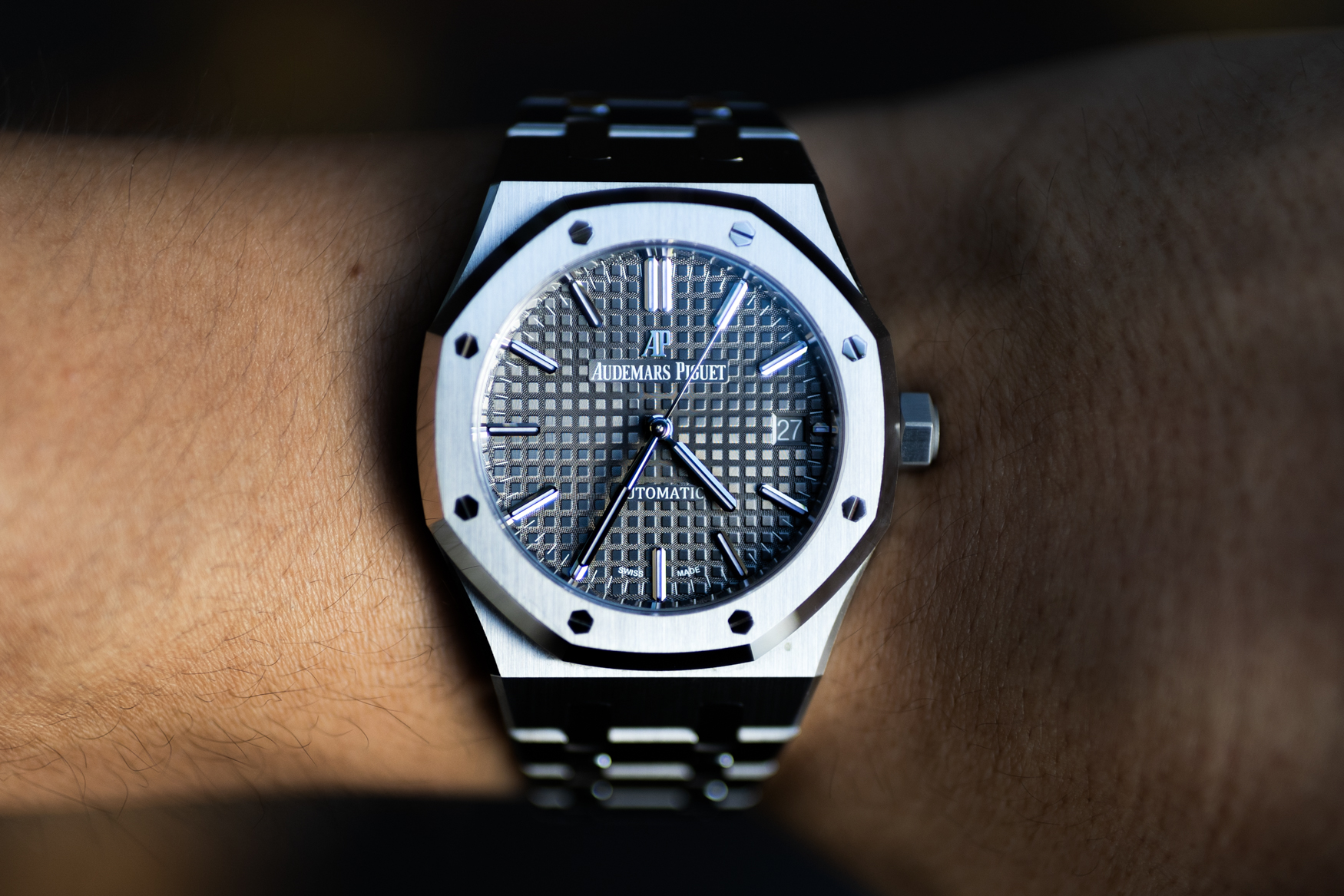
Audemars Piguet remains in a special place in my heart. The 37 mm ruthenium‑dial Royal Oak was my first entry into the so‑called Holy Trinity, and the way it played with sunlight—polished bevels flashing against long runs of satin brush—was a formative lesson in how much character can be drawn out of steel. The “one‑watch brand” critique has followed AP for years, but I’ve always felt that judgment overlooks how carefully AP refines this design: the sharp transitions of the case, the interplay of brushed planes and polished bevels, and the depth the Petite Tapisserie dial creates against the light. The Royal Oak, to me, is a different breed: familiar as a sports watch, but delivering a distinct, carefully choreographed experience on the wrist.
That context matters this year, as the brand marks its 150th anniversary with a piece that aims to change how a chronograph feels to operate without disturbing the Royal Oak’s familiar silhouette. The Royal Oak “Jumbo” Extra‑Thin Selfwinding Flying Tourbillon Chronograph RD#5 is a limited edition of 150 pieces that debuts an all‑new calibre and, for the “Jumbo,” the first combination of a flyback chronograph with a flying tourbillon. It is presented as a research‑driven project from AP’s R&D team, with the ergonomic brief—shorter travel, lower force, cleaner reset—driving both movement and case decisions.

Dimensions hold to type: 39mm in diameter, 8.1mm thick, with water resistance rated to 20m. That’s as thin as a standard “Jumbo” Extra-Thin! The case middle is in titanium, alternating satin flats and polished bevels. The bezel, pushers, function‑selector elements around the crown and part of the caseback are rendered in AP’s proprietary bulk metallic glass (BMG), a palladium‑rich alloy with an amorphous structure that is highly resistant to wear and corrosion and takes a mirror polish with a glass‑like sheen. The bracelet itself integrates titanium and BMG, closing with a titanium AP folding clasp.
AP also opts for sapphire “glass‑box” crystals front and back—flat to the eye from the outside, but hollowed internally to clear the hand stack and oscillating weight while preserving thinness. It is a small, logical concession to packaging: rather than make the watch thicker, the brand shapes space into the crystals so the Jumbo can remain a Jumbo even with two headline complications aboard.
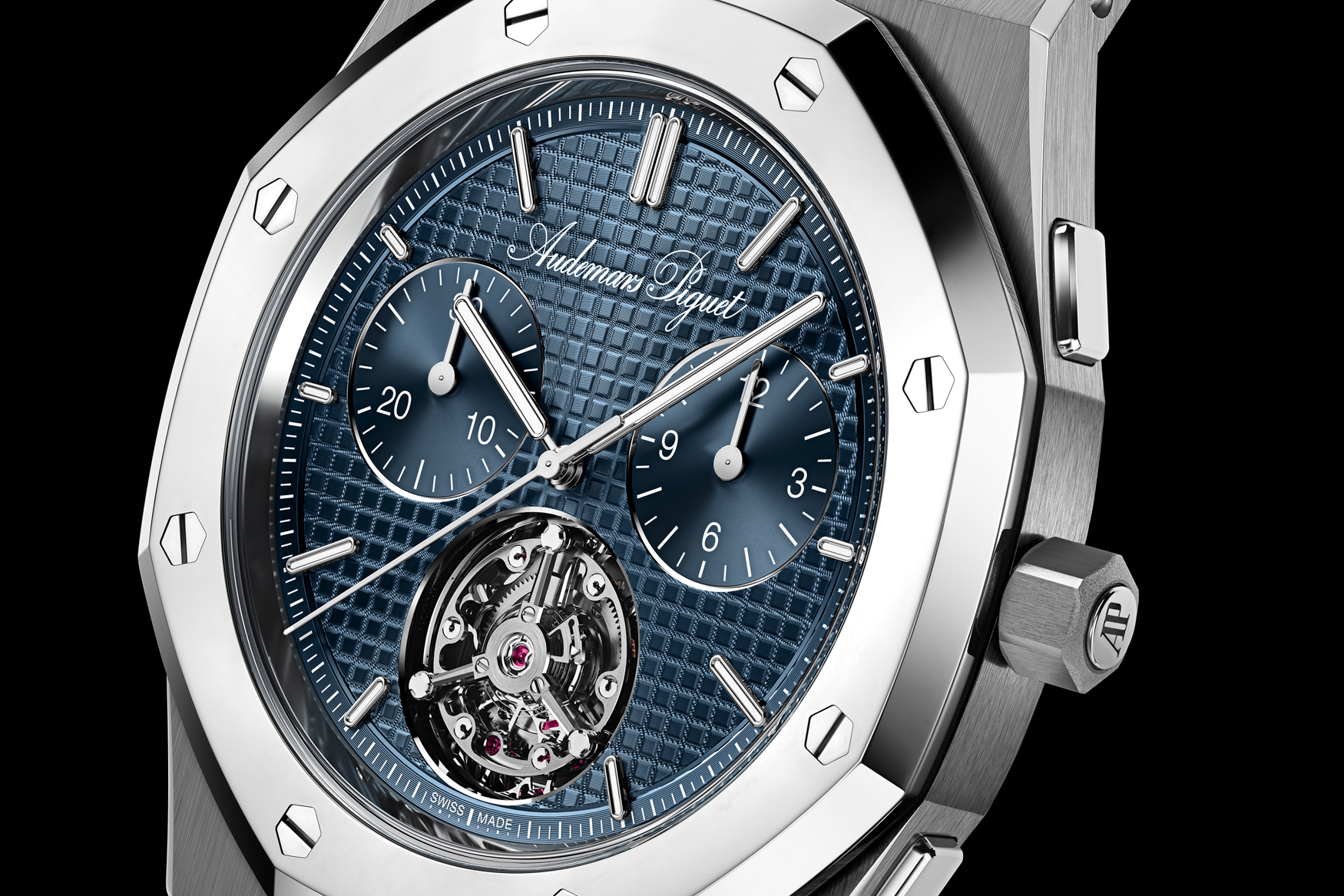
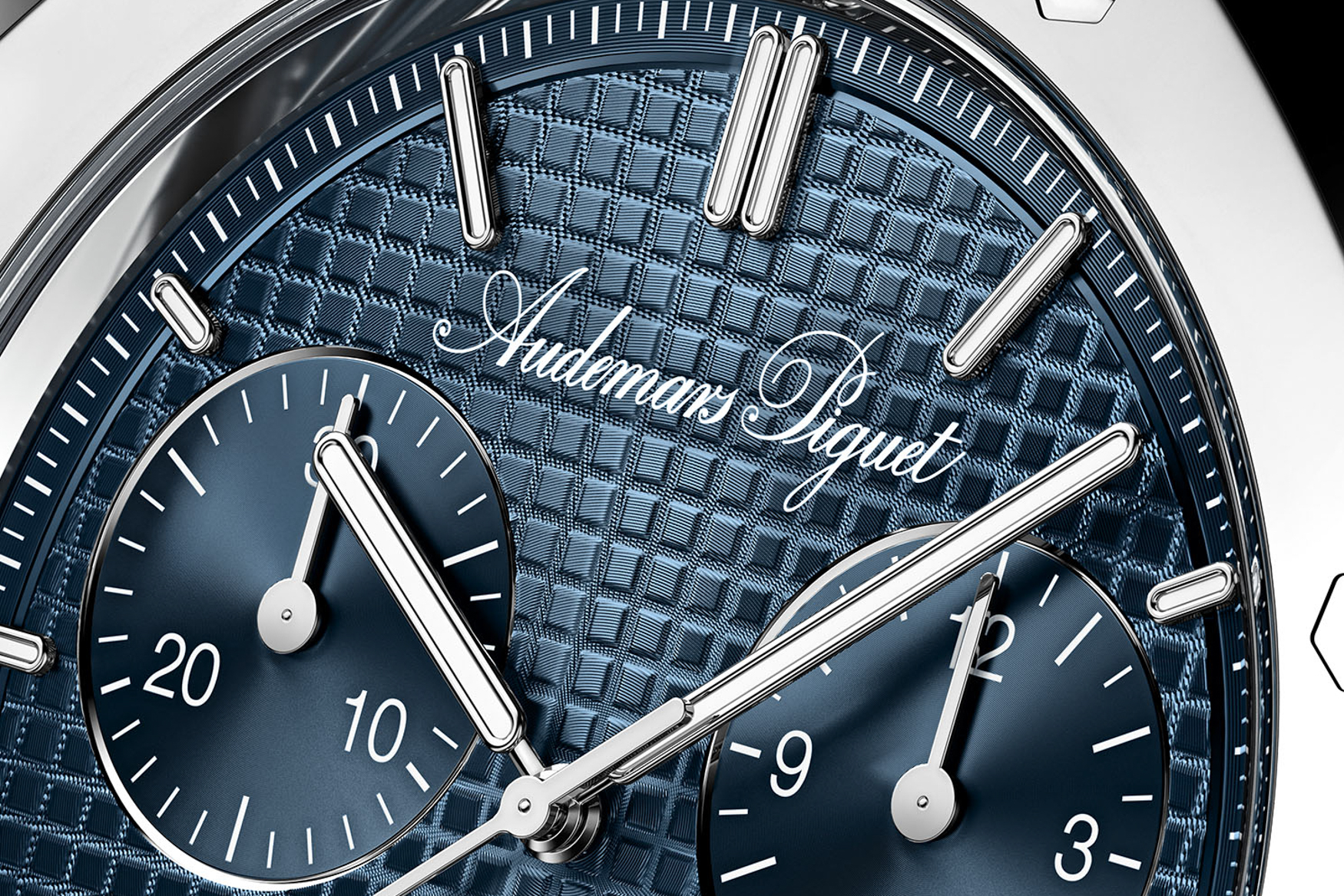
The dial is the shade many associate with the model’s identity: Bleu Nuit, Nuage 50 on a Petite Tapisserie base. Sub‑registers at 3 and 9 o’clock are rendered in matching blue with a snailed finish for legibility; the hour markers are rhodium‑toned 18‑carat pink‑gold batons; and the hours and minutes are handled by 18‑carat white‑gold hands with luminous material. To reduce inertia, the chronograph hands are made of titanium.
Marking the anniversary, a period‑informed AP wordmark appears at 12, and the caseback engravings read “1 of 150 pieces” alongside “150 Years.” These are restrained cues that keep the watch from tipping into commemorative excess.
From a user’s point of view, the story begins with the pushers. AP contrasts the typical modern chronograph—roughly 1mm of travel requiring about 1.5kg of force—with a target inspired by smartphone buttons: around 0.3mm of travel and roughly 300g of force. The brand’s argument is historical as much as technical. Mid‑century chronographs could feel superb, but the transition to robust water‑resistance and the industrialisation of the 1970s drove activation forces higher. The RD#5 tries to recapture that tactile finesse by re‑engineering how energy is stored and released in the mechanism. The crown adds a second ergonomic tweak, integrating a push‑piece and a visual indicator to switch between winding and time‑setting—an unobtrusive alternative to the traditional pull‑out action that preserves the Royal Oak’s profile.
Those interface changes sit on top of a new movement architecture. The self-winding Calibre 8100 runs at 3 Hz and carries a 72‑hour power reserve. It uses a platinum peripheral rotor to keep the centre of the movement open to view. The finishing highlighted by AP includes hand‑bevelled chronograph bridges with sharp inward angles and a satin treatment—traditional elements that connect the research‑led premise back to craft.
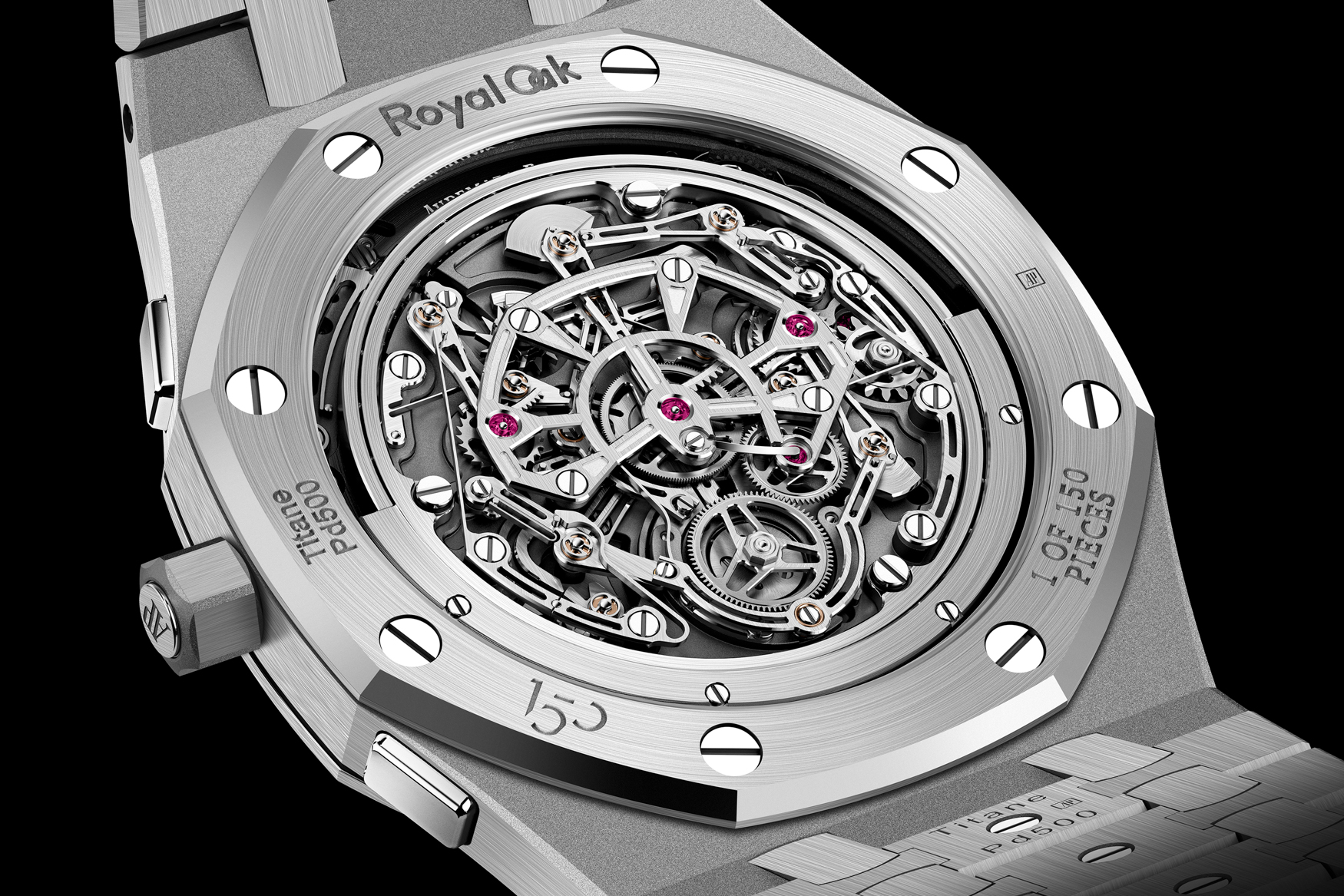
Where the calibre breaks from long‑standing practice is in the reset system. Rather than the classical hammer falling onto heart‑shaped cams moderated by a friction spring, AP uses a patented rack‑and‑pinion device that stores energy while the chronograph runs. Keeping the train under tension helps suppress hand shudder and, crucially, allows the stored energy to be released on reset. AP cites a reset that is effectively instantaneous to the eye—less than 0.15 seconds—and notes that the same architecture enables a true instantaneous minute jump.
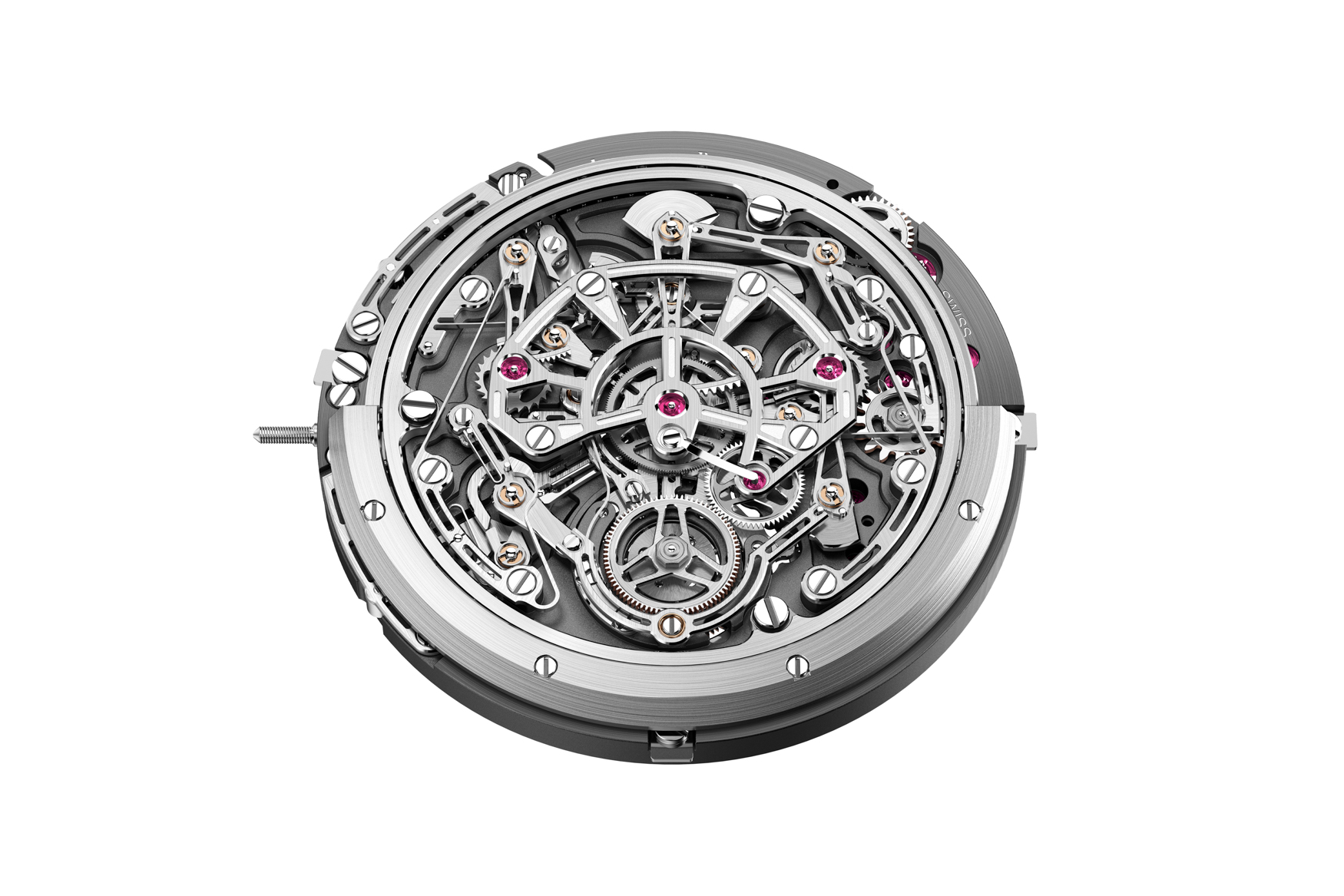
Engagement and running are handled by a column wheel and a redesigned vertical clutch that blends elements of traditional and friction clutches. By allowing the clutch wheel to move vertically, the system reduces unnecessary rotations and limits the hand “jump” that can occur at the start.
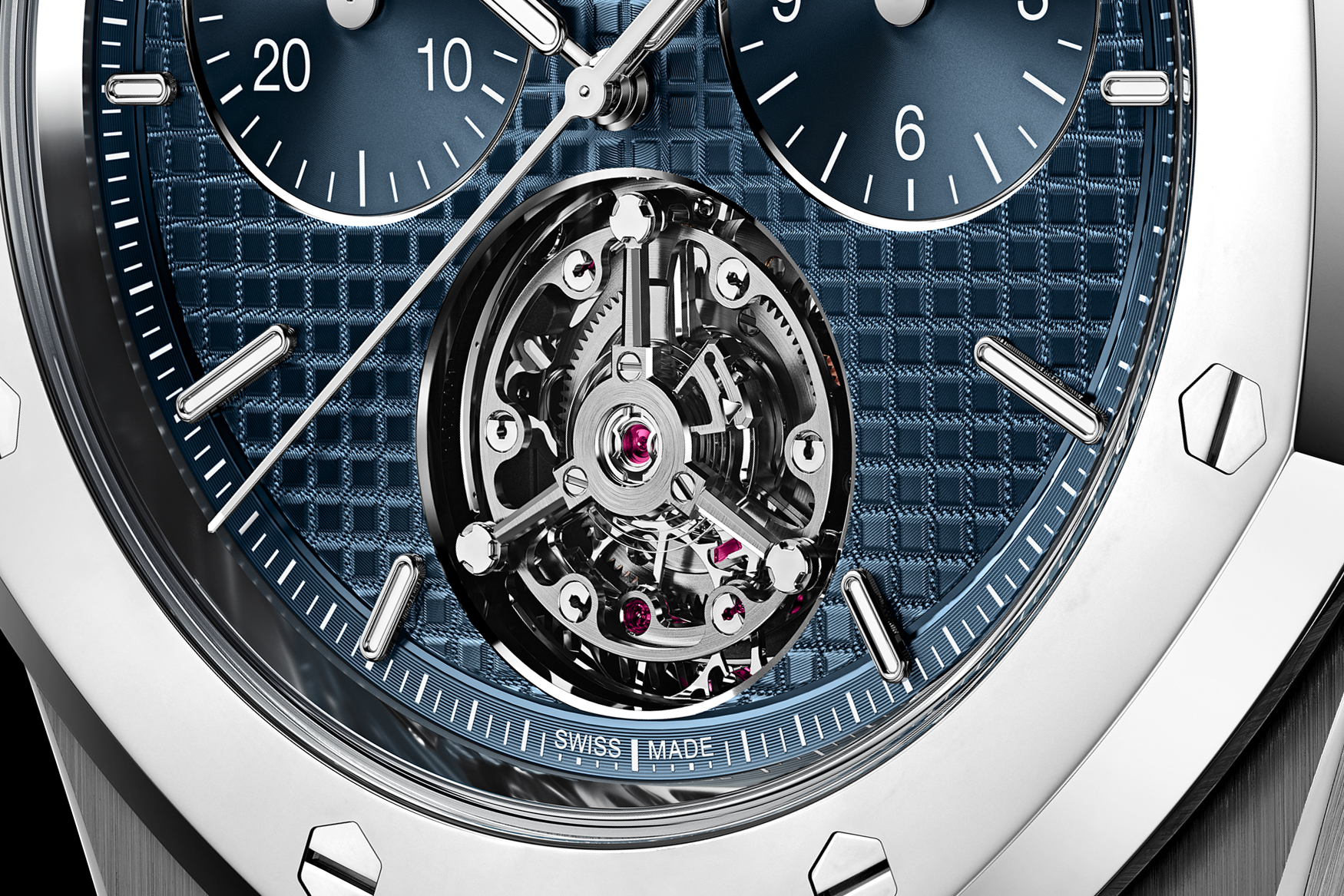
The second headline feature—an ultra‑thin flying tourbillon—derives from the high‑amplitude unit introduced in the RD#3 project. Here, the tourbillon has been re‑engineered to be thinner without distorting its proportions. A new escapement drives a titanium cage peripherally, paired with an oscillator that tolerates higher amplitudes than a conventional setup. AP’s stated aim is improved energy distribution, reduced backlash and better reliability. In practical terms, it helps explain how the watch keeps the “Jumbo” dimensions with an open tourbillon at six o’clock and opposing sub‑registers.
Closing thoughts
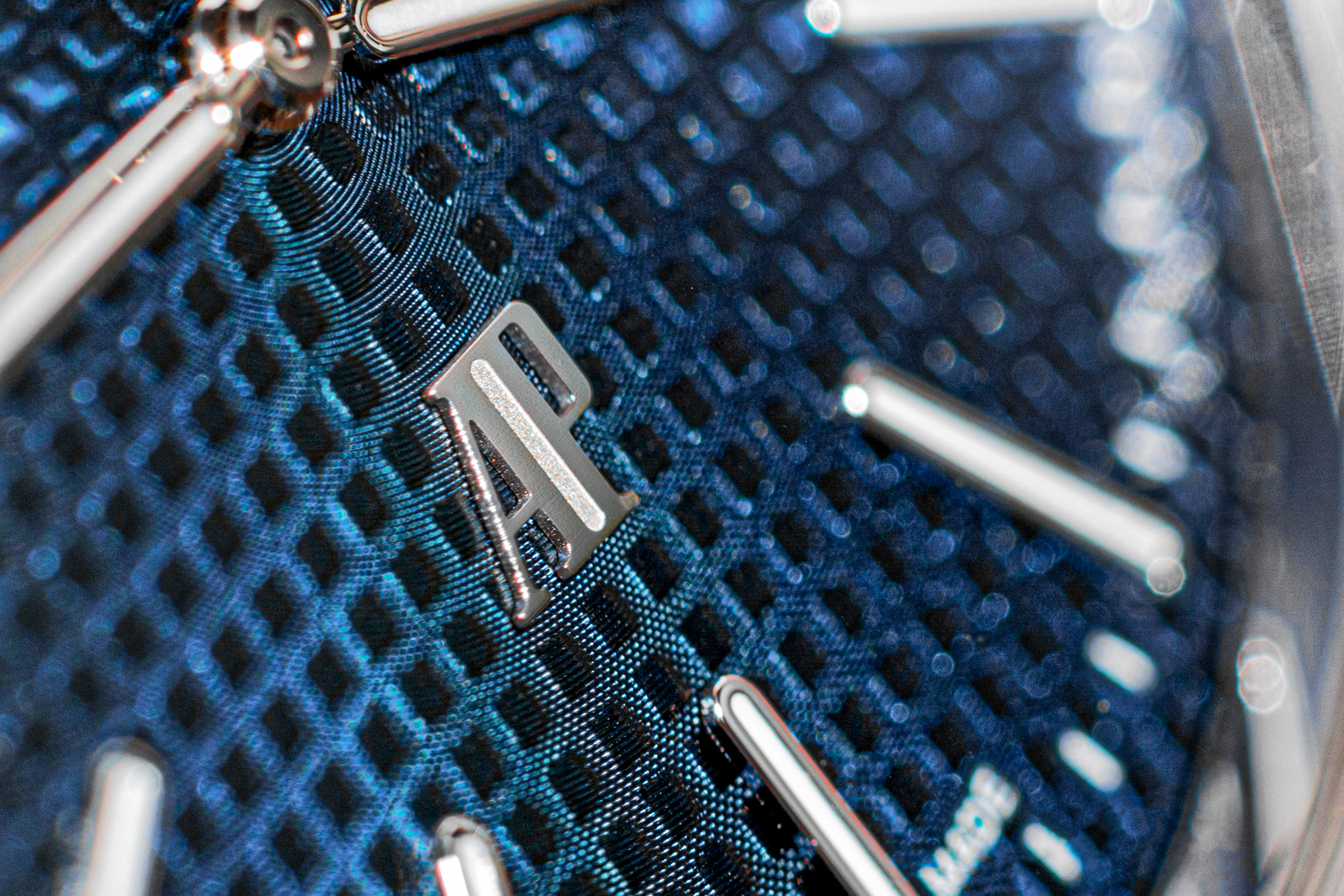
As someone who has lived with earlier “Jumbo” references like the 15202ST and 16202ST, I find the commitment to thinness here more than an aesthetic preference; it’s a core part of how the watch wears. The combination of “glass‑box” crystals and a peripheral rotor is a neat engineering solution to a packaging problem that could easily have distorted the profile. BMG’s polish adds a marginally different light effect without pulling the watch away from the Royal Oak’s language. And the anniversary signals—archival wordmark, engraved caseback—are present but restrained. The sum is a conservative‑looking Royal Oak that asks to be judged less on what’s added to the dial and more on what happens when a finger meets a pusher.
Audemars Piguet Royal Oak “Jumbo” RD#5 pricing and availability

The Audemars Piguet Royal Oak “Jumbo” RD#5 is limited to 150 pieces total, and is available now directly from Audemars Piguet boutiques. Price: CHF 260,000
| Brand | Audemars Piguet |
| Model | Royal Oak “Jumbo” RD#5 |
| Reference | 26545XT.OO.1240XT.01 |
| Case Dimensions | 39mm (D) x 8.1mm (T) |
| Case Material | Titanium and bulk metallic glass (BMG) |
| Water Resistance | 20 meters |
| Crystal(s) | Glassbox sapphire front and back |
| Dial | Petite Tapisserie dial in “Bleu Nuit, Nuage 50” |
| Strap | Integrated bracelet in titanium and BMG |
| Movement | Calibre 8100, in-house, automatic |
| Power Reserve | 72 hours |
| Functions | Hours, minutes, flyback chronograph, flying tourbillon |
| Availability | Limited to 150 pieces |
| Price | CHF 260,000 |