


The Tissot RockWatch returns with a granite-based limited edition
Russell SheldrakeThe Tissot RockWatch returns! 40 years after this cult-classic was originally released, it’s back with its solid granite dial and case, but in a seriously limited number of just 999. Instead of opting to exactly replicate the original, this new RockWatch has carved its own path while remaining true to the foundations of this line.
Those of you who remember the RockWatch and its origins in the 1980s will not only recall how genre-bending it was, but just how much variety came from this seemingly simple concept. Rocks are everywhere, as common as dirt, and so you would think to make a watch out of them wouldn’t be that big of a deal, but the way Tissot went about it showed just how much creativity and fun can be had when playing with rocks.
The case
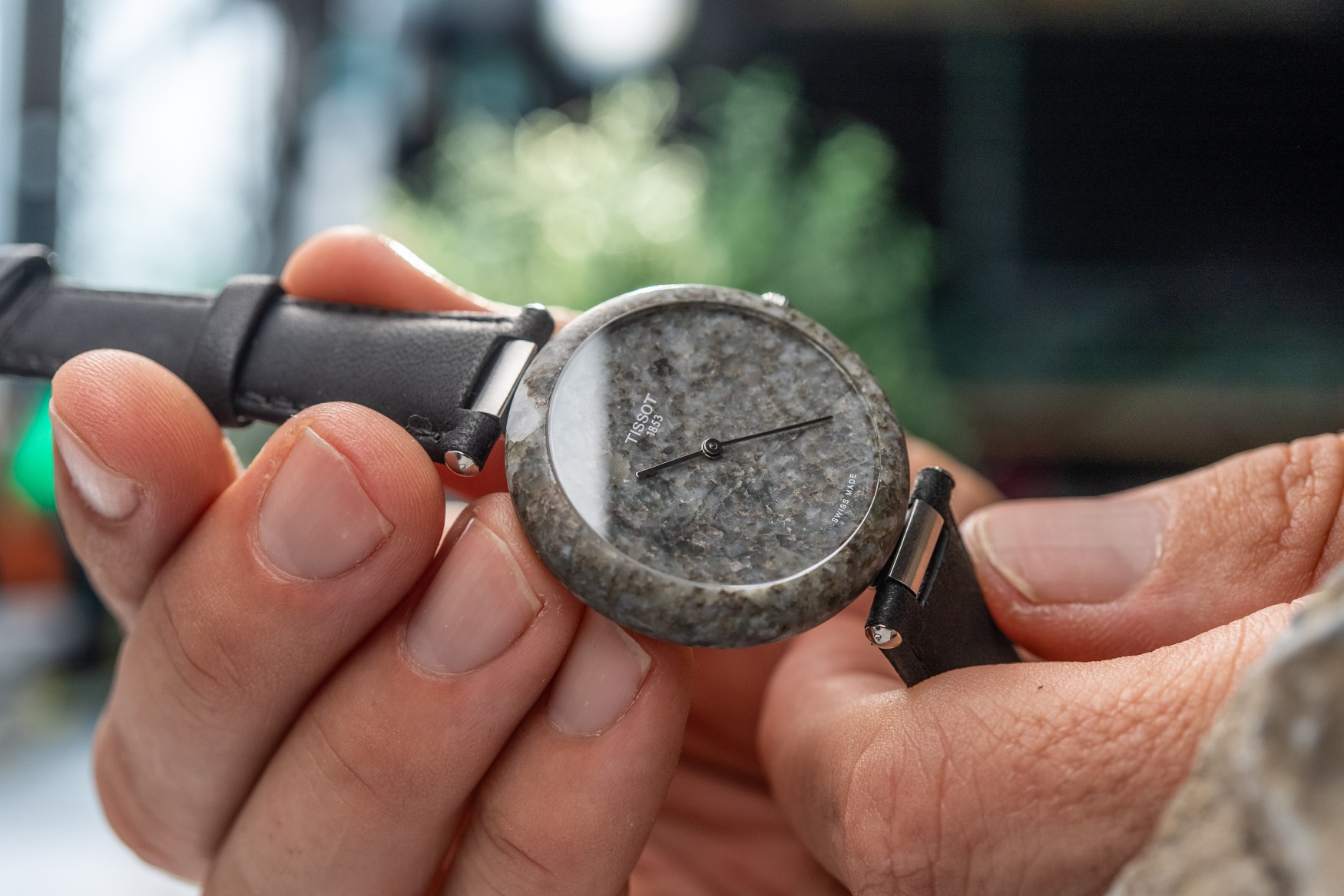
This new edition of the RockWatch modernises the design and brings this stone age-tech firmly into the year 2025. While the original model was offered in 23mm, 30mm, and 33mm case sizes, here we have it in 38mm, so it not only wears more like a modern watch, but you are getting a lot more rock for your money. And this is not just any old stone that Tissot has decided to use here; this has been carved out of the Jungfrau mountain, one of the most iconic summits of the Swiss Alps, which is also known as the “Top of Europe”.
One thing that the Jungfrau mountain is famous for is its high-altitude railway, and to construct this sky-high track, tunnels had to be cut out of the solid rock, and it is from these cuttings that the new RockWatch was made. It’s a nice, sustainable move that meant more stone didn’t need to be extracted for this limited run.
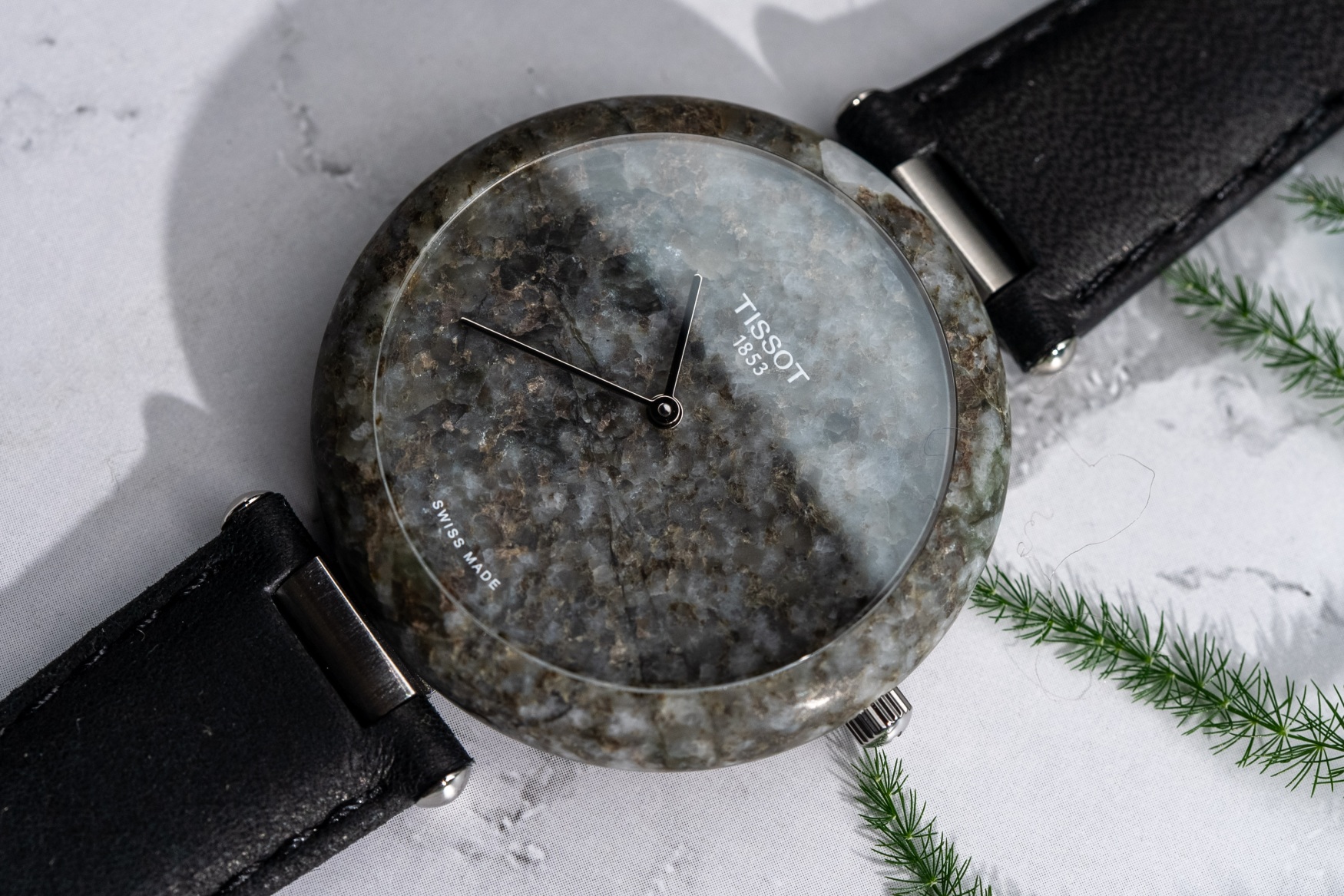
Due to the fact that these watches are made from this natural material, each one will have a unique pattern to it, and this is something that drew collectors to the original models, and still does to this day on the secondary market. While the stone used for this new release is a bit darker in tone than the first series, there are still specs of white quartz throughout the grey granite that help provide that unique pattern to each one.
The strap/caseback
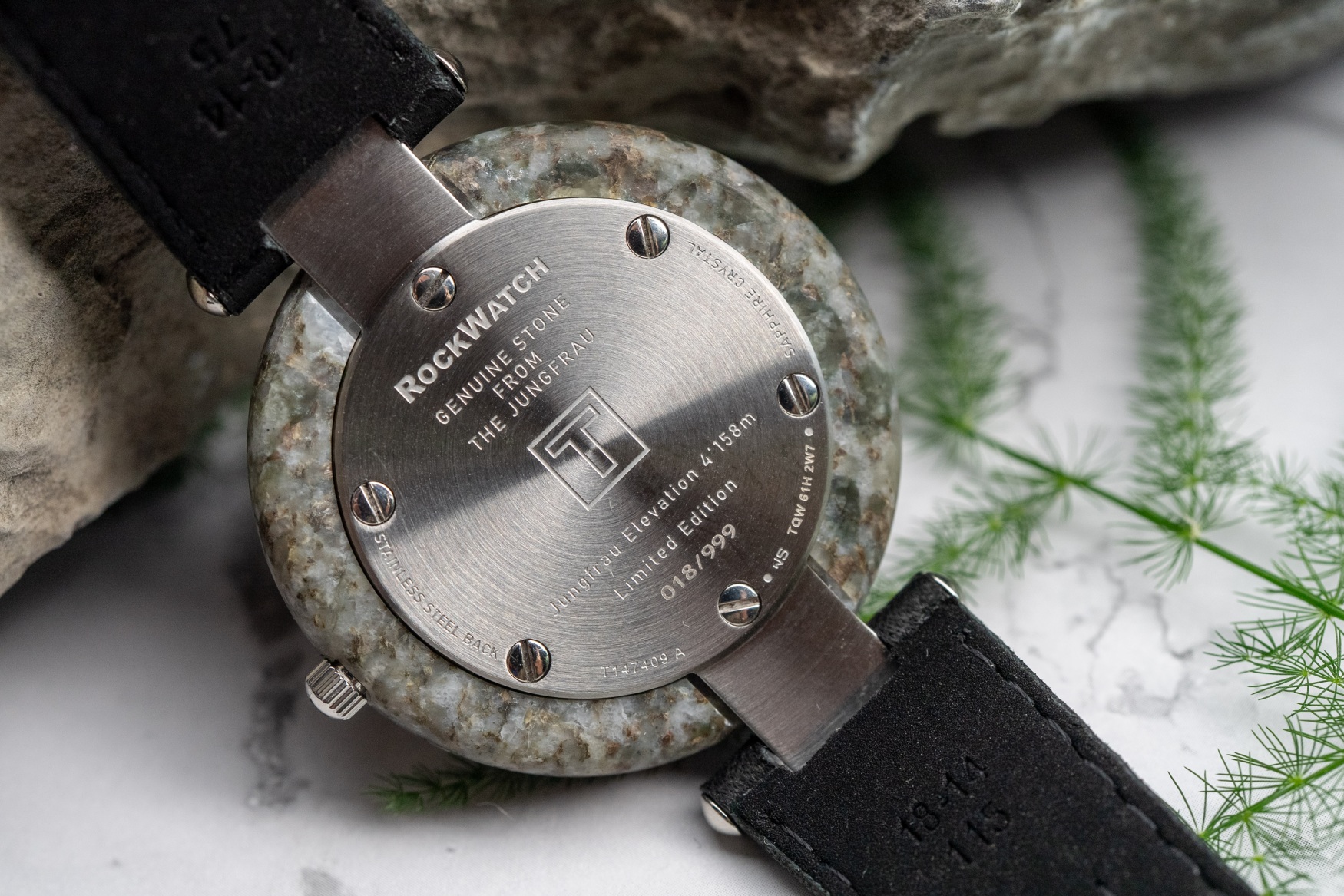
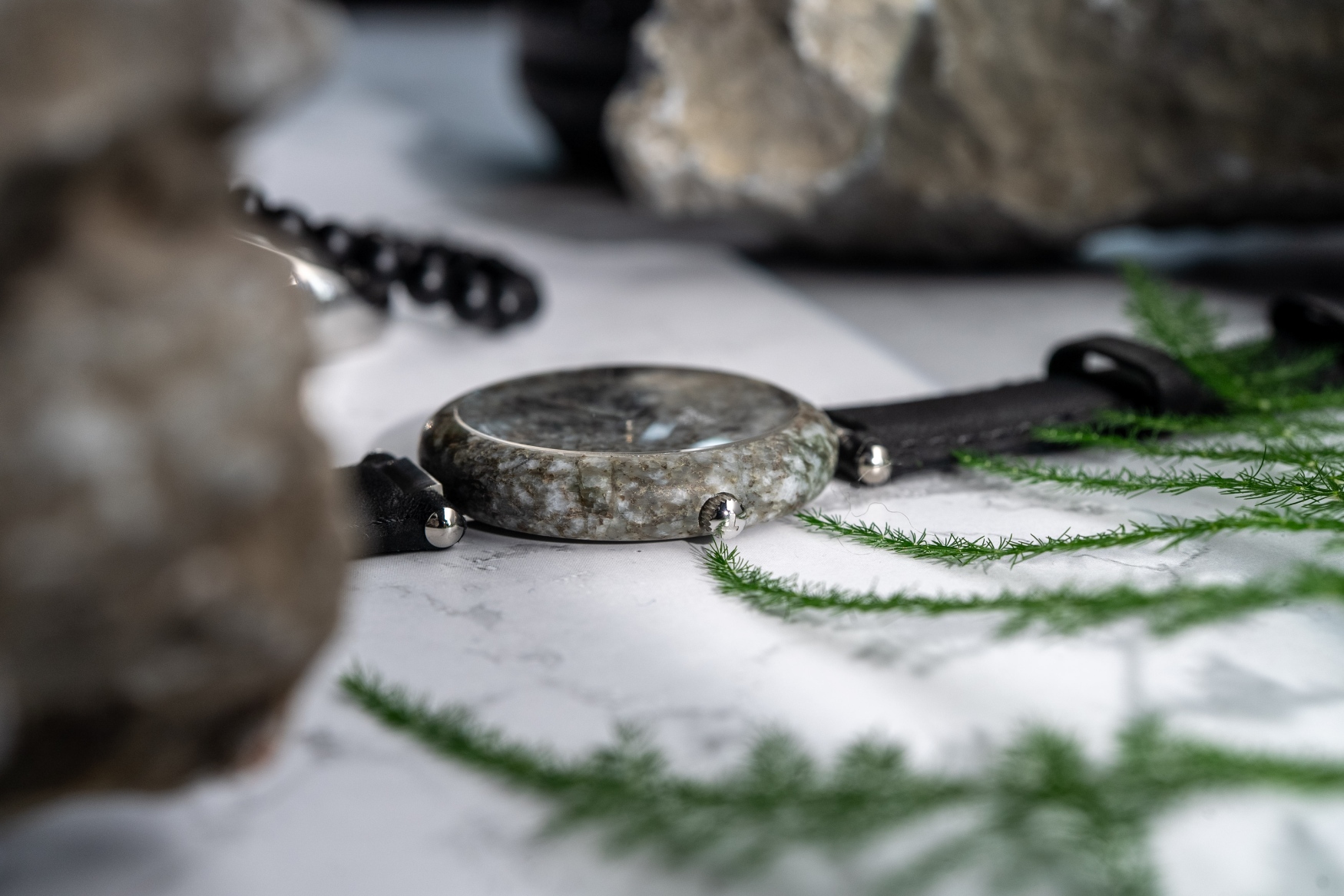
Something that has been carried over from the now 40-year-old pieces is the way in which the strap attaches to these watches. Drilling holes for a spring bar would not only ruin the aesthetic of this smooth pebble-like watch but would also be incredibly impractical. Instead, a metal plate is attached to the back that not only protects and encloses the movement but also acts as your lugs to anchor the strap to the case. This means the watch can wear quite small thanks to a nearly incomprehensible lug-to-lug measurement. This also means that the black leather strap doesn’t directly connect to the watch case, meaning it almost floats on the wrist, independent of the strap itself.
The dial
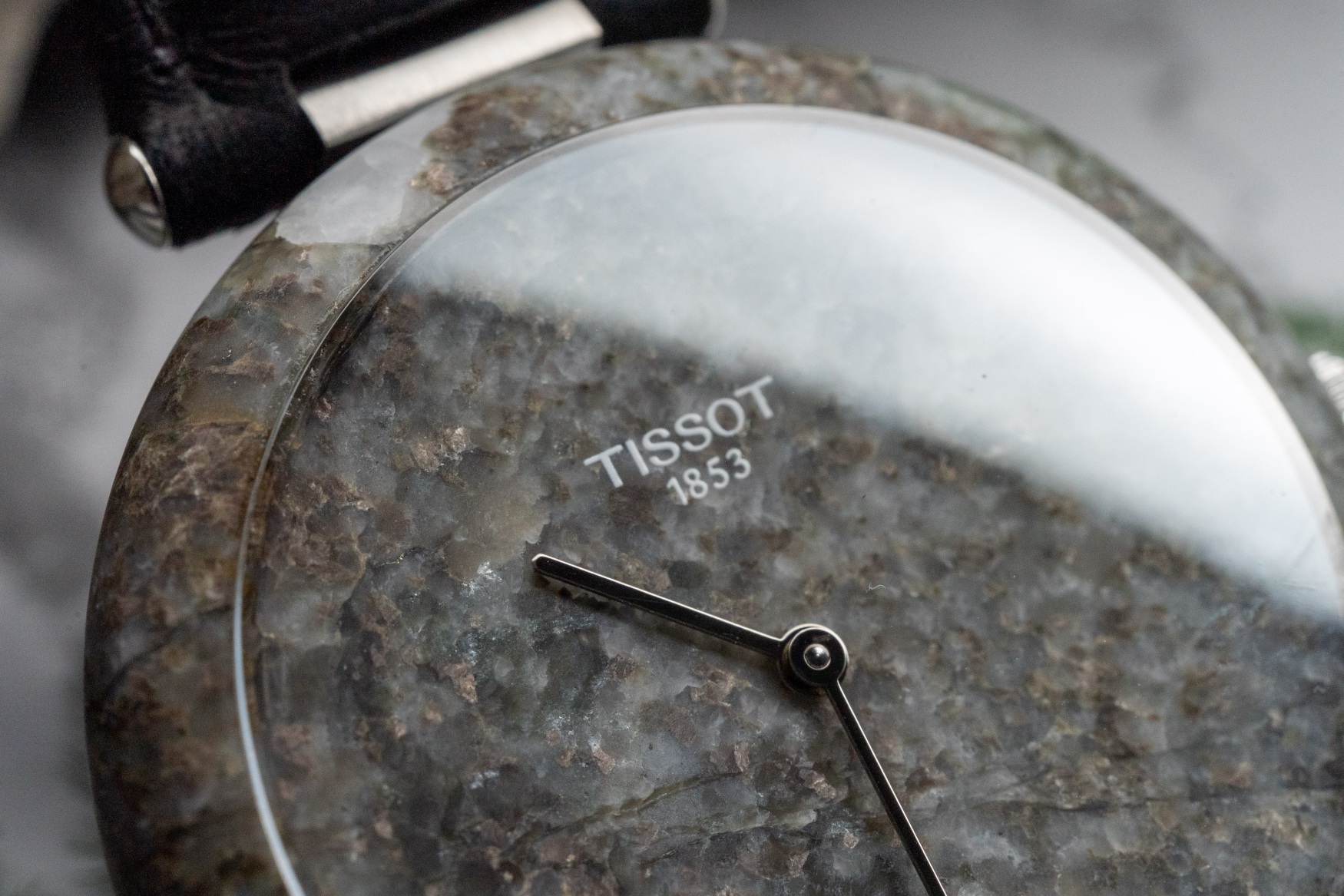
While that caseback and lug replacement has stayed the same, this cannot be said for the hands set on this new release. Originally, the hands were coloured in red and yellow as a reference to the markers used on hiking trails in the Swiss Alps – and while they were extremely legible on the dial, we now have a more subtle set of grey nickel-plated hands that remain visible yet not distracting from the overall design. There is also no seconds hand: I feel like this reduction helps keep the design clean, allowing the natural beauty of the stone to be covered by as little as possible, but it also means you don’t notice that it is a quartz movement inside that would cause a seconds hand to hack.
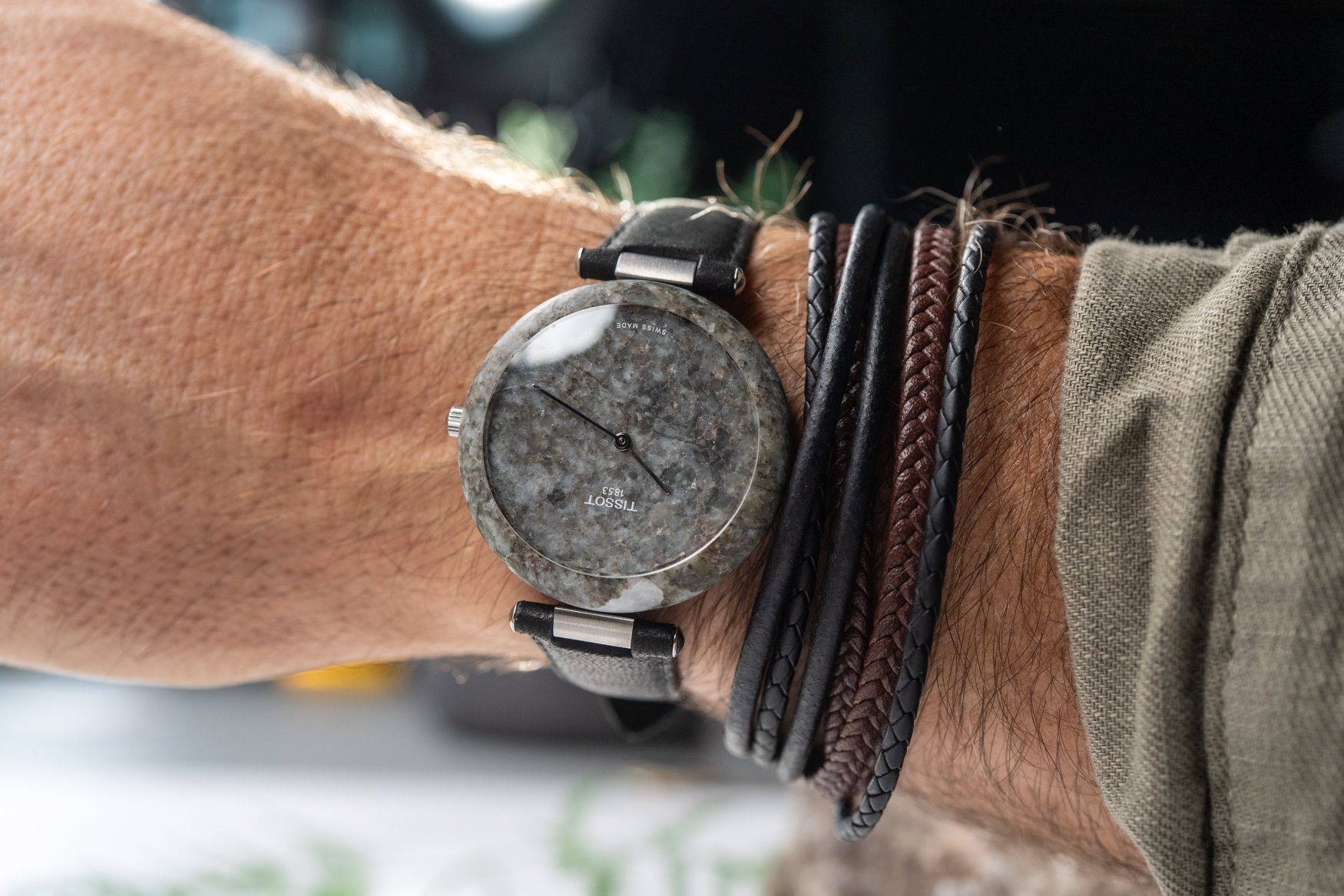
The way the case and dial are constructed has stayed the same, which will keep many of the purists happy. Milled from a single piece of stone, the dial and case are one solid unit with the space for the hands and movement milled out on each side. This makes them incredibly strong but also pretty unique in the watch world. We are used to the idea of an integrated bracelet, but an integrated dial feels fairly unconventional, yet incredibly fitting for a watch carved straight from the Swiss Alps.
The verdict
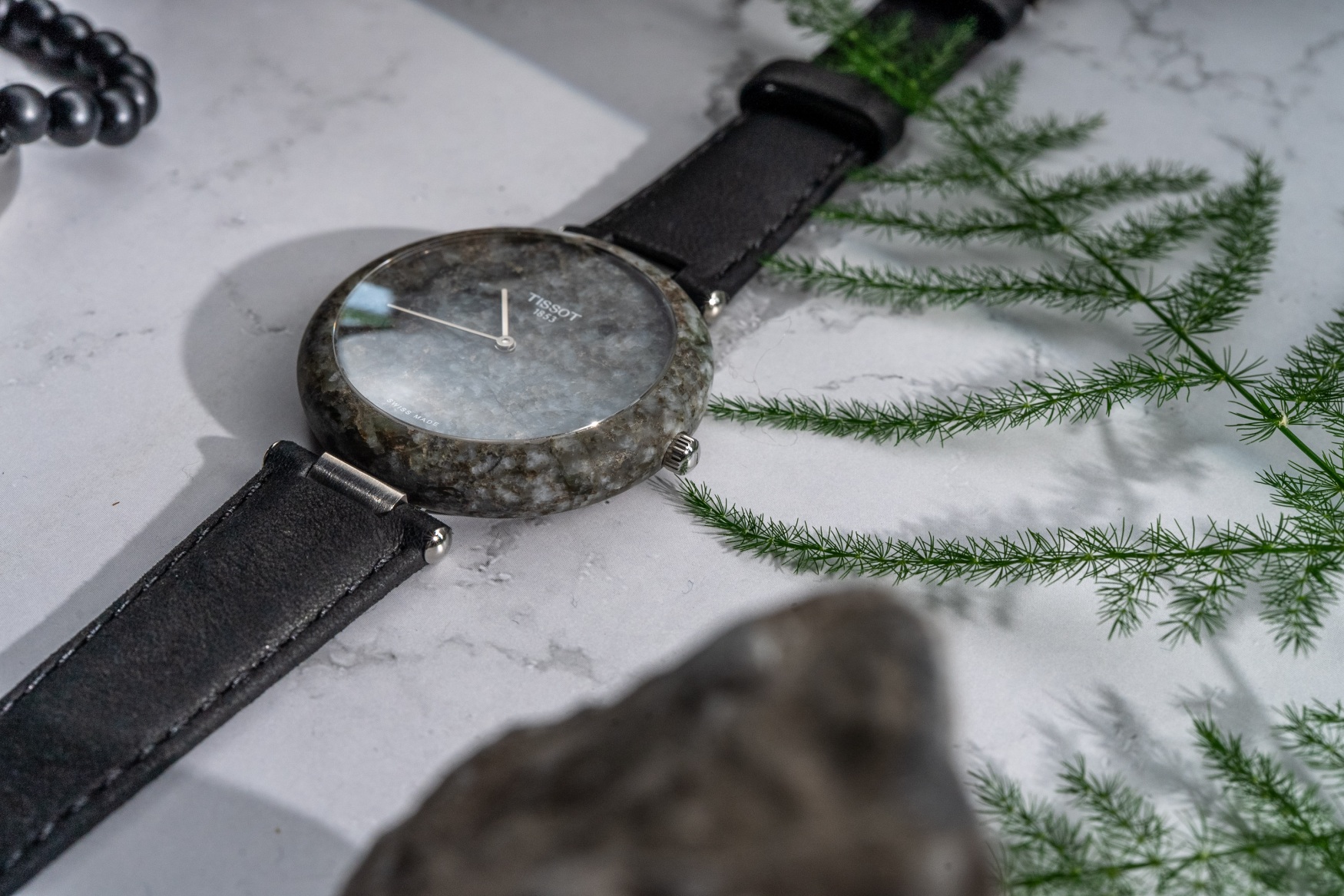
One important factor about this watch that is key to understanding its importance and why this re-release matters is to know what it meant to Tissot. Prior to its release, Tissot was struggling as a company. The quartz crisis had had a devastating effect on the traditional output of the brand that had once been a proud movement manufacturer, and while its stablemate in Swatch had experienced a massive success with its initial release, Tissot was in need of its own pick-me-up. After millions of Swiss francs in investment, the Tissot RockWatch brought the brand back to America and proved to be an instant success, saving this proud company and helping support its parent organisation that would soon become the Swatch Group.
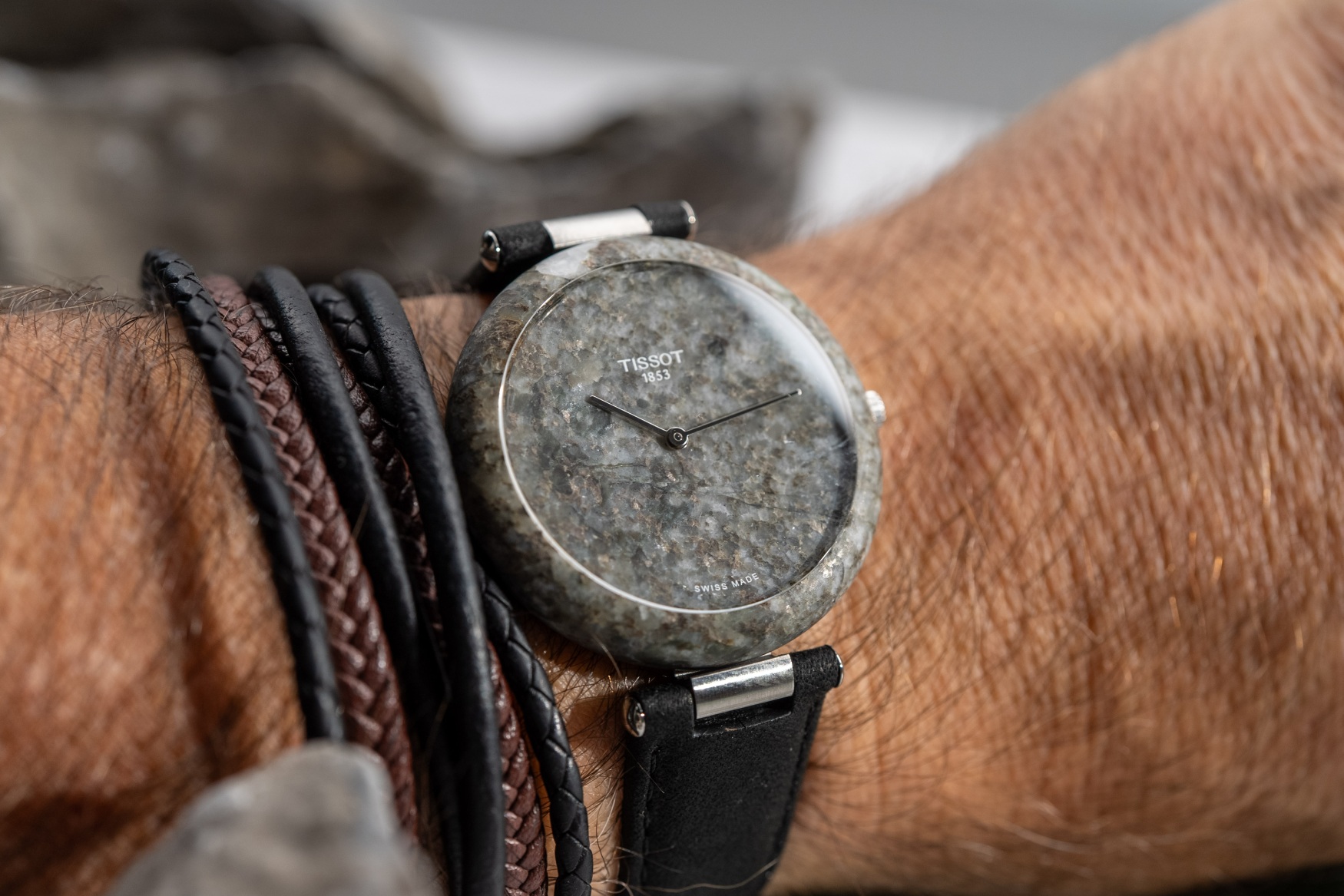
This watch is all about refining what nature has spent millennia creating. The smooth, pebble-like case feels perfect in hand, and with no barrier between you and the rock, there is no mistaking this for a veneer or faux-texture; you are getting a genuine piece of granite on your wrist from one of the highest points in Europe. And while this new limited edition is great to see, it does beg the question: are we going to see the rest of the trilogy, namely the pearl and wood watch, make a return too?
Tissot RockWatch pricing and availability
The new Tissot RockWatch is limited to 999 individually numbered pieces and is available at selected Tissot dealers. Price: £995
| Brand | Tissot |
| Model | RockWatch |
| Case Dimensions | 38mm (D) |
| Case Material | Jungfrau granite |
| Water Resistance | Not stated |
| Crystal(s) | Sapphire crystal |
| Dial | Jungfrau granite |
| Bracelet | Black leather, pin buckle |
| Movement | ETA quartz |
| Functions | Hours and minutes |
| Availability | Limited edition of 999 pieces |
| Price | £995 |