


We read the Rolex Datejust book so you don’t have to
Bruce DuguayBefore I sat examining the last few pages of Nicholas Foulkes’ latest book, Oyster Perpetual Datejust, I intentionally selected my venerable reference 1601 to wear. The last few days spent poring over this 224-page tribute to (arguably) the most recognisable watch of all time had inspired me to re-examine my motivations for acquiring and holding this timepiece in my collection for over ten years. At fifty-five years old, my particular 1601 gradually increases its own fascination factor with every passing birthday. Yet, reading Foulkes’ account of the accumulated history behind the Datejust really served to accelerate that fascination by several levels.
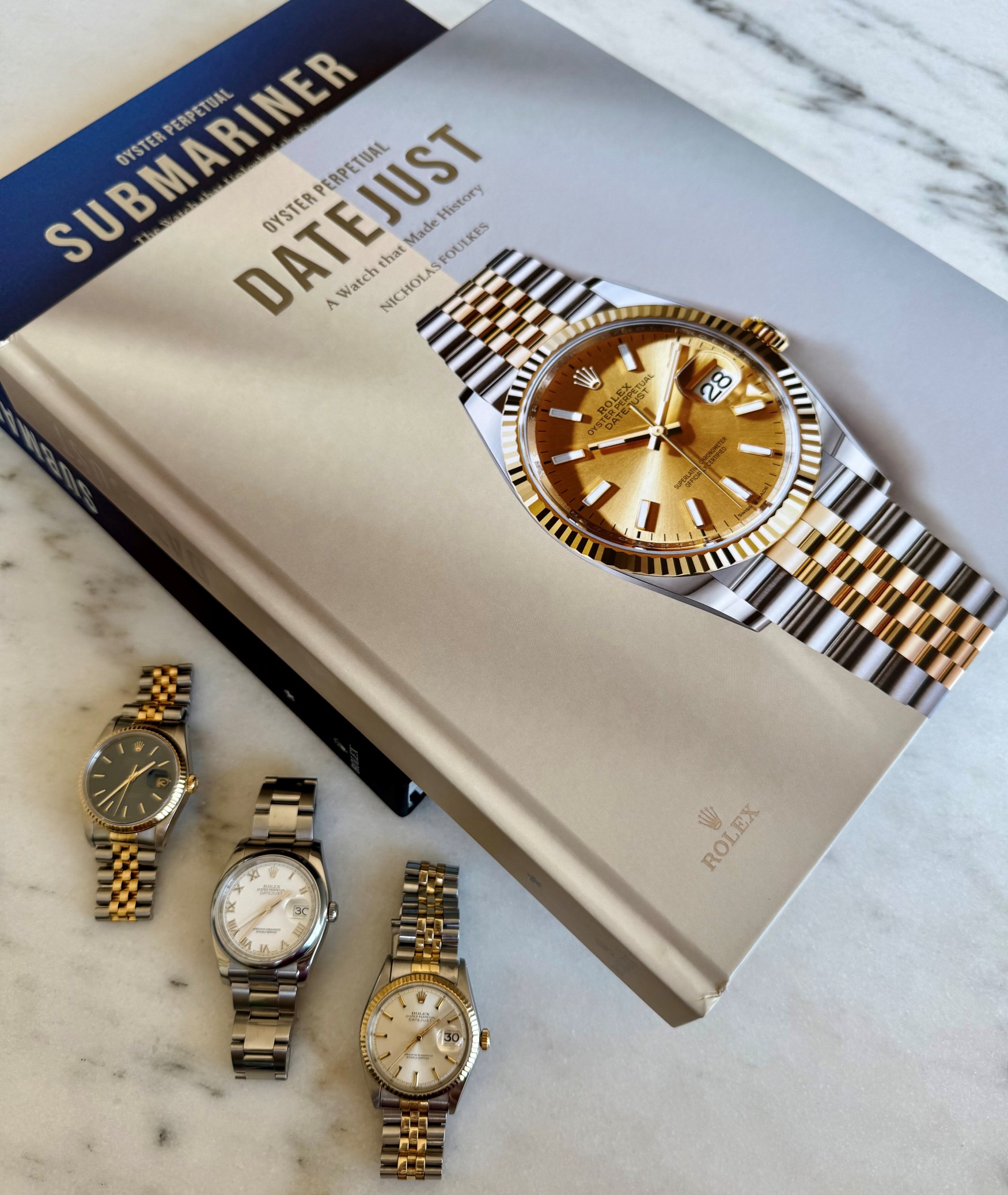
Released on the coattails of last year’s lauded Submariner book, Datejust naturally curates high expectations of storytelling and meaningful historical references. Foulkes arguably has the unenviable responsibility of highlighting very prominent figures and resources in a way that credibly weaves the background of the Datejust’s mystique, without looking like an overt marketing re-hash on the part of Rolex. As with the inaugural Submariner book, Rolex is essentially the second byline and heavily supports the author with archival extracts and documents that may not have been accessible without their involvement in commissioning.

The core of the storytelling for me was not in the development of the watch, of which great attention to detail is paid, but rather in the story behind elevating the Datejust to the highest echelons of politics and personalities. Foulkes narrates riveting tales of Rolex’s efforts to couple people like Winston Churchill, Dwight D. Eisenhower, and Martin Luther King Jr. with the Datejust. There are also honest moments noted where the match didn’t make much sense in hindsight, as in the case of Anthony Eden, and authentic nods to the fact that Iron Curtain personalities like Leonid Brezhnev also wore Rolexes.
The storytelling is also exemplary in explaining the prestige and ownership factors that, thanks to marketing placement and capitalisation, evolved with Rolex watches, and have steadily contributed to their unparalleled modern desirability. Foulkes doesn’t shy away from some of the more vanity-oriented motivations of early Datejust influencers, like Churchill being proud of how the Datejust looked on his wrist and the signalling of success it fostered early in the watch’s history. Wilsdorf himself is even quoted in admiration of the light glinting off his gold Datejust. In a similar vein, the decadent decade of the 1980s is addressed, as by then, Rolex and the Datejust were at the top of social preening and status.

For those who didn’t read Submariner, this book stands well on its own in that there is plenty of recap of the Rolex story and Hans Wilsdorf, as well as accounting for the essentials of Rolex product differentiation in the early 20th Century. In fact, there are many diversions from the specific Datejust narrative to cover additional company elements, such as the death of Wilsdorf, the subsequent creation of the Rolex company in its foundational form, and even the building of the first modern Rolex headquarters building in Geneva.
One chapter that stands out in terms of historical analysis is the detailed history of women’s Datejust models and the evolution of women’s relationship to watches as the century saw significant change in that area. Foulkes is exhaustive in his effort to show the transition from admittedly cringe-worthy 1940s, 50s, and 60s advertising text to copy venerating women as equally strong performers in exploration, the arts, and sports.

When assessing the level of detail one can extract from Datejust, it is important to have reasonable expectations of Foulkes, as well as the size limitations of the book. As with Submariner, it is pointed out in the introduction that covering all permutations, changes, revisions, and nuances of the Datejust would require several volumes. Even with that disclaimer in place, I was impressed with some of the areas where detail dives were found. The Jubilee bracelet is a good example, with plenty of background on this hallmark element of the watch.
Even though standard Rolex marketing materials have long heralded the history of the Cyclops date lens, Foulkes really magnifies this technical improvement as well as Rolex’s efforts to ensure that such a feature ensured exclusivity and competitiveness with other brands. Again, keeping things honest, one can also find a reflective anecdote on the Datejust II and the eventual correction of its awkward proportions into the Datejust 41.
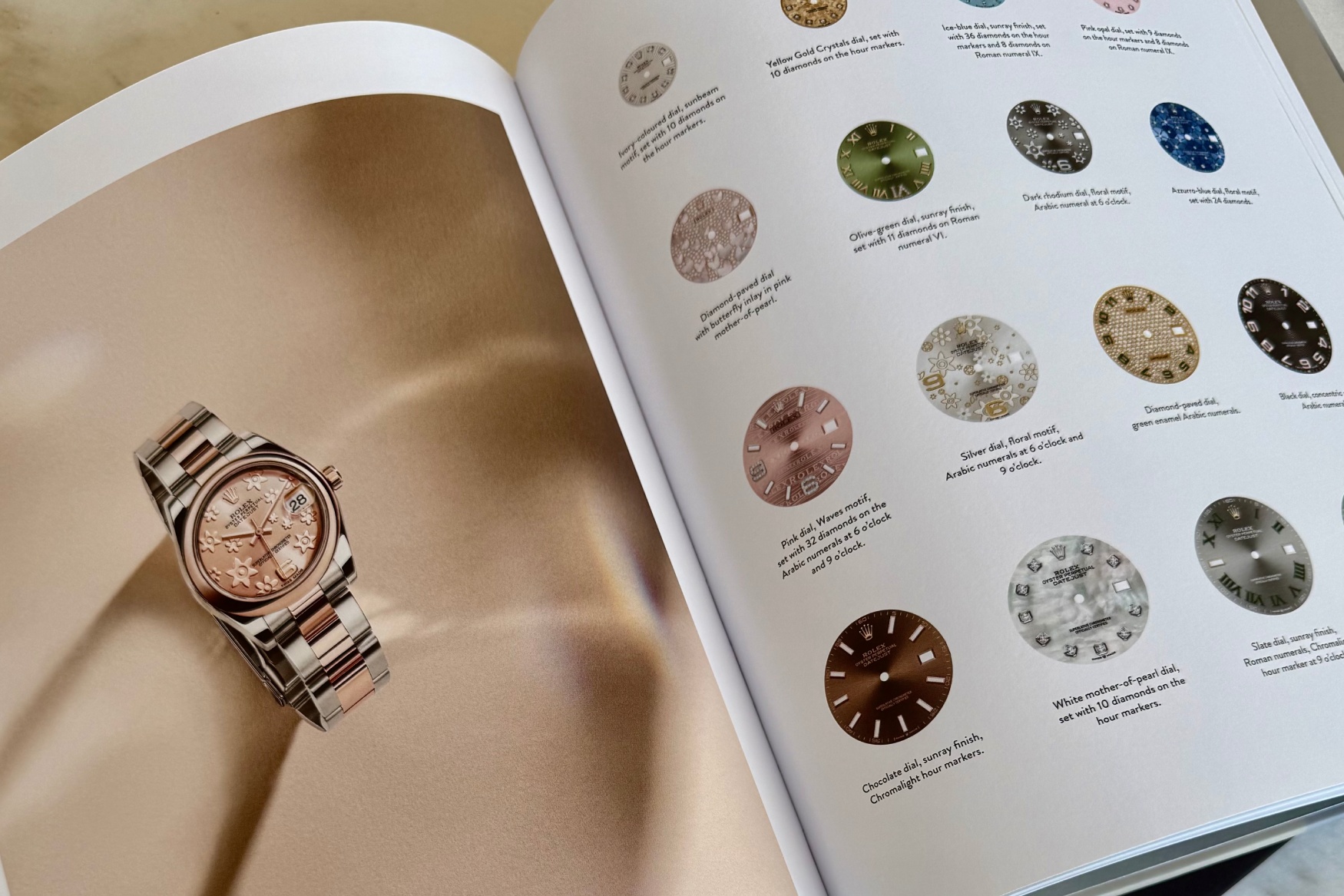
There were some areas of detail and subsequent lack thereof that also caused me some confusion. A good example is the contrast in space given to the relatively unappreciated Turn-O-Graph and decadent Pearlmaster at eight and seven pages, respectively, with no mention allocated to the significant Oysterquartz model. I scoured the book thoroughly for even a line on the quartz venture; however, I was left scratching my head. Given the seismic shift the industry underwent when quartz watches became available, in combination with the fact that Rolex’s latest Land-Dweller model apes the unique case shape of the ‘high-tech’ Datejust from that era, I feel this could possibly be the one big thing that was missed.

That said, the Datejust book is resplendent with archival goodies, such as letters from aforementioned prominent people, documents chronicling big moves within the business, high-res images of historic watches, and no shortage of vintage advertising copy. It also goes without saying that the book is well laid out, easy to read in a couple of sittings, and the imagery is beautiful. The last sections lean heavily into the current Rolex Testimonee narrative with Roger Federer, Coco Gauff, and company, as well as truncated attempts to highlight the Datejust timeline and model variations throughout the years. While beautifully done, and really to no fault of Foulkes (after all, he did give us the disclaimer), these charts come across as very abbreviated relative to what enthusiasts know about the full scope of the watch.

This abbreviated feeling is ultimately where the book leaves the enthusiast reader. Strong on stories, imagery, and quality, however light on some key technologies and specifics, Datejust is still a must-have book in the emerging collection by Foulkes. If you take certain missing elements like the Oysterquartz, the transition to quickset date, sapphire crystal, and various anomalies over the years, the 26-page deficit in volume compared to Submariner could easily have been recaptured without feeling bloated. There is no denying the enchanting value in the story side of precious objects, and ultimately, this is what carries us into eager anticipation of the next book Foulkes is no doubt penning as this comes to press.