


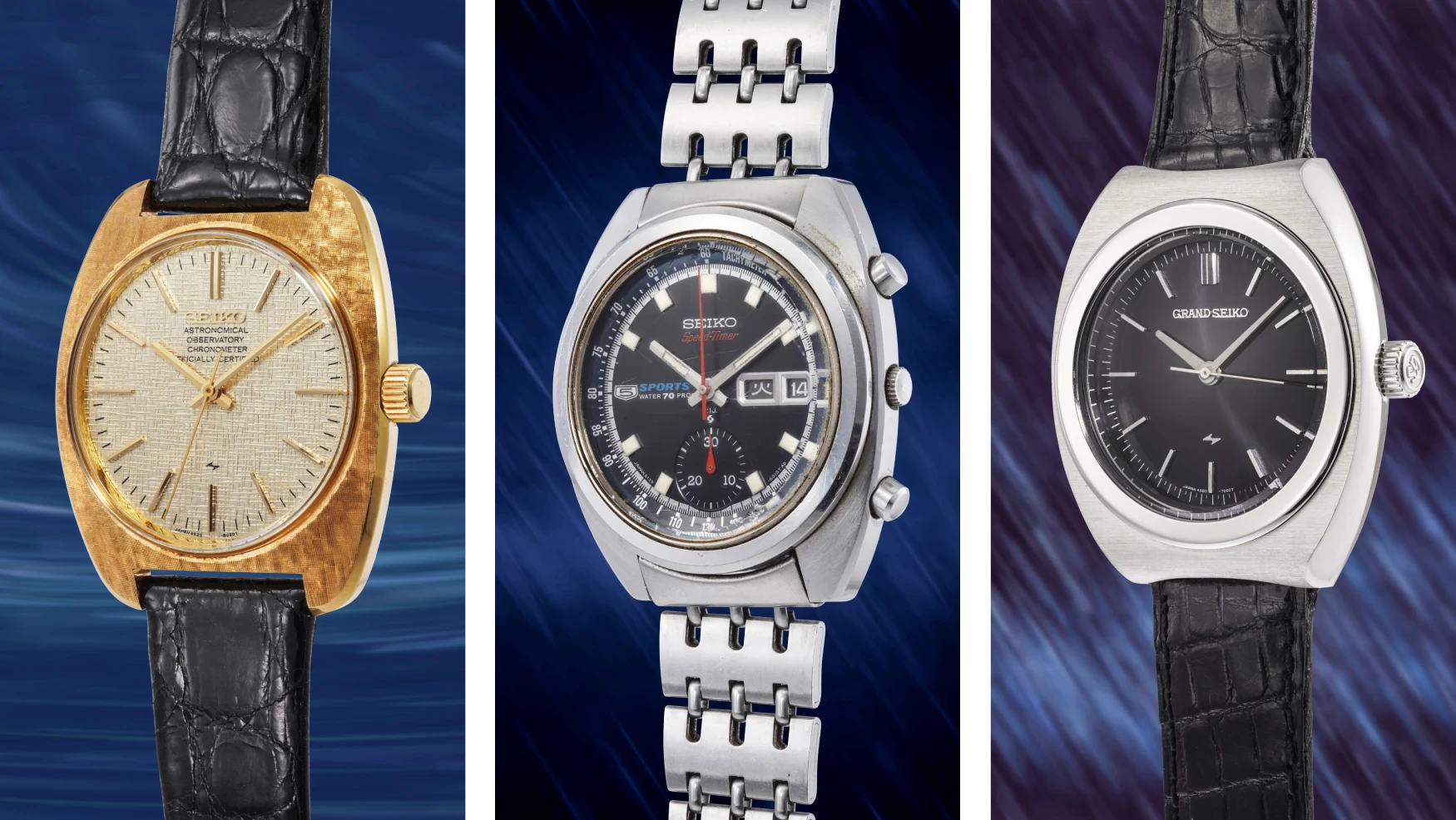
Look out for these ultra-rare Seikos at Phillips’ Decade One auction
Borna BošnjakI might be telling on myself, but when browsing auction catalogues these days, it takes something truly special to catch my eye. Don’t get me wrong, the swathes of five and six-figure pieces are impressive to see, but I’ve just become inundated with the seemingly endless, hugely expensive independents and the likes of Rolex and Patek Philippe. Thankfully, the cure to my bidder’s dysfunction seems to be a triple dose of Seiko, this time courtesy of Phillips’ all-encompassing Decade One auction set to take place on November 8th and 9th.
Seiko Astronomical Observatory Chronometer ref. 4520-8020
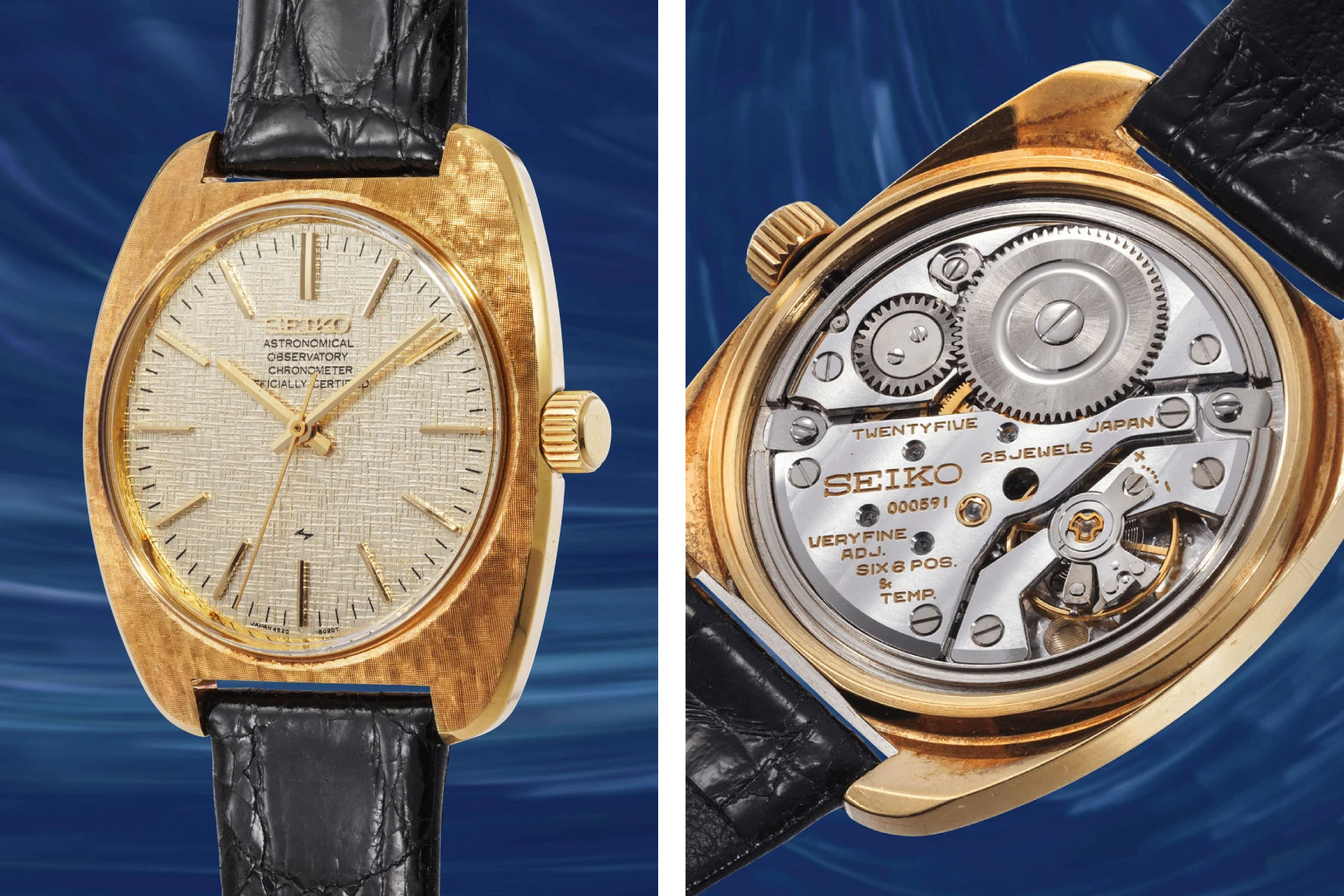
We start strong – very strong. It might be bold of me to say, but of all the watches made with the Seiko name on the dial, the Astronomical Observatory Chronometer might just be the most collectible. Of the 283 movements Seiko submitted to the Neuchâtel Observatory – coincidentally right after they announced they’ll no longer be running the trials – 226 passed the test. This isn’t that odd, as plenty of brands sent their watches in to be certified, but Seiko (alongside Girard-Perregaux) are unique in the fact that they actually cased and sold the very movements that were put to the test. These yellow gold, cushion cases with a linen pattern extending to the dial are quite the sight to see. In fact, everything was solid gold, including the dial itself, as well as the hands, markers, and crown.
This particular example is from the tail end of the 1968 – 1970 production period, using a V.F.A. 4580 movement as indicated by the stamping below the balance. Unlike most other watches, the reference number remained the same, even though the movement changed from the 4520A to the 4580, a quirk which is indicated on all AOC dials at 6 o’clock, reading “4520”.
Estimate: US$18,800 – US$37,600
Grand Seiko 45GS V.F.A. ref. 4580-7000
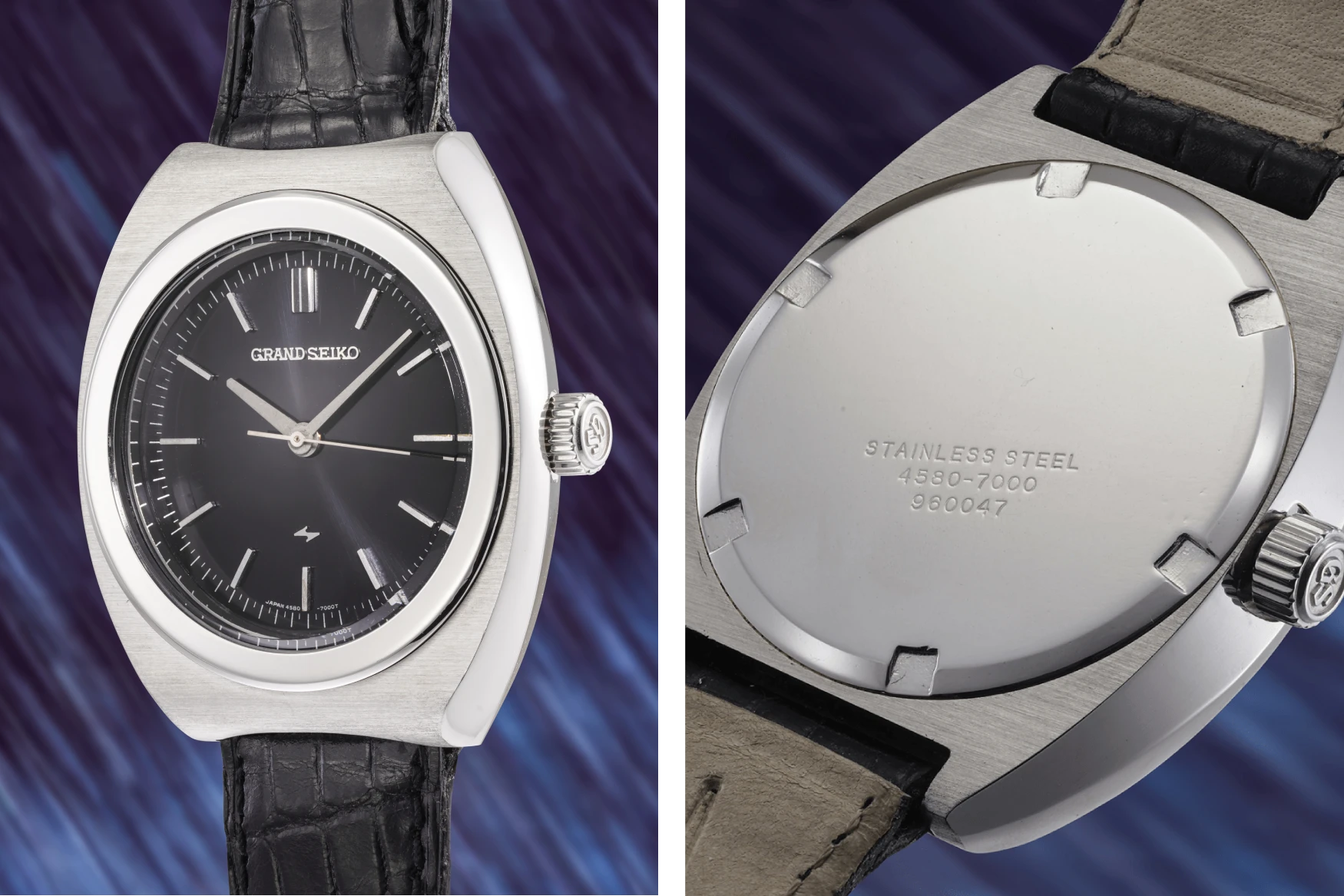
Speaking of grails of vintage Seiko collecting, I’d be remiss not to include a Grand Seiko V.F.A. This particular Daini-made model also perfectly ties into the aforementioned Astronomical Observatory Chronometer, as it uses the same 4580 movement. If all of this nomenclature is confusing, this Seiko brand guide might help, but the gist is this: these Very Fine Adjusted Grand Seiko watches used calibres that matched the accuracy of the Astronomical Observatory Chronometer (at +/-2 seconds per day), but were made in much greater numbers, and never actually sent to be certified.
The 4580-7000 in particular stands out with its unique case shape and dial layout, perhaps matched only by the quirkiness of the V.F.A 6185-8000. Even though it was a V.F.A. model, it’s the only one from this esteemed group that never had any V.F.A. branding. Having said that, no other Grand Seiko looked like this, either. The example offered by Phillips suggests a production date of June 1969 (though Phillips lists it as “circa 1970”), and is one of eight serial numbers known.
Estimate: US$10,000 – US$19,900
Seiko Speedtimer Chronograph ref. 6139-6010
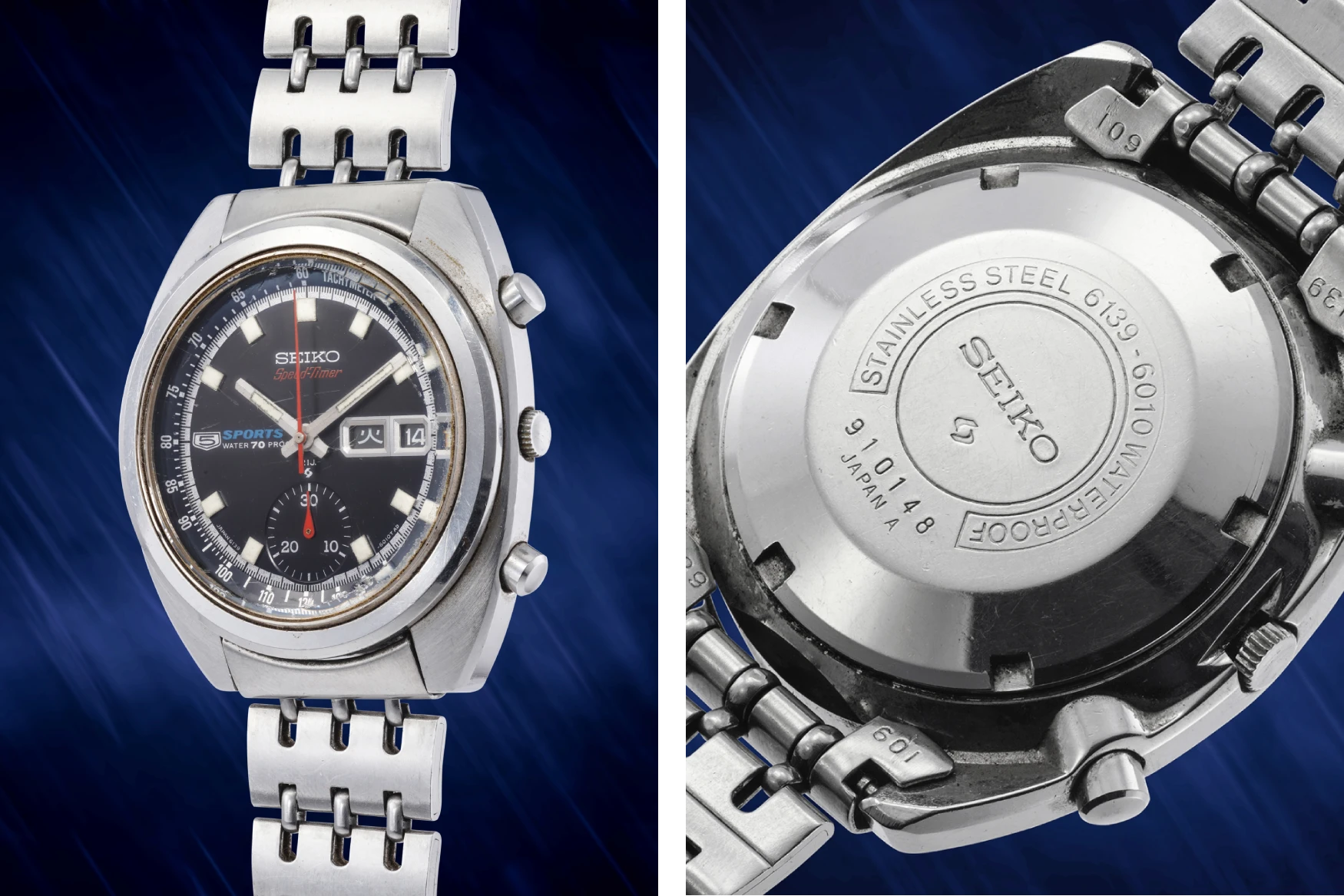
I’ve left what is, in my opinion, the most special of the lot, and the one that inspired me to write this article. My love for the 6139 is well-documented, but the watch that Phillips is auctioning off is no mere Speedtimer. For starters, this is a “Bruce Lee” variant, the nickname arising from the black-dialled Seiko chronograph worn by the martial artist, though likely not the exact model he wore. This one differs by the “Speed-Timer” branding, “5 Sports” logo, and a Japanese date wheel, whereas Lee’s would’ve probably been a “PROOF/PROOF” model with a Hong Kong date wheel.
What makes this watch special is that its serial suggests it is among the earliest 6139-powered watches ever. Phillips notes that the January 1969 date is the “earliest known surviving example”, and that could very well be true, as I’ve only seen dials and casebacks dating as early as (and earlier than) this, rather than complete watches. Given that the dial and case numbers match, this one seems to be in pristine shape, with the correct two-piece chrono seconds and original bracelet. This would also strengthen the 6139’s claims as the first automatic chronograph, though I have a feeling that story will never have a conclusion.
Time to light the beacons and summon DC Vintage Watches – this is what Nick had to say: “While I would strongly disagree January 1969 was the earliest Seiko’s iconic 6139 was offered (I myself have a 6139 dial from a November 1968 example, predating the Phillips example), finding one from January 1969 is certainly no easy task. We’ve handled thousands of late 1960s/1970s Seiko 6139s in nearly 15 years of business, which has included perhaps a dozen or so 6139s from January and February 1969; starting in March 1969, as the Seiko 6139 grew in popularity in Japan, more were made and surviving examples became much more common.”
Estimate: hands off, this one’s mine