


Why the Lang & Heyne Georg “Penny Watch” Edition is a collector‑led milestone for Korean watch culture
Jason LeeWe, as collectors, are naturally drawn to stories. Specifications matter, of course—but what stays with us is narrative: why a watch exists, who made it, and what values it carries forward. Perhaps that is why so many luxury brands now foreground the tales behind their traditions and aesthetics. At Time+Tide, our job is to surface those stories with clarity. In Seoul, one story in particular has been gathering momentum: the rise of Penny Watch—and a community‑directed collaboration with Lang & Heyne that marks a notable moment for Korean horology.
A collector, a platform, and a community

Penny Watch—real name Sang Moon Lee—is best known for his Instagram presence, where more than 38,000 followers track a steady cadence of wrist shots, macro details, and reflections on independent watchmaking. Social feeds, though, are only the surface. Lee is an independent watch blogger with a wide orbit in the South Korean luxury space. He also runs a membership‑based community also called Penny Watch that hosts GTGs, connects brands and collectors, and offers consulting to those navigating the higher tiers of collecting.

The impetus for the group is straightforward. In Korea, luxury watches are often perceived primarily as status objects; that perception can be an obstacle for enthusiasts who want to discuss finishing styles, movement architecture, or the finer points of restoration without the weight of social signalling. As Lee explains it, that gap—between private passion and public perception—was the reason to create a deliberate space where collectors could meet, share reliable information, and enjoy watch culture in person.
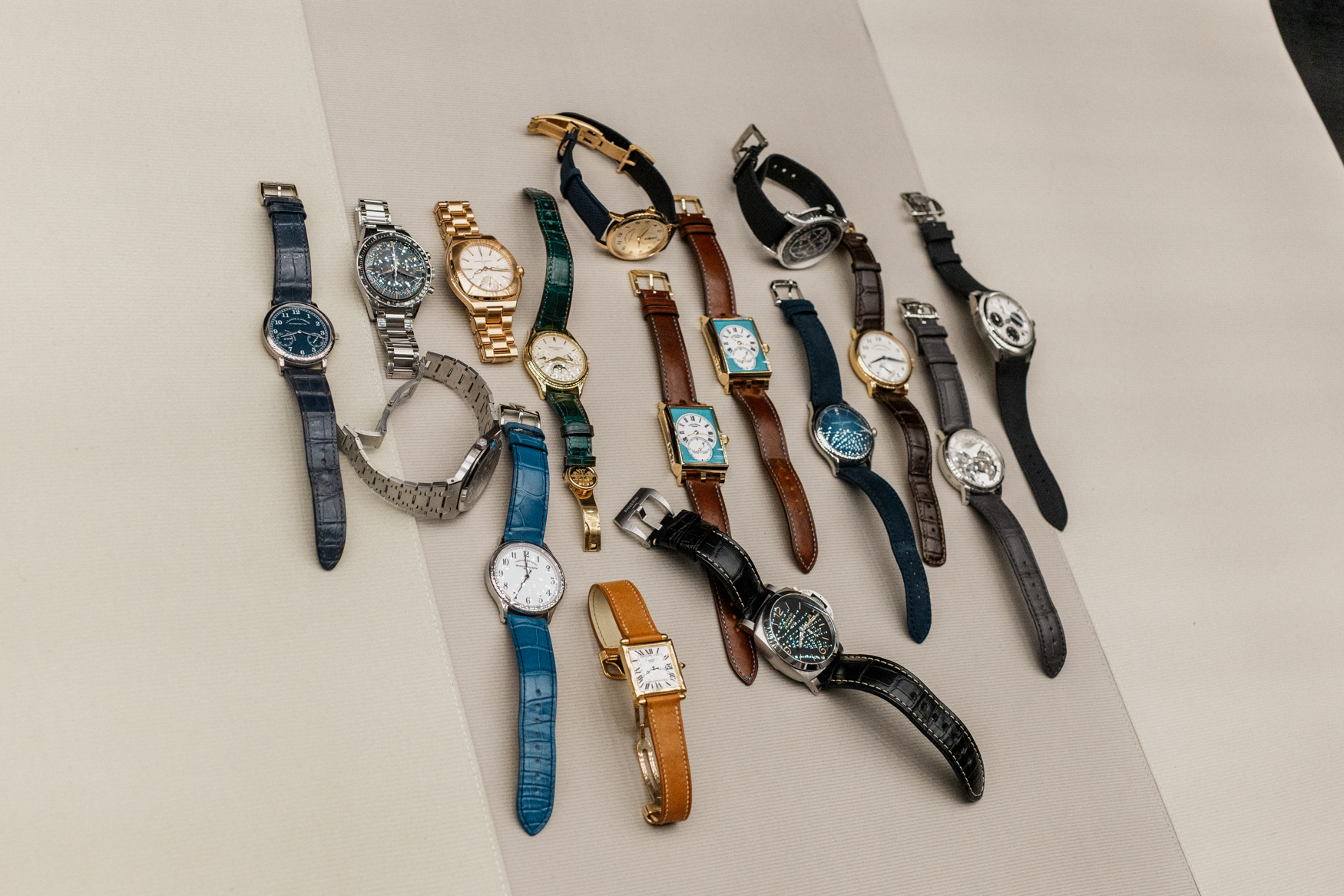
In a landscape that has sometimes lacked organised, face‑to‑face communities, Penny Watch has functioned as a bridge. Members gather to handle watches in metal, compare notes on servicing, and trade views on the independent scene. It is not an online forum replicated offline; it’s a practical network that pairs collectors with one another and, when useful, with the brands that interest them. The result has been a tangible contribution to Korea’s collector ecosystem—one that many local enthusiasts recognise.
A limited edition with intent

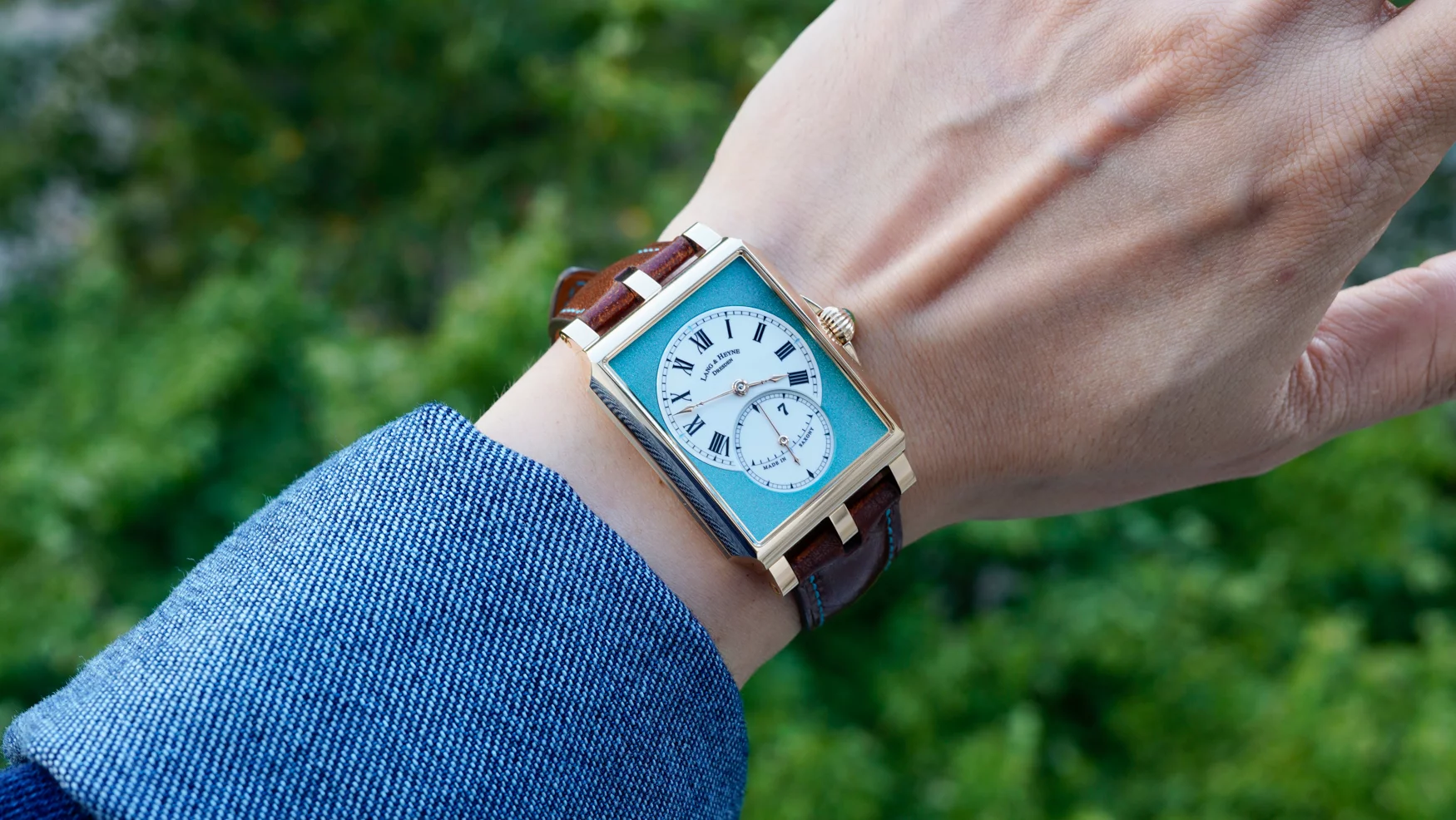
That ecosystem just produced something uncommon: an enthusiast community directing a limited‑edition collaboration with a high‑end independent watchmaker. The watch— the Lang & Heyne Georg “Penny Watch” Edition—is limited to seven pieces. More than a club memento, it signals that Korean collectors are organising around shared standards of craft and aesthetics, and that they are prepared to commission work that meets those standards.

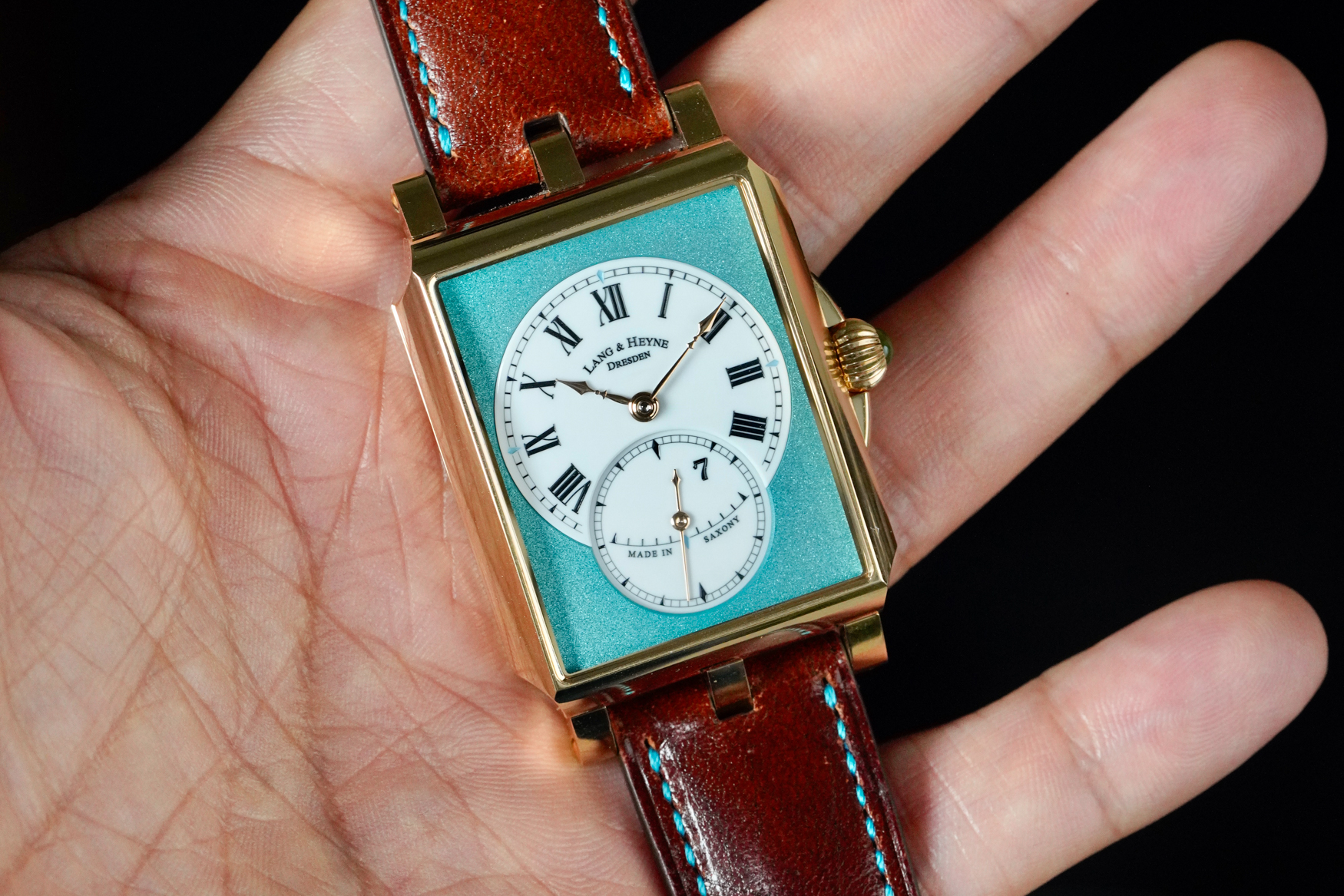
Community‑driven editions are not new globally, but they are rare, and rarer still with a house like Lang & Heyne. The significance here is twofold. First, as far as the community is aware, this is the first collaboration in Korea between a local collector group and a high‑end independent maker. Second, the Penny Watch project is not a sticker‑and‑caseback exercise; the group shaped the watch’s design language in meaningful ways. The dial layout, colour scheme, hands, and crown cabochon were all selected by the community. The movement carries bespoke engravings—notably “One of 7”—that tie the piece to Penny Watch’s 7th anniversary.

The strap is also part of the brief. Working closely with the head of 109 Leather Atelier over several months, the group commissioned a dedicated strap specification for the edition. The result is not simply an accessory swap, but a material decision that completes the chosen palette.
Why the Georg—and why Lang & Heyne?
Lee’s connection to the project begins at the model level. The Georg was the first Lang & Heyne reference that caught his eye, and it remained on his longlist. When it came time to design an edition, the choice aligned: a classically composed, time‑only watch with strong architectural cues, ready to host targeted changes without losing its identity.
On the brand side, timing and exposure mattered. When a local retailer became a Lang & Heyne authorised dealer in 2024, members had the opportunity to study the watches closely at a showcase. The response, according to Lee, outpaced reactions to other independents. The ensuing conversation—“What would a Penny Watch edition look like?”—gradually became a serious proposal.

There is also a craft rationale. Lang & Heyne’s output is deliberately small, and the company’s approach is rooted in traditional, hand‑driven finishing. More than 90% of the movement in the brand’s typical practice is manufactured in‑house. For a community that values distinctiveness and process, that level of verticality and bench time has weight.
The palette: Korean jade to emerald green

The Penny Watch edition begins with colour. Lee describes the first design meeting as a discussion about tone: what hue would carry cultural meaning yet remain legible and enduring? The answer was to look to traditional Korean jade, translating that cool green spirit into a contemporary emerald.
Colour choice on its own can be nothing but cosmetic. Here it is anchored by surface. The dial carries a givré finish: a texture achieved by sandblasting a silver‑plated main plate. The process leaves a fine, tactile grain that still reflects light with a soft metallic sheen. A transparent lacquer layer amplifies the effect without deadening the underlying material. Under direct light, the surface reads as layered rather than flat, which suits the Georg’s measured proportions and restrained typography.

Hands and indices follow suit: crisp, legible, and calibrated to the dial’s reflectance. The decision to specify a crown cabochon adds a precise accent—small enough not to pull focus, distinct enough to make the daily ritual of winding feel intentional. The caseback engraving, “One of 7,” states the edition without flourish: a watch made to be worn daily can carry a limited number without turning into a commemorative plaque.
The strap, developed with 109 Leather Atelier, completes the brief. Rather than default to an off‑the‑shelf option, the group worked through leather selection, thickness, and stitch treatment to achieve a profile that sits correctly on the wrist and in proportion to the lugs. The point is not luxury for its own sake, but coherence—each material nods to another.
A brief history: Lang & Heyne in context

A few signposts clarify why this collaboration resonates with collectors who follow independent watchmaking. Lang & Heyne was founded in 2001 by Marco Lang and Mirko Heyne. The brand soon appeared at the AHCI booth at Baselworld 2002, and Marco Lang became a full AHCI member in 2005. After Mirko Heyne left early on to join Nomos Glashütte as Head of R&D, Marco Lang largely steered the company.
In 2019, Marco Lang departed to pursue a new chapter under his own name, and Lang & Heyne entered a period of transition. The continuity came in the form of Jens Schneider, a veteran of the German watch industry. His résumé spans the early 1990s at VEB Glashütte Uhrenbetrieb (the precursor to Glashütte Original), key development work at A. Lange & Söhne (including the Zeitwerk), and later, a role as Head of Construction at Moritz Grossmann. After establishing his own workshop in central Glashütte, Schneider deepened his involvement with Lang & Heyne and now serves as master watchmaker.

For collectors, those details aren’t trivia—they speak to continuity of German watchmaking character: three‑quarter plates, sensibly engineered motion works, and finishing that reads as intentional rather than theatrical. That is the environment into which the Penny Watch edition was born.
A collecting philosophy that favours the independent

Lee’s personal collection explains the edition’s tilt toward craft. He focuses primarily on independent watchmakers and pieces that are both distinctive and high‑quality. Among his current 14 watches are: an F.P. Journe Tourbillon, the Grönefeld 1941 Remontoire, Parmigiani’s Ovale Pantographe, A. Lange & Söhne’s Zeitwerk Lumen, Jaeger‑LeCoultre’s Reverso Tourbillon, the Audemars Piguet Royal Oak 15202, Blancpain’s Fifty Fathoms Trilogy, Louis Vuitton’s Tambour Automatic, and Jaeger‑LeCoultre’s Atmos Infinity.
The through‑line is not brand name for its own sake; it is engineering personality, finishing language, and, often, a technically interesting mechanism realized with care. Lee is candid about the practical discipline behind that curation. If he hasn’t worn a watch for more than a year, he considers selling it. He tends to collect around a theme, and he buys against a short list of criteria: first quality, then rarity and uniqueness. Past phases have included brand‑ and movement‑driven collecting as well as a neo‑vintage focus; the current phase elevates independent voices for their distinctiveness and the way they express ideas not commonly found at larger maisons.

This perspective also clarifies why a community edition makes sense now. After visiting independent workshops in Switzerland, Lee left with a renewed sense of the category’s strength—its clear identities and surprisingly high quality at the bench. A limited collaboration with a maker that exemplifies those virtues is a logical extension of what the group values and discusses.
Why this matters beyond the seven owners

It is tempting to see a seven‑piece edition as a private celebration. And to an extent, it is: the owners will experience the watch in ways that others cannot. But the signal of this project reaches further. It tells brands that the Korean collector base is more diverse and mature than the high‑street stereotype suggests. It tells communities elsewhere that a grounded, in‑person network can scale up from sharing information to shaping objects. And it tells new collectors that participating in culture doesn’t require waiting for top‑down permission—thoughtful bottom‑up initiatives can have an impact.
There is also a quiet educational effect. A watch like this pulls attention toward finishing techniques (what, precisely, does givré look like under changing light?), to dial colour decisions (why emerald rather than a more obvious sunburst green?), and to details like the crown cabochon (how small touches influence the daily hand‑winding ritual). Conversations that begin with aesthetics often lead to movement construction, serviceability, and the craft lineage behind a brand. That is culture in motion.
The personal dimension

When asked to reduce it all to a sentence, Lee offers a simple line: “For me, a watch is life.” In practice, that translates to attention to detail, to daily wear, and to the idea that watches should enrich ordinary routines rather than sit apart from them. The Georg “Penny Watch” Edition is a physical expression of that stance. It avoids showmanship, focuses on materials and finish, and carries a cultural reference in its colour without turning symbolic.

It also functions. The decisions around texture and hand shape are aimed at legibility; the strap was tuned for comfort over long wear; the crown cabochon makes winding tactile and repeatable. These are small things, but collectors know that small things are what you feel most acutely across months and years.
Looking ahead

What happens after seven watches? Ideally, nothing dramatic. The better outcome is incremental: more cross‑talk between Korean collectors and independent ateliers; more local GTGs where the discussion ranges from oils and tolerance stacks to typography and proportion; more confidence among communities to commission thoughtfully when the fit is right.
For us here at Time+Tide, that is the story worth passing on—not as an endpoint, but as a reference point for what collector culture in Korea can be when it is organised, curious, and focused on the work at the bench as much as the photos on the feed. If the measure of a collaboration is the clarity of its intent and the quietness of its execution, the Georg “Penny Watch” Edition meets the brief. It tells a clear story, and it does so in the language collectors know best: proportion, texture, and time.
Lang & Heyne Georg “Penny Watch” Edition pricing and availability
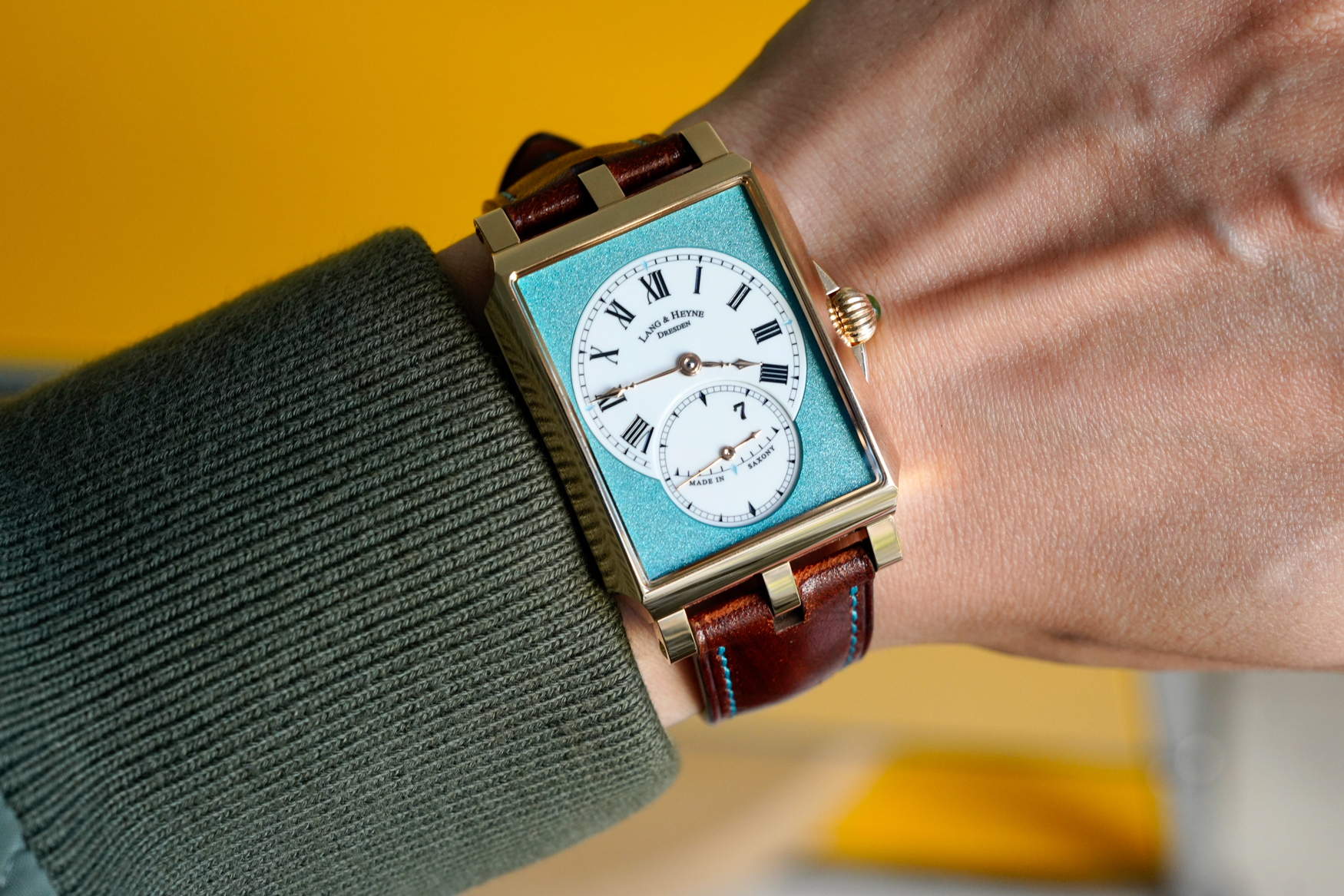
The new Lang & Heyne Georg “Penny Watch” Edition is limited to 7 pieces and exclusively available at Collector’s House, a local Lang & Heyne authorised dealer based in South Korea. All 7 pieces are currently spoken for. Price: ₩101,250,000 (~US$71,655)
| Brand | Lang & Heyne |
| Model | Georg “Penny Watch” Edition |
| Case Dimensions | 40mm x 32mm (D) x 9.4mm (T) |
| Case Material | 18k rose gold |
| Water Resistance | 30 metres |
| Crystal(s) | Sapphire front and back |
| Dial | Pastel-turquoise dial with givré finish; silver‑plated ceramic main plate |
| Lug Width | 20mm, triple-lug design |
| Strap | Tobacco ecbatana leather strap with emerald green stitching; black alligator strap |
| Movement | Calibre VIII, in-house, with Georg “One of 7” engraving |
| Power Reserve | 55 hours |
| Functions | Hours, minutes, small seconds |
| Availability | Limited to 7 pieces, sold out |
| Price | ₩101,250,000 (~US$71,655) |