


Dual-register chronographs are not very useful – we need more three-register chronos!
Andrew O'ConnorI think there will be little argument on whether or not dual-register chronographs are aesthetically pleasing. Whether it is a vertical or horizontal layout, the design is inherently symmetrical, thus appeasing the masses that demand symmetrical watches. Three-register chronographs can be tricky, though. While I think most do prefer the registers at 3, 6, and 9 o’clock, thus maintaining symmetry, the traditional Valjoux 7750 layout with registers at 12, 6 and 9 o’clock puts the visual weight on one side, and thus is not preferred by many.
My biggest pet peeve when it comes to chronographs, however, is not the visual layout, but the functionality. While dual-register chronographs can be very pretty, they are not very functional, as they often forgo a 12-hour or additional counter in favour of aesthetics. While mechanical watches are not ‘necessary’ any more, their tool-oriented origins should take precedent, and brands should make more 12-hour chronographs available!

My vendetta against most two-register chronographs has little to do with the aesthetics, and everything to do with most of them are only able to measure events up to 30 minutes. While it can be useful for some tasks, I find that most things that I’m doing that I want to time with a chronograph are longer than 30 minutes. Timing my runs, measuring my practice time for the day, settling bets with my spouse about how long it takes to put IKEA furniture together… All usually take longer than half an hour. Events that are less than 30 minutes, or between 30 minutes and an hour, are better served with a rotating bezel, hence why my dive watch is usually my cooking watch!
Also, I find that many things less than 30 minutes are better served with a countdown timer rather than a chronograph (a great excuse for an alarm watch, however). For timers, I do rely on my phone or smartwatch, as they are simply better suited for the job.
I am a big fan of actually using your watches. I’m sure we can all agree that we should wear our watches, but I mean actually using them for something at least remotely associated with their intended use. Have a dive watch? Take it swimming (rotating bezels make great pace clocks for lap swimmers). Have a GMT watch? Take it somewhere at least one time zone away on a regular basis.
With a chronograph, I would want to be able to time things! I want to take it running, I want to use it to help keep my practice journal, and I want to win those bets with my spouse! 30 minutes is consistently not enough in these instances, thus many wonderful watches get tossed in the hypothetical “no pile” for me.
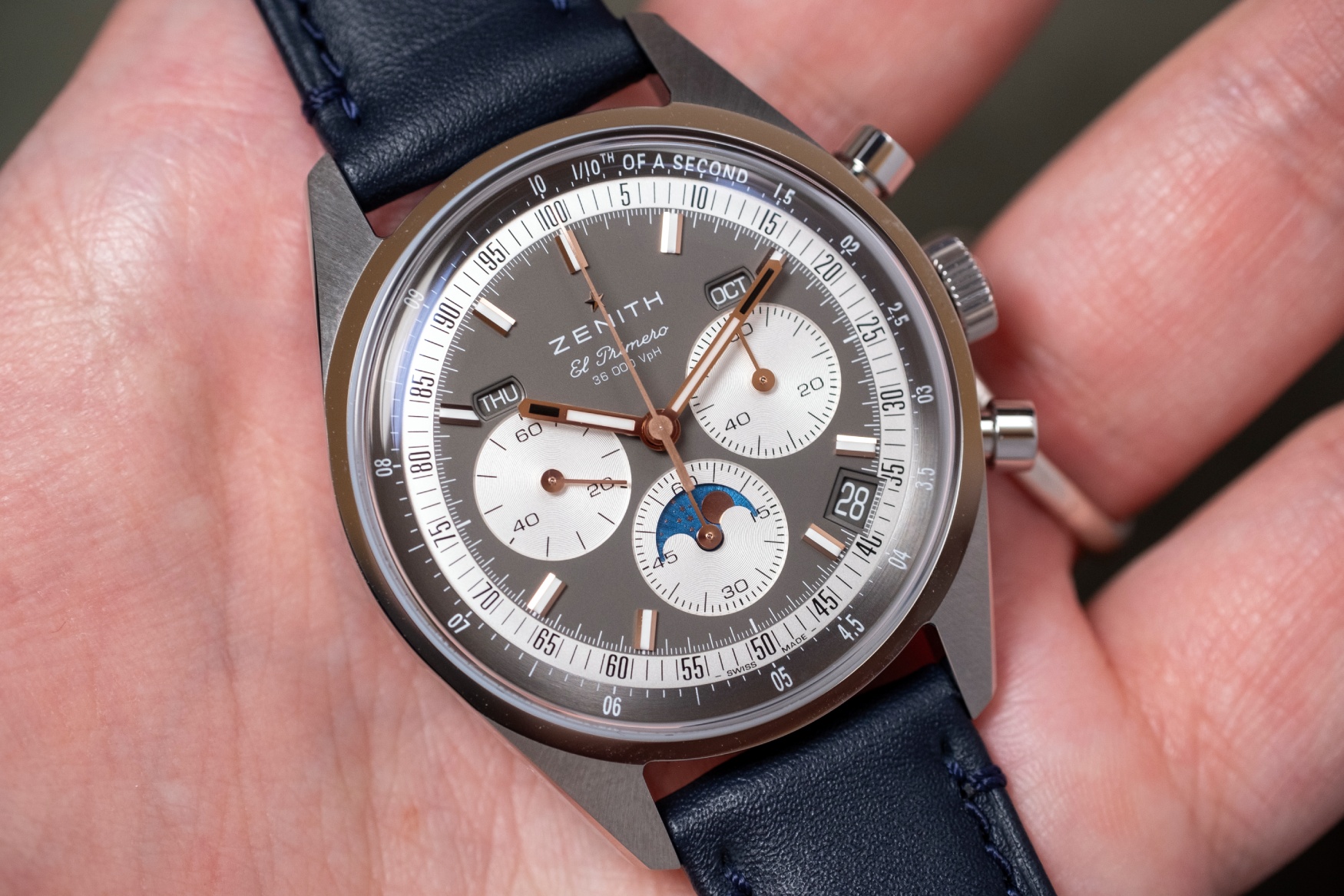
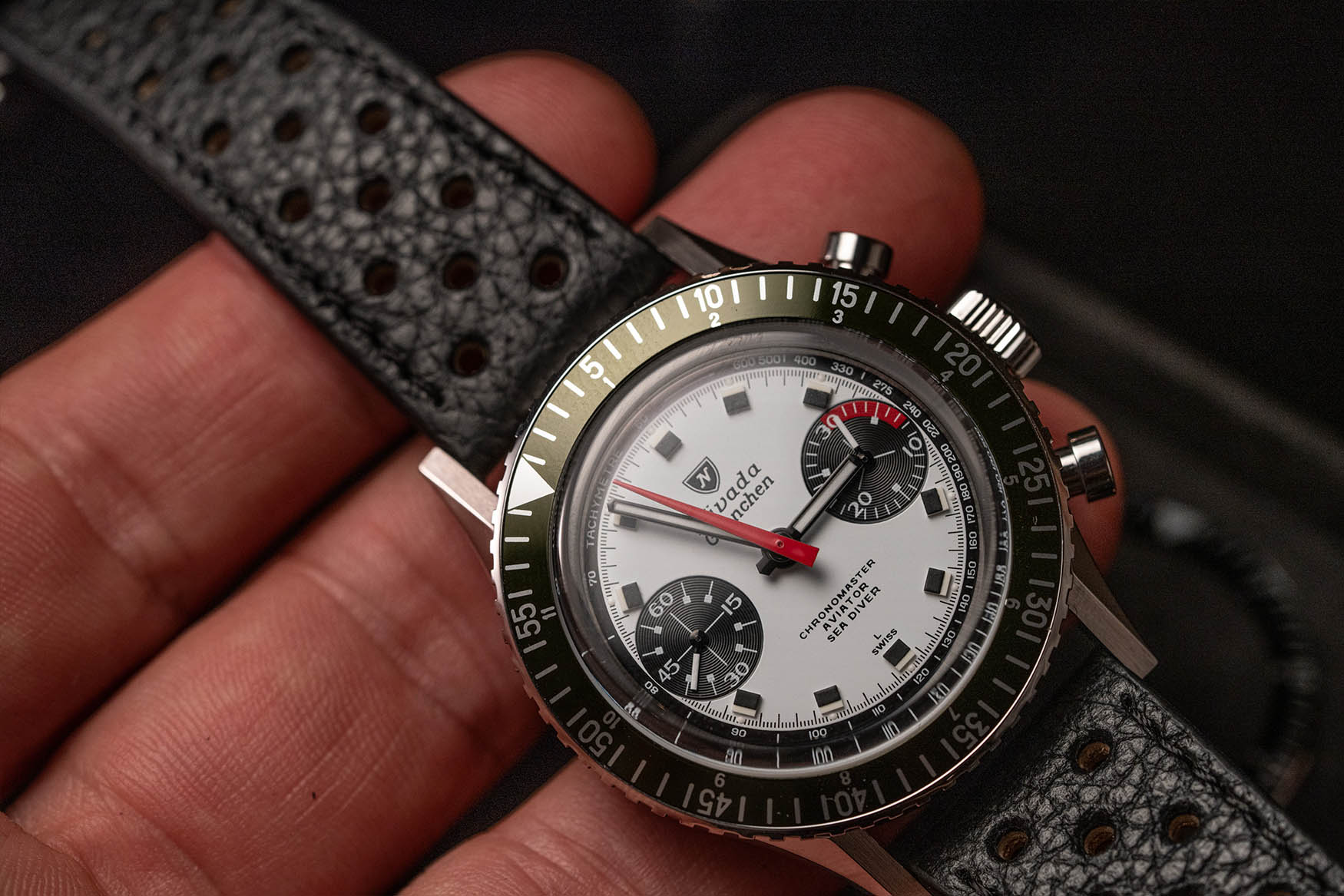
The inability to measure elapsed hours has made this pile disappointingly large in my eyes. Many micro and independent brand chronographs are out, such as the Nivada Grenchen Chronomaster range. Zenith’s Triple Calendars are out, as it only measures up to sixty minutes. The Jaeger-LeCoultre Triple Calendar is gorgeous, but sadly, it is also out.
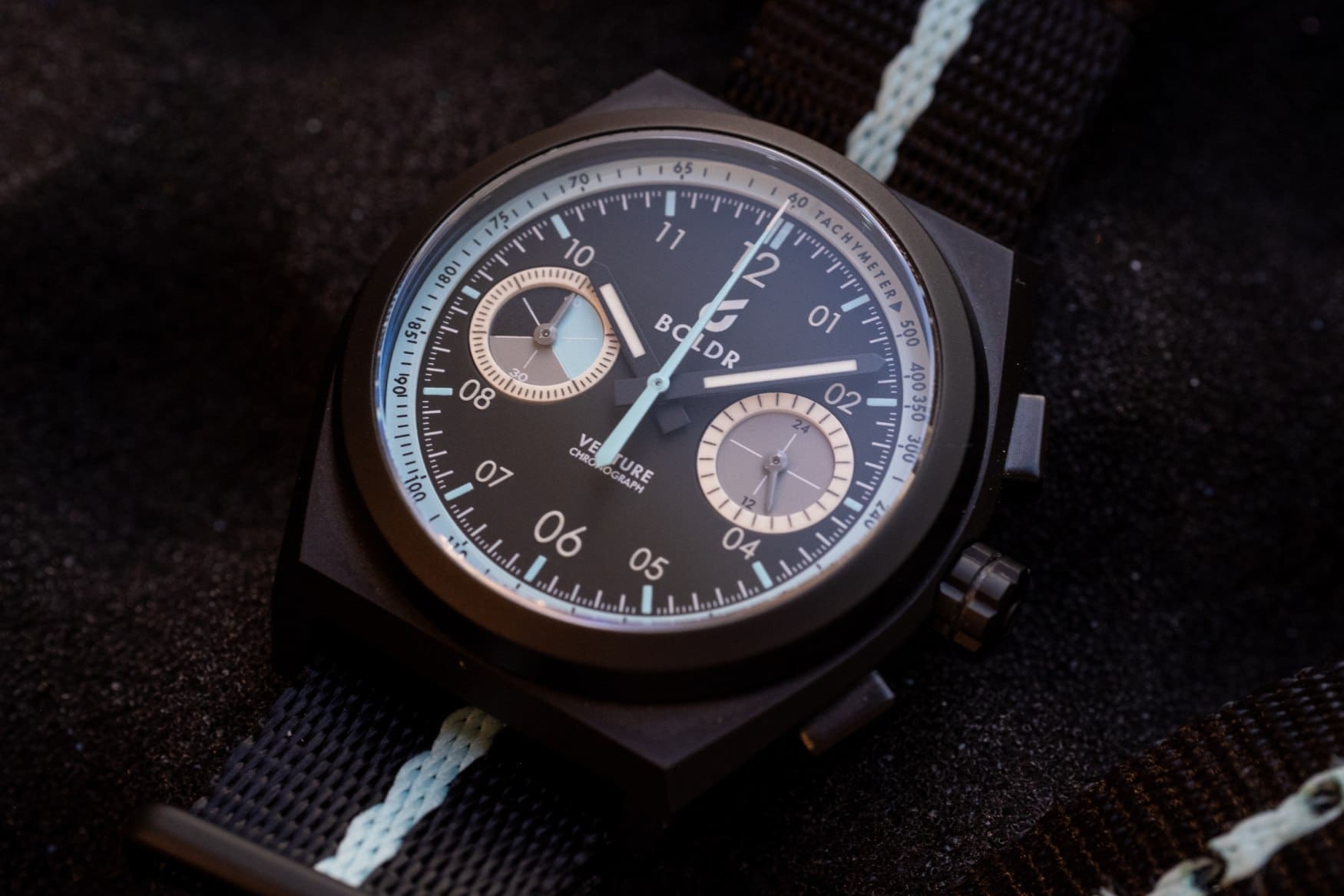
I also find the proliferation of quartz or mechaquartz chronographs with a 24-hour/day-night indicator register equally annoying. I don’t have much use for a day-night indicator, and the fact that some brands remove the running seconds and keep the chronograph minutes and 24-hour display clearly demonstrates to me that the design is about aesthetics and not function.
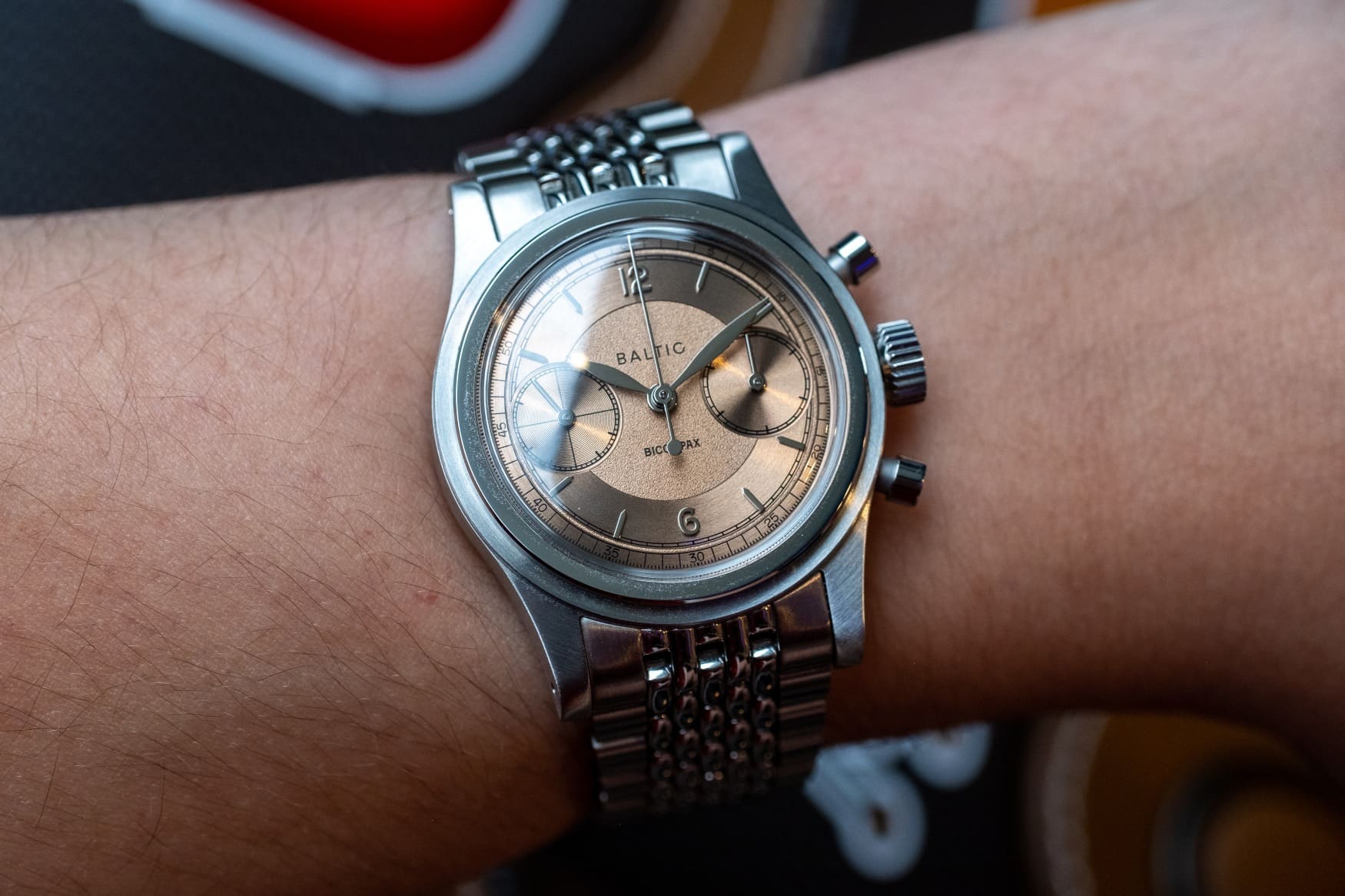
I do understand that we largely buy watches for their aesthetic beauty, but it would bother me greatly to have a watch in my personal collection and for it to go unused and then consequently unworn. I have a Baltic chronograph with the ST1901 movement currently, and while it is also gorgeous, I don’t wear it often for this reason.
Not too long ago, I kind of understood why. With so many independent brands entering the space, there did not seem to be an accessible 12-hour chronograph movement available. The Sea-Gull ST1901 is a great entry-level chronograph movement, and Sellita has a number of great options that are more premium. However, Sellita also has a three-register, 12-hour chronograph calibre available, in a variety of configurations.
I do not think there is much cost difference between a two-register and three three-register chronograph movement from Sellita, given the retail prices of watches using these movements. So there is no excuse! I’m sure someone, somewhere, has the sales data that two-register chronographs sell better than three-register chronographs, but from the focal point of being able to assemble a three-register chronograph with relative ease, it can be done.
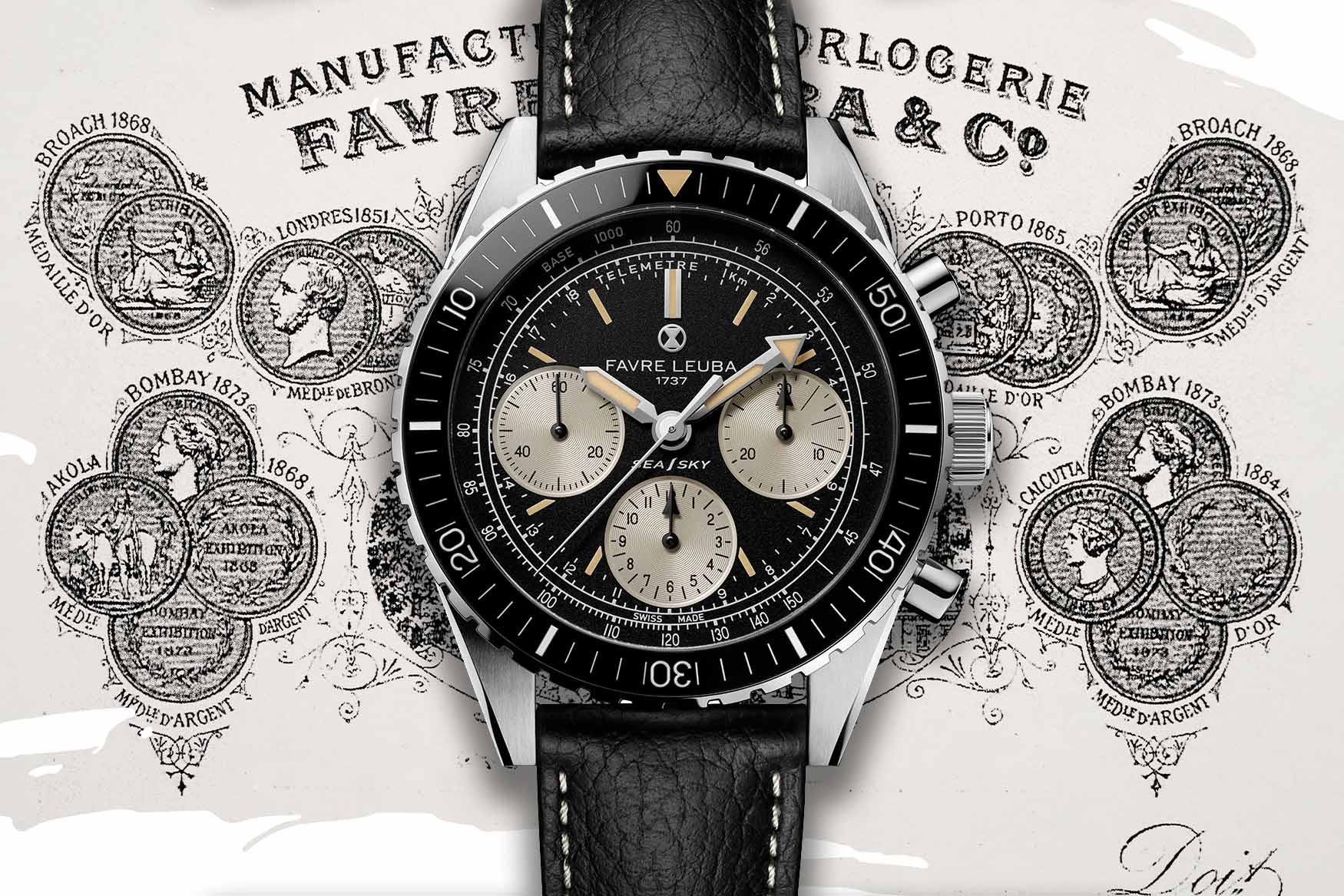
Many of the watches that I see are also heritage-inspired designs, resurrecting references that were dual-register 30-minute chronographs. For the sake of historical accuracy, I understand. However, taking vintage chronographs from the 1960s as an example, there are also three-register chronographs from the same period! So again, there is precedent to make those available as well.
As I have harped on earlier, my problem isn’t with one layout being inherently better than the other; it is purely based on the ability to time events longer than 30 minutes. Ideally, I would like to time events over an hour. I have seen chronographs with a 6-hour totalizer in the past (for example, the ETA calibre C01.211 used in some Swatch and Tissot watches), but because of the inherent nature of how we tell time, most chronographs that can measure hours have a 12-hour totalizer.

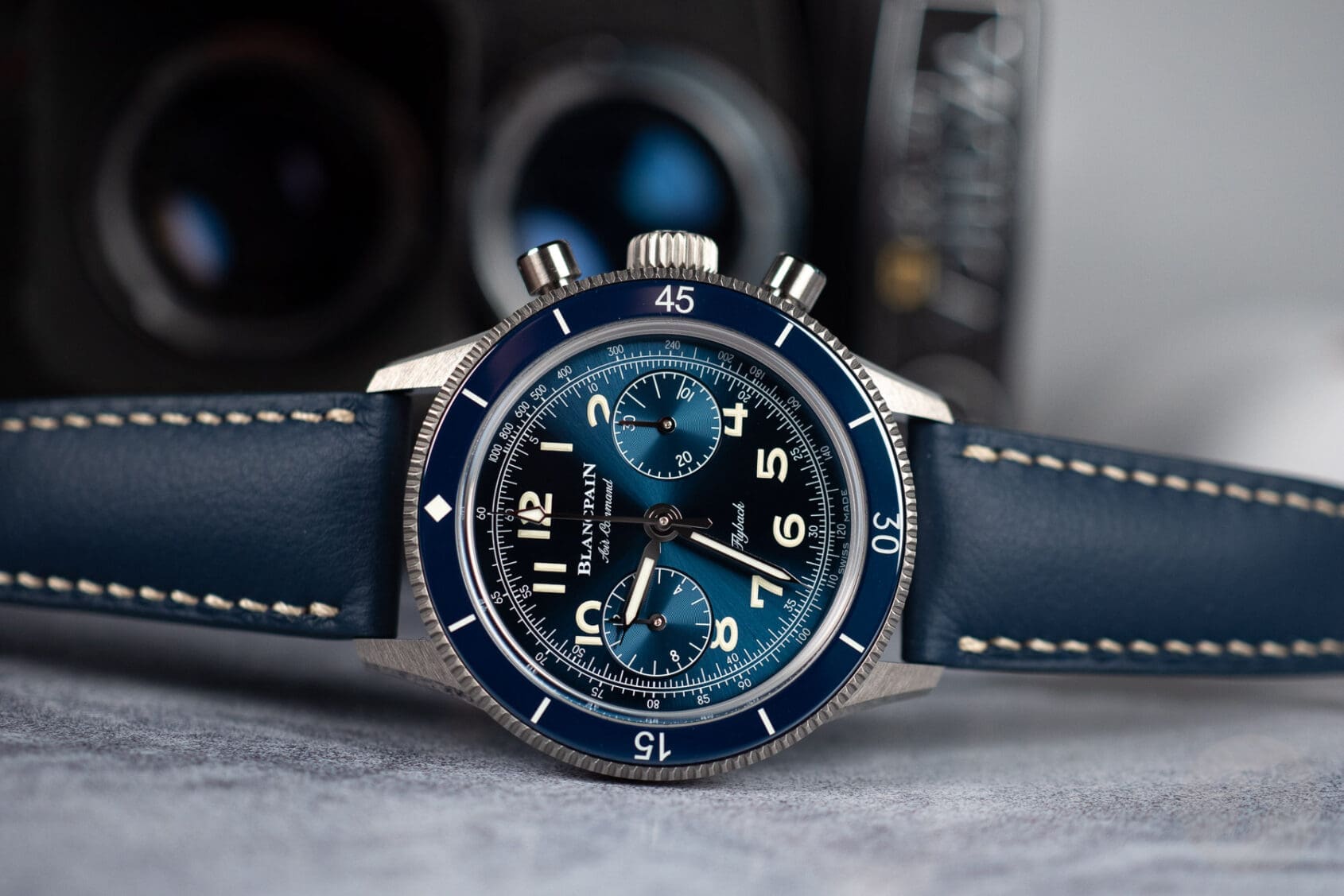
There are some watches that accomplish this with a dual-register layout, such as Omega Two Counter Speedmasters (’57, Chronoscope, Pilot) and Blancpain Air Command. The Omega 99XX series movements feature the chronograph hours and minutes on the same sub-dial, allowing for the elapsed time to be read the same as you would read the time of day. The Blancpain Air Command references remove the running seconds display, which makes for a balanced dial, but removes the ability to tell the watch is running from the dial side.
There are also a number of TAG Heuer chronographs that have the running seconds at six o’clock, with the register on the same plane and same colour as the rest of the dial, mainly serving as an indication that the watch is running as opposed to accurate time keeping. The chronograph hours and minutes are clearly delineated with contrasting sub-dials, giving the look of a dual-register layout without compromising the running seconds. Many symmetrical three-register calibres based on Valjoux or Lemania architectures have the running seconds at 9 o’clock, making it not so simple to remove the running seconds and have a symmetrical display.

Omega, Blancpain, and TAG Heuer are large brands with budgets to develop/rework calibres to provide a symmetrical layout. Maybe, someday soon, Sellita will develop a two-register 12-hour horizontal chronograph calibre for the masses (the SW500 BV c calibres feature a vertical two-register layout with a 12-hour display, which would make for a very fun bull-head for someone out there!)
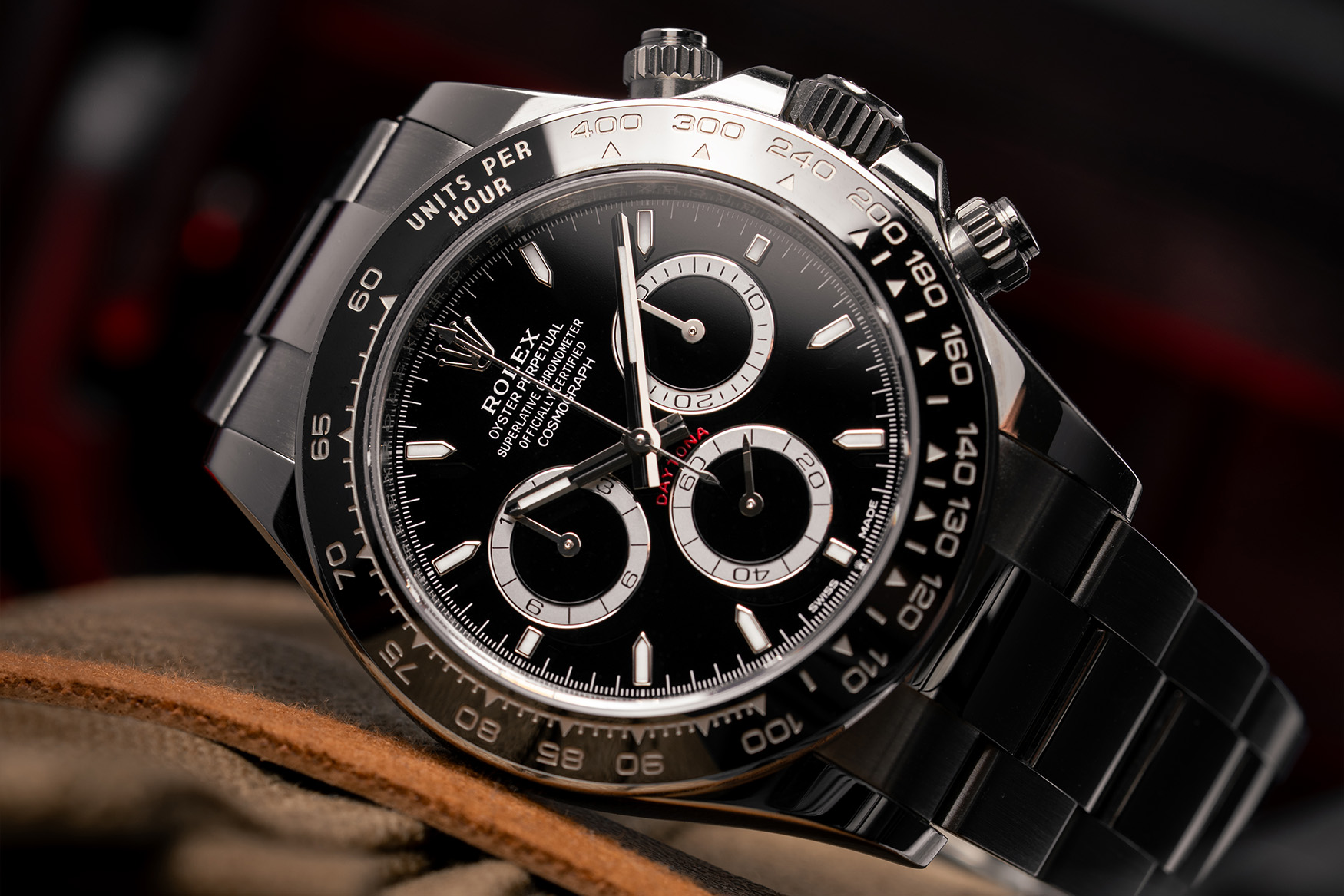
I do realise I have plenty of 12-hour chronograph options out there, but many are too large for me, too expensive, or simply do not appeal to me from a design perspective. 12-hour mechanical chronographs that are under 40mm and relatively affordable are few and far between, relatively speaking. While many small brands are nailing the designs and dimensions, the seemingly broader preference for two-register 30-minute chronographs makes me a little sad, when one extra register at 6 o’clock would not ruin the design.
So please, watch brands, I implore you to start offering more 12-hour chronographs. They are more practical and can be equally as stunning as their two-register counterparts. I do think doing so will have more owners engaging with and using their watches, which only deepens our connection to our watches.
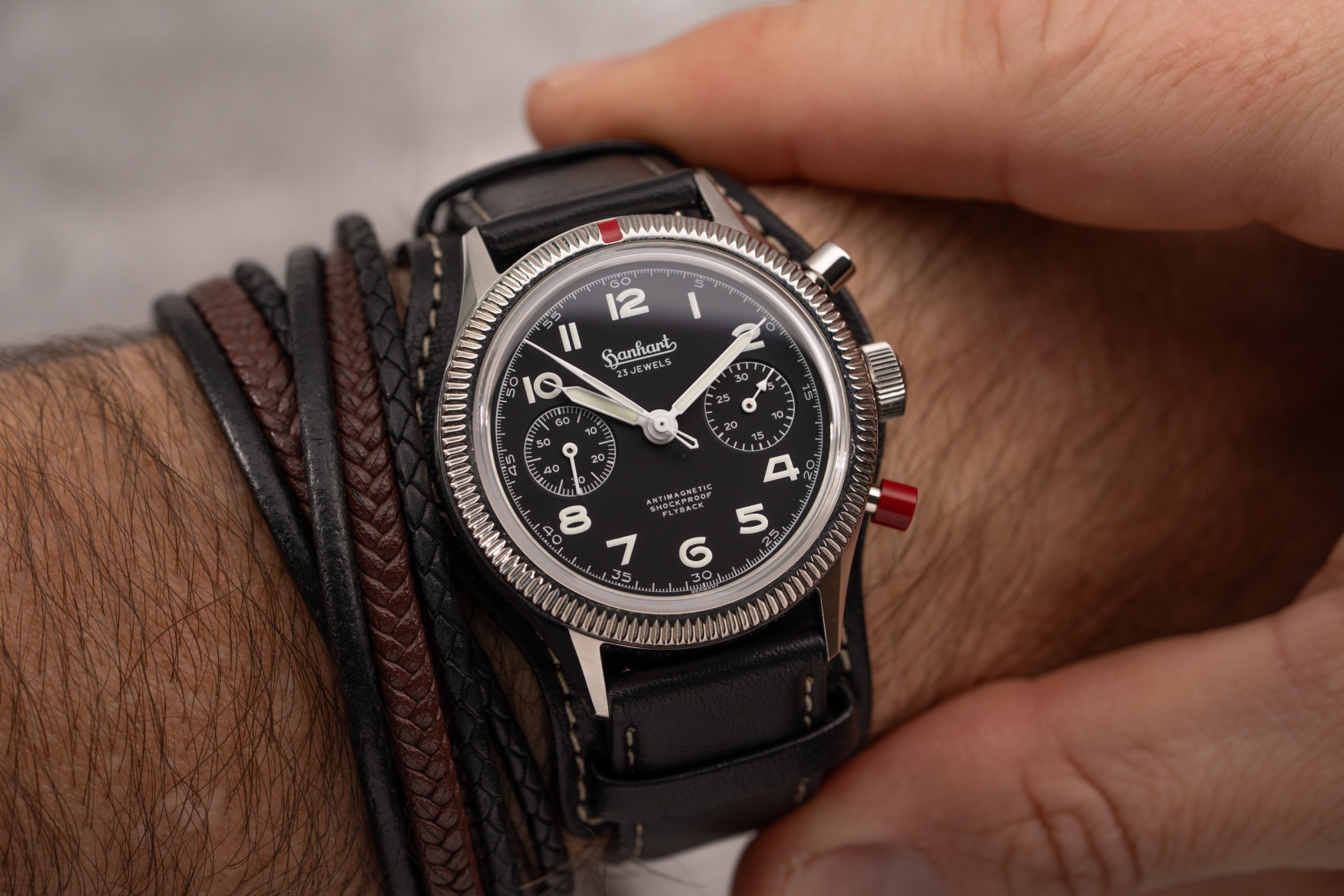
I will give an exception to flyback and rattrapante chronographs, as flyback chronographs are focused on timing events in rapid succession, and rattrapante chronographs are designed to see the difference between two events (i.e. two cars passing the finish line). For both of these, timing short events is the focus, so the ability to time events longer than 30 minutes is not as important. Also, in case anyone was wondering, I am on the team of compax means complication, hence my avoidance of using “bi/tri-compax” when referring to chronograph displays.