


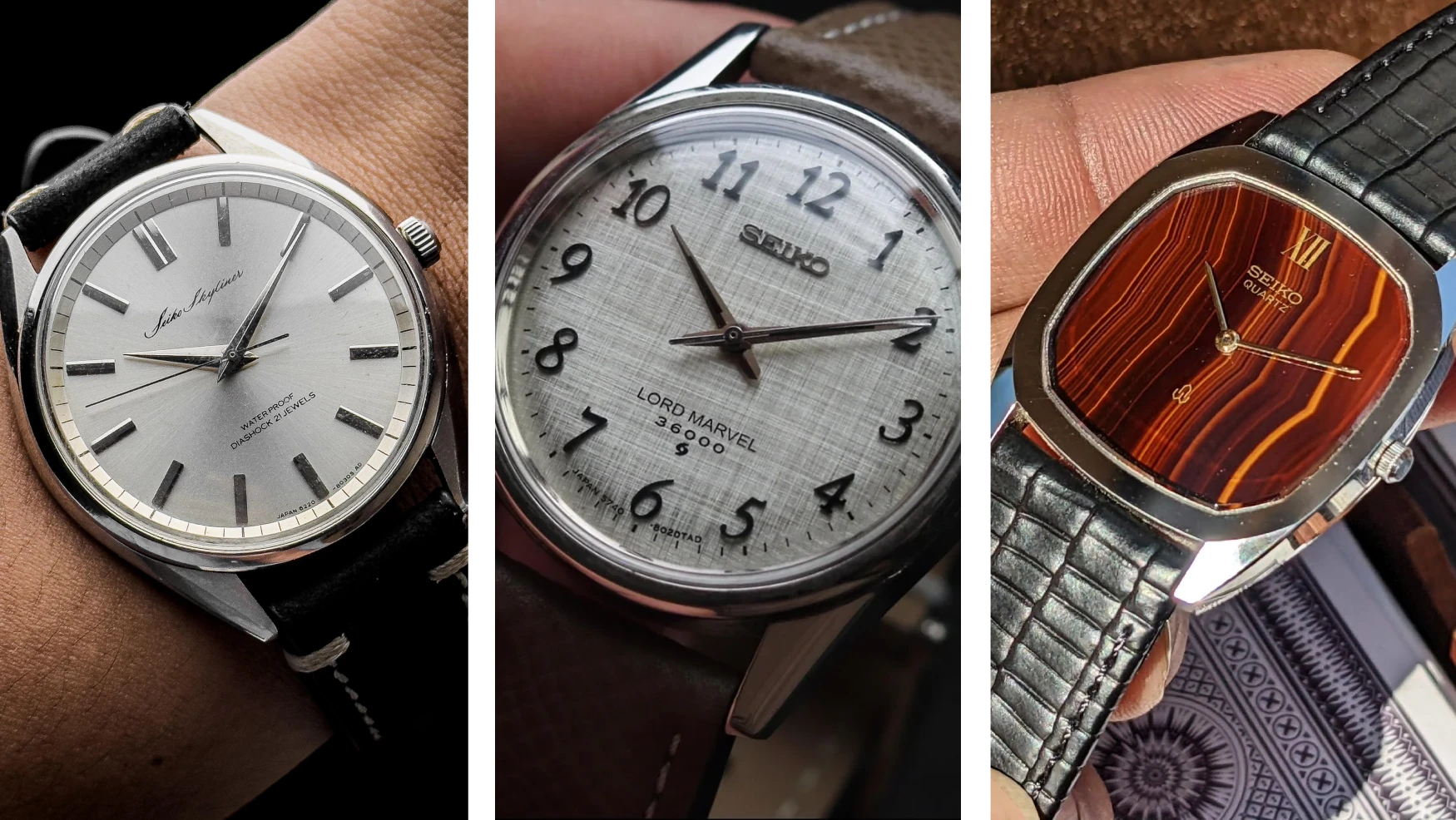
These three affordable vintage Seikos deserve your attention
Borna BošnjakWatch collecting can be a downright miserable affair, with all of its soaring heights easily outweighed by the plunging pits of despair due to high cost, lack of availability, a community of those playing into hype, or a combination of all three and more. Thankfully, Seiko exists. It’s truly the only brand able to offer you a $100 watch and a $10,000 watch, with neither sum sounding too good to be true for what’s on offer.
It may sound like I’m overly praising the Japanese watchmaker, but with so much variety and such a knowledgeable (and usually supportive) community, it’s the perfect starting point for dipping your toes into vintage collecting without breaking the bank, and I really do mean it. If you looked hard enough, you could find such good deals for the watches listed to justify buying one a month. Don’t ask me how I know.
Seiko Skyliner
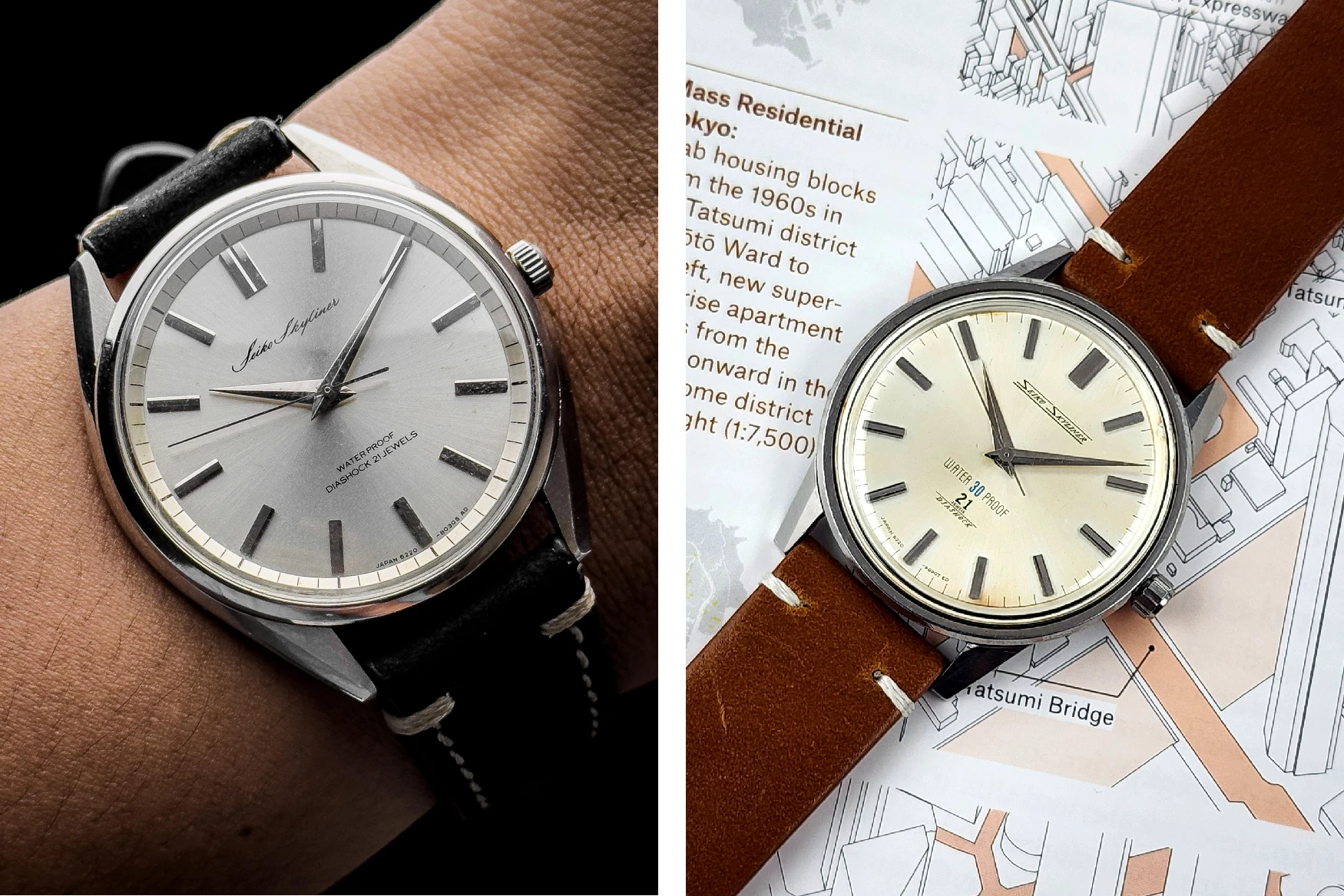
As is clear to any enthusiast, Seiko was on a bit of a roll in the 1960s, spawning the world’s first quartz watch, (arguably but likely) the first automatic chronograph, Grand Seiko, professional dive watches, and so much more. But in the midst of these horological paragons, there was a lot of work to be done to fill the gaps. While vintage Grand and King Seikos still haven’t reached the heights that I believe they will one day, nice examples are becoming less and less affordable. I debated whether to choose the 56KS for this entry, as it still is among the most affordable and plentiful King Seiko variants, but I instead chose a lesser-known name, that of the Skyliner.
The brief is simple: I believe this to be the best way to get a well-designed, manually wound vintage watch if you’re working with a tight budget. We’re talking less than A$500 here. These were made in three distinct generations (or two and a transitional one, depending on who you ask), and while you can’t really go wrong with any of them, I’d start looking at the 1965 ref. 6220-9970 and the two 6222 models from 1967. Just make sure you stick to the steel cases, rather than the gold-plated brass ones.
The ref. 6220-9970 is a great example of how dial text should be done if you insist on putting lots of it on there. The modernist Skyliner logo strangely isn’t out of place at all on this very mid-century-derived design, and the pop of blue in the 30 is just enough to make it interesting. But if you want pure, unabashed elegance, go with the no-date ref. 6220-8010. The script logo lets the polished indices and dauphine hands do the talking against either a sunburst silver or glossy black dial.
Seiko Lord Marvel

The Lord Marvel is widely considered to be the first truly luxury watch made in Japan, and despite its success and long-term production, it was pipped to the top dog spot just two years after being introduced by Grand Seiko. To make it all the more confusing, Seiko actually made the Lord Marvel in solid gold cases before GS changed from gold-filled to solid. With all this in mind, feel free to pick whichever of the Lord Marvel references speaks to you the most, but keep in mind that the earliest models with the prominent, applied “S” at 12 have long left the realm of affordability.
Instead, I’d look to Lord Marvel models from 1967 and onwards, as they feature Seiko’s first-ever high-beat movement (the world’s second, after GP’s in 1966), receiving it before the top-tier Grand Seiko line – for reasons surely only known to Seiko. In any case, it makes for a great story, and the calibre 5740C has made its way into numerous Lord Marvel references – my favourite being the linen-dialled examples with stylised Arabic numerals.
Keep an eye out for stone dials
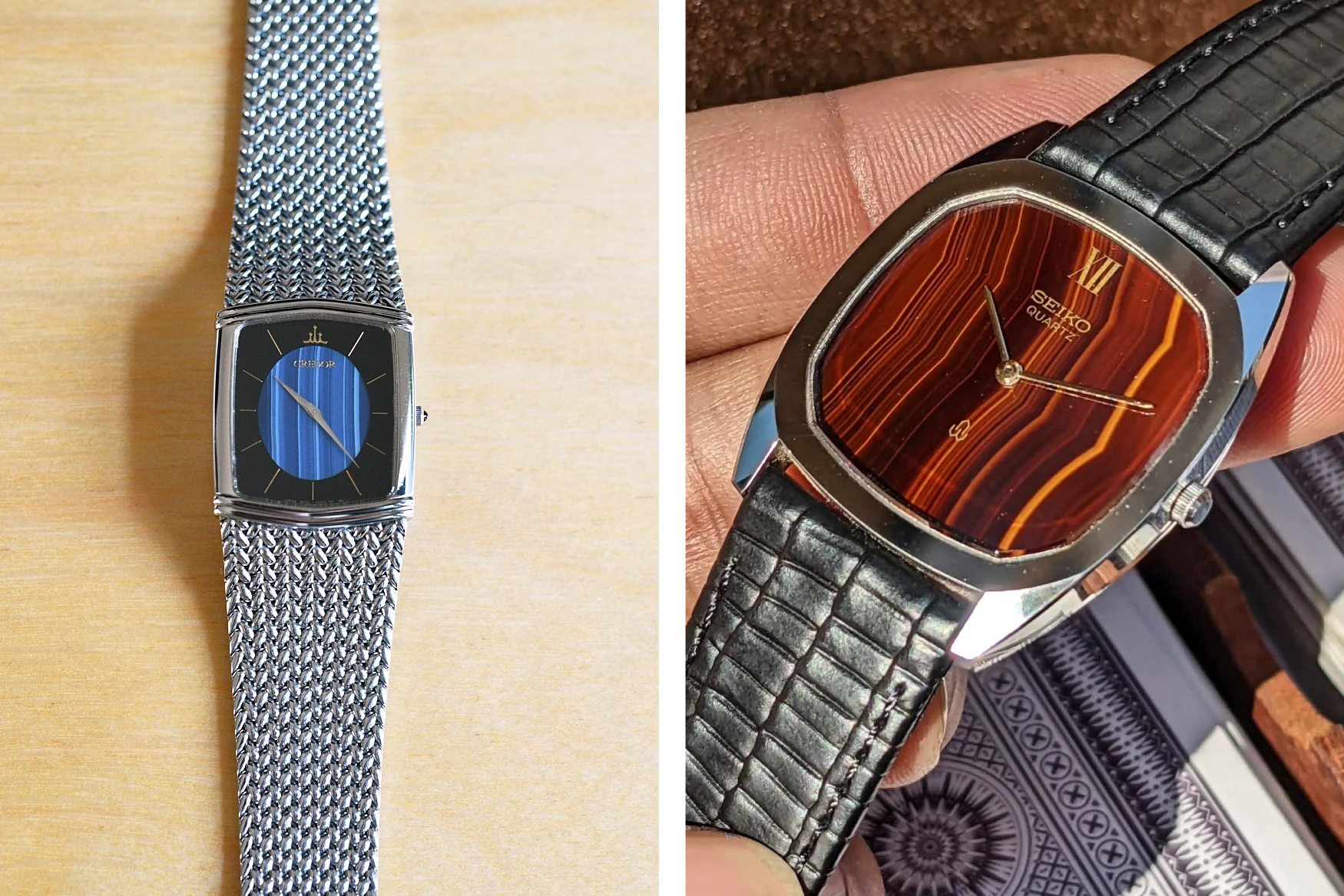
Yes, this is a bit of a catch-all entry, but you’ll thank me for it. We’re now probably cresting the peak of interest in natural stone dials, and while many were busy snapping up vintage Piaget and driving the hype of Toledano & Chan and Berneron, Seiko stayed thoroughly underappreciated. The best thing about them is that, while rare, you can regularly pick them up for well under A$1,000, and sometimes at half that if you snag a deal. What’s more, you don’t have to limit yourself to just the Seiko brand, as there are some stunning vintage Credors with hard stone dials out there.
If you’re after specific references to start your search, one of the most common you’ll come across is the ultra-thin, tungsten carbide-cased ref. 6020-5260. Its main drawcard is its burnt orange sardonyx dial that you’ll find with just a Roman index at 12, opposed by the rather phallic quartz logo at 6 o’clock. Another is one that I’ve owned in the past but had to let go as the integrated bracelet didn’t fit my wrist – but I’m hopping onto the first one I find with a bracelet that fits. I’m talking about the Credor ref. 2F70-5380, sporting a dial combining black onyx and blue agate. Need I say more?