


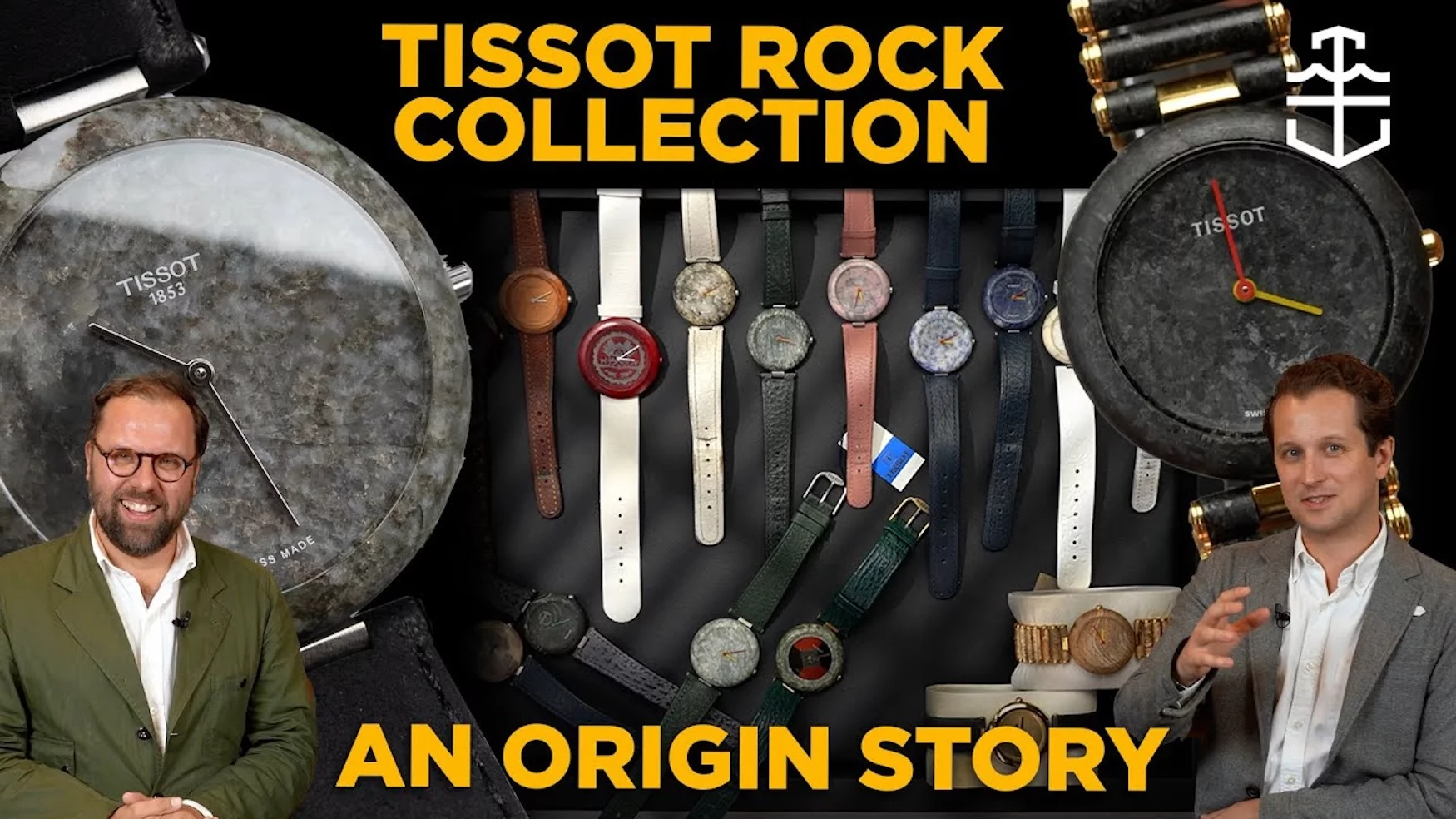
The RockWatch from 1985 – 2025: how Tissot carved out a watch icon
Time+TideThe watch industry loves a good comeback story, but few are as unconventional as Tissot’s resurrection tale from the mid-1980s. Picture this: Ernst Thomke, the mastermind behind Swatch, getting drunk with Tissot executives and declaring, “Tissot needs its own Swatch. We’re going to make a watch out of Swiss rock.” What followed was one of the most audacious gambles in horological history, and now, 40 years later, it’s making a triumphant return.
From crisis to stone: the genesis of an icon
To understand the magnitude of Tissot’s gamble, we need to rewind to 1984. The Swiss watch industry was on its knees, decimated by the quartz crisis. Tissot, despite its rich heritage dating back to the 1800s and reputation as an excellent movement maker, had sold just shy of 15,000 watches the previous year. For a company that operated best at scale, this was catastrophic.

Enter Ernst Thomke’s late-night brainstorm: whether it was the schnapps talking or genuine inspiration, his idea to create timepieces from actual Swiss stone captured imaginations. Tissot committed fully to the vision, investing 5-7 million Swiss francs just to develop the machinery capable of boring out solid stone cases. But that was only the beginning.
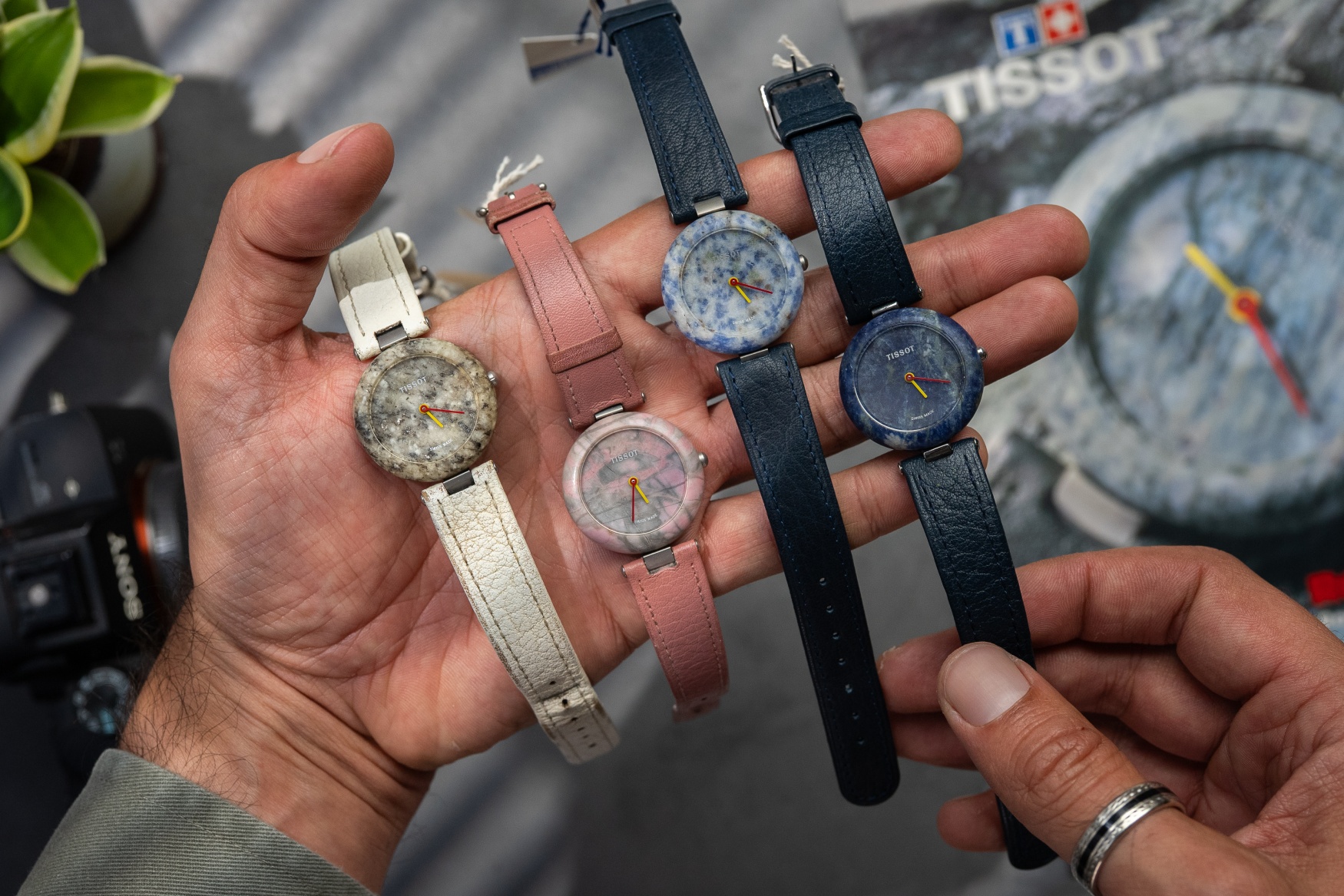
December 1985 marked Tissot’s dramatic re-entry into the American market, a territory they’d abandoned for a decade. Not content with merely launching a product, they backed it with a staggering 20 million Swiss francs in advertising spend. Those gloriously over-the-top 80s advertisements, complete with their unforgettable soundtrack, announced to the world that something entirely new had arrived.
The art of stone: engineering the impossible

The original RockWatch wasn’t just a gimmick; it was a genuine feat of engineering. Creating a timepiece from stone presented unique challenges that required innovative solutions. Stone excels in compression but has poor tensile strength, meaning traditional case construction methods wouldn’t work. Tissot’s solution was elegantly simple: a base plate system that allowed the stone to be the star while ensuring structural integrity. While it may not be seen as a traditional or highly lauded skill, the engineering ingenuity that went into the construction of these watches is to be applauded. The dial and case were carved from a single piece of stone, topped with sapphire crystal and powered by a quartz movement.

The beauty lay in the fact that no two pieces were identical. Granite from the Swiss Alps looked nothing like its cousin from the same quarry, and Australian stones brought an entirely different character to the wrist. The collection evolved beyond its rocky origins. Mother-of-pearl variants arrived, offering an aquatic elegance that felt both organic and luxurious. Wood editions followed, predating the current wooden watch trend by decades.

Then came the crown jewel, the Gold Rush model, featuring genuine 18-karat gold with “750” proudly displayed on the dial. For collectors, these gold variants represent the Holy Grail; pieces so rare that dedicated enthusiasts can search for years without finding one.
The collector’s perspective: more than just novelty

For serious collectors, the RockWatch offers something unique in the horological landscape. Each piece is effectively a one-off creation, shaped by geological forces over millions of years before being transformed into a timepiece. There’s something profoundly calming about wearing a piece of ancient earth history, a connection to nature that transcends typical watch-collecting motivations. The variety is staggering.

From local Swiss granite to Brazilian stones, Italian marble to Australian minerals, the RockWatch collection became a geological grand tour. The brand even created matching stone bracelets, though these statement pieces required considerable confidence to wear in public. Pearl and wood variants added fragility to the equation. While stone watches could withstand decades with minimal wear, their organic counterparts were more susceptible to cracking and aging. Finding examples in pristine condition today is increasingly rare, making them particularly coveted among collectors.
The return: 40 years later
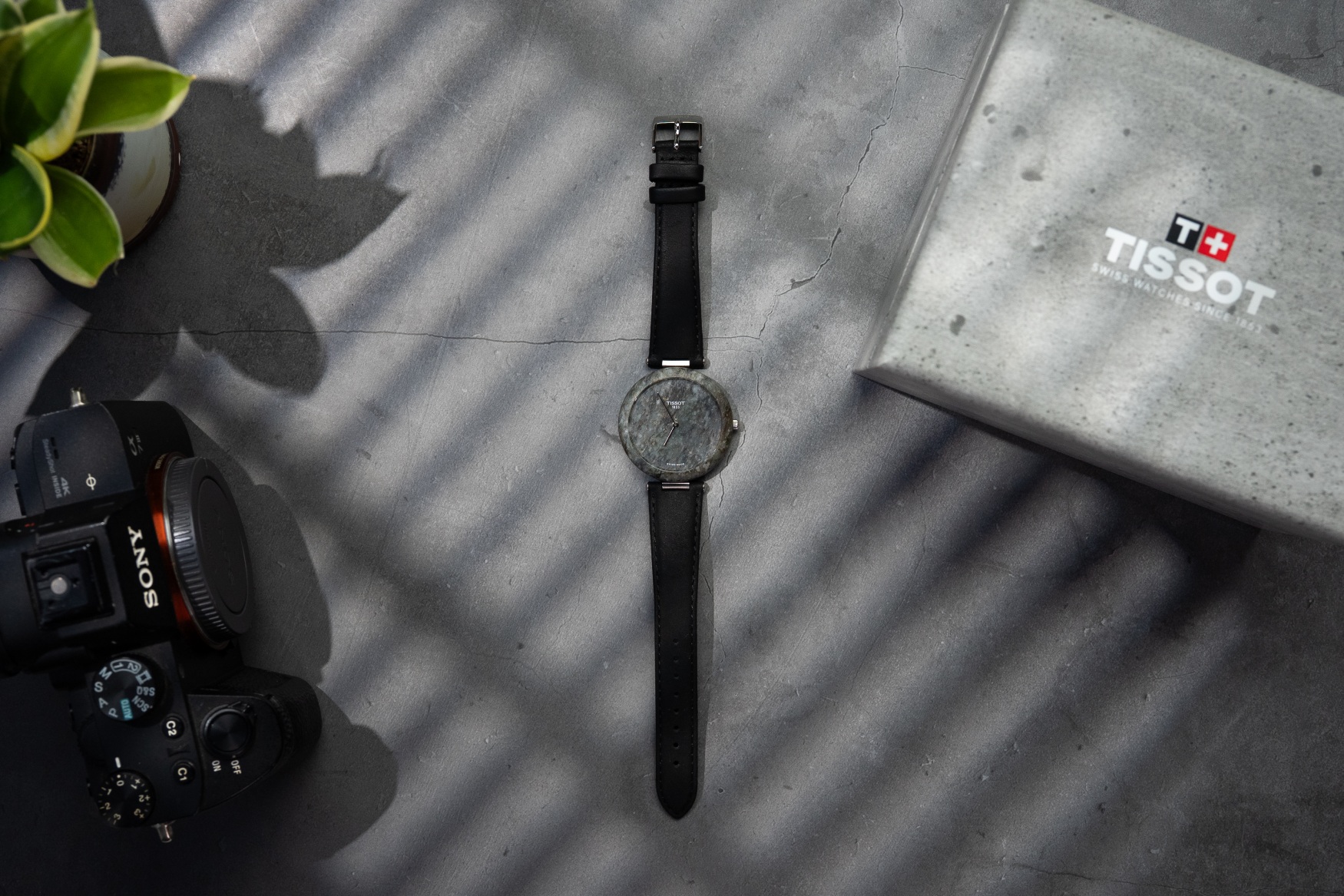
Fast forward to 2025, and Tissot has announced the return of the RockWatch for its 40th anniversary. This isn’t just nostalgia marketing; it’s a celebration of one of the brand’s most defining moments. The timing feels perfect, arriving as the industry embraces stone dials with renewed enthusiasm.
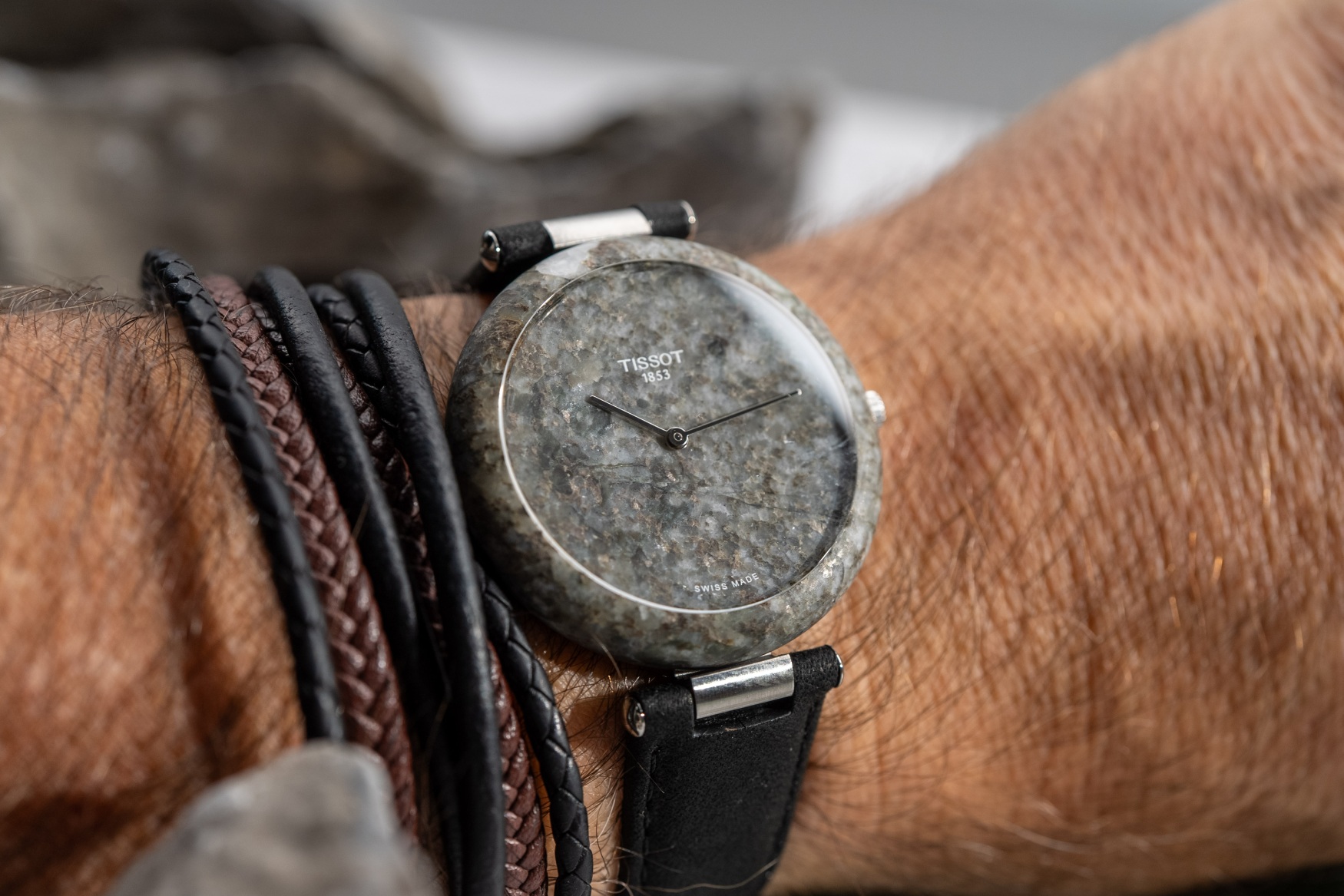
The new edition draws its material from Switzerland’s iconic Jungfrau mountain, specifically from tunnel cuttings carved during railway construction. This approach ensures no fresh stone is quarried from the mountain, adding an environmental consciousness to the story. At 38mm, it’s sized for contemporary tastes, with simplified grey nickel-plated hands that allow the stone’s natural beauty to take centre stage.

Limited to just 999 pieces globally, the new RockWatch faces the same challenge that made some of the original examples so special: scarcity. With Tissot’s expanded global presence and network of boutiques, demand far exceeds supply.
Legacy etched in stone
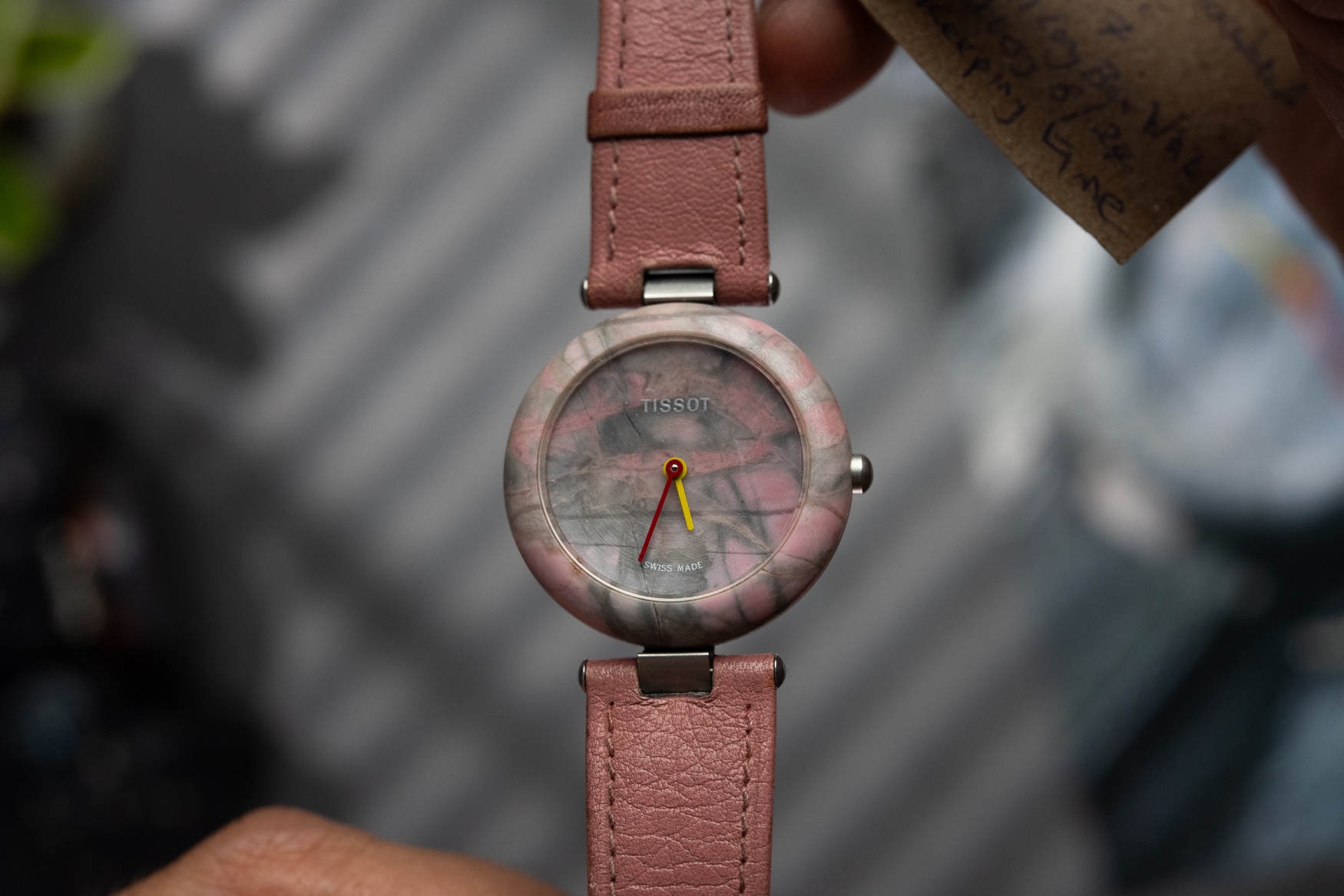
The RockWatch represents more than horological innovation; it’s a physical manifestation of corporate resilience. From the brink of bankruptcy to global success, Tissot’s journey mirrors the transformation of the Swiss watch industry itself. The fact that they’re returning to this design language 40 years later speaks to both its enduring appeal and the brand’s confidence in its identity. Today’s stone dial trend owes a debt to Tissot’s pioneering work.
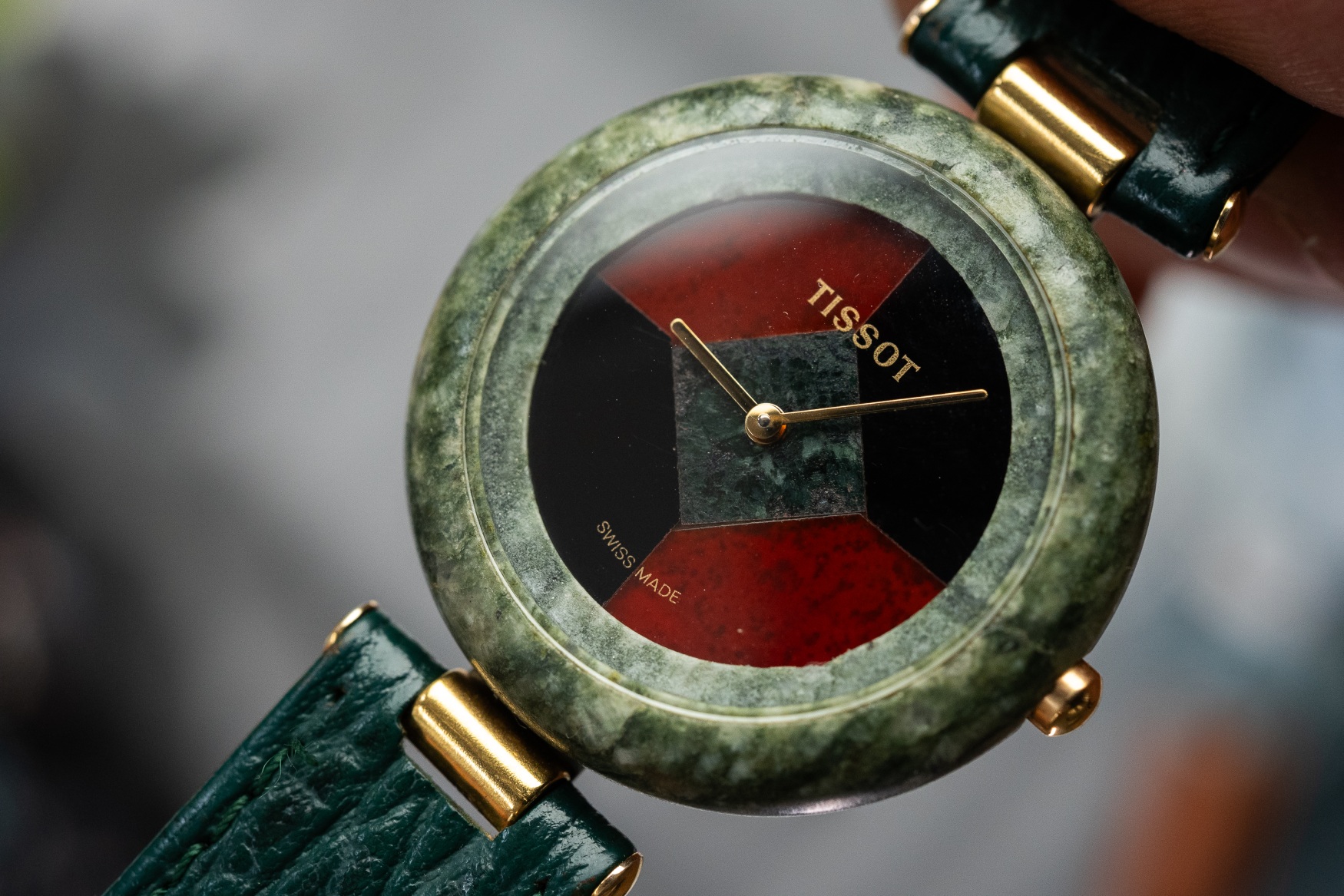
While brands now offer mother-of-pearl, marble, and meteorite dials, few have committed as fully to the concept as Tissot did in 1985. Creating an entire case from stone remains uniquely audacious. The RockWatch story resonates because it captures the spirit of innovation born from desperation. When traditional approaches failed, Tissot literally broke new ground.
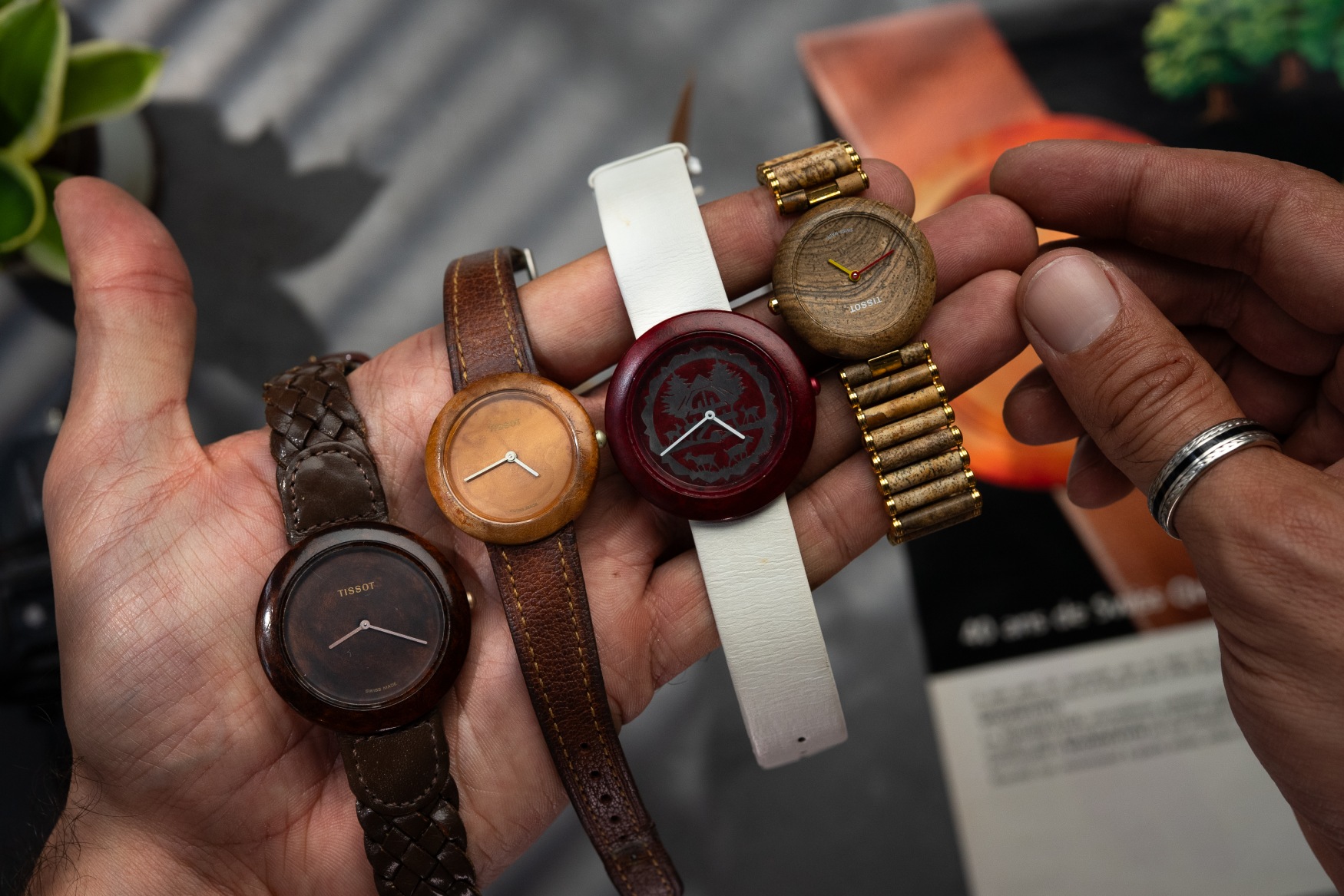
The result was a collection that defied categorisation, part timepiece, part geological specimen, entirely unprecedented. As we await the new release hitting stores, the original RockWatches serve as time capsules of both horological history and geological deep time. They remind us that sometimes the most successful innovations come not from incremental improvements, but from bold leaps into uncharted territory. In Tissot’s case, that territory happened to be carved from the very mountains of their Swiss homeland.
Whether this relaunch signals a broader return to the RockWatch collection remains to be seen. But if history is any indication, betting against Tissot’s willingness to take risks with stone would be unwise. After all, they’ve already proven that sometimes the boldest ideas, even those born from schnapps-fueled brainstorming sessions, can literally be carved in stone…
Tissot RockWatch pricing and availability
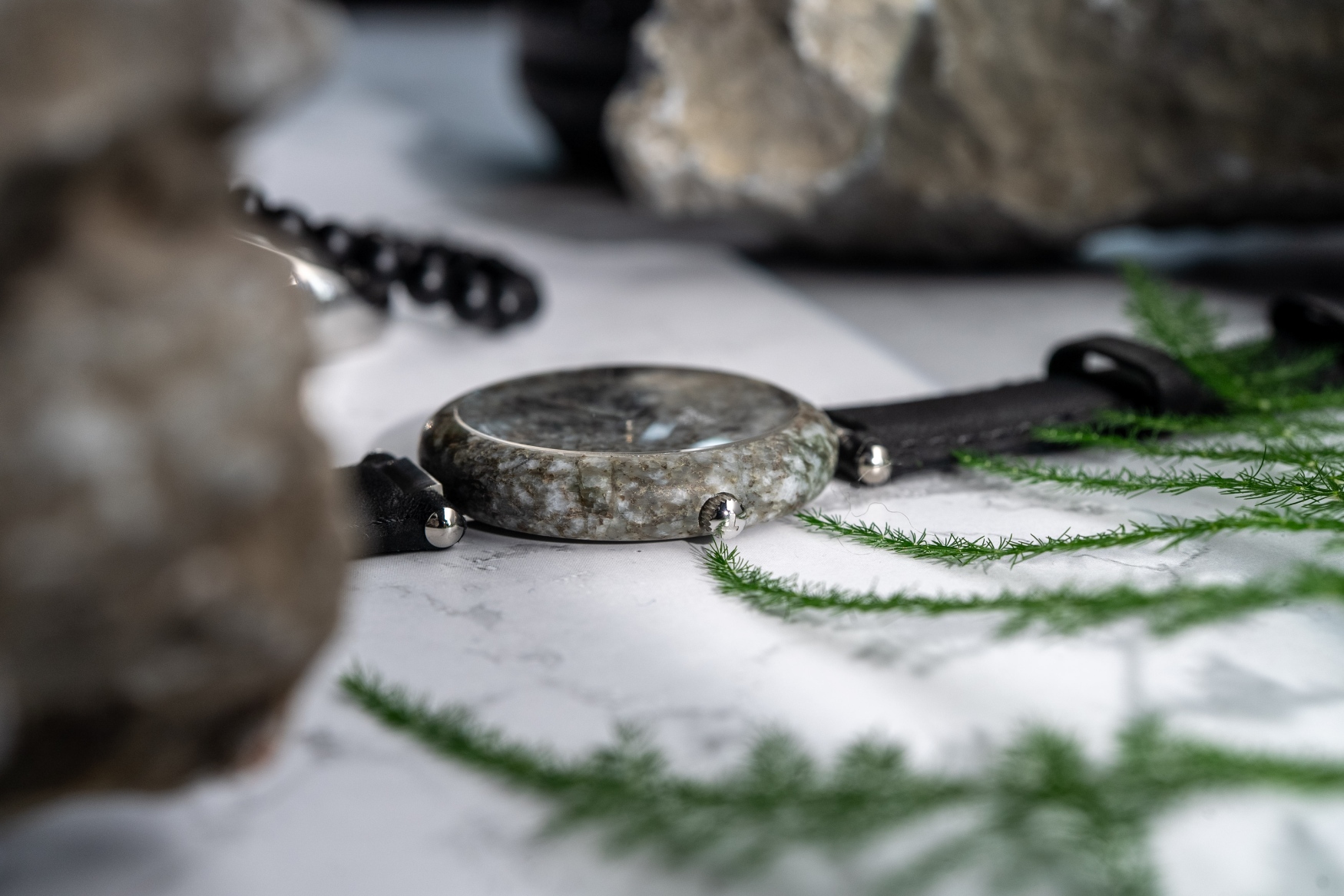
The new Tissot RockWatch is limited to 999 individually numbered pieces and is available at selected Tissot dealers. Price: £995
| Brand | Tissot |
| Model | RockWatch |
| Case Dimensions | 38mm (D) |
| Case Material | Jungfrau granite |
| Water Resistance | Not stated |
| Crystal(s) | Sapphire crystal |
| Dial | Jungfrau granite |
| Bracelet | Black leather, pin buckle |
| Movement | ETA quartz |
| Functions | Hours and minutes |
| Availability | Limited edition of 999 pieces |
| Price | £995 |