


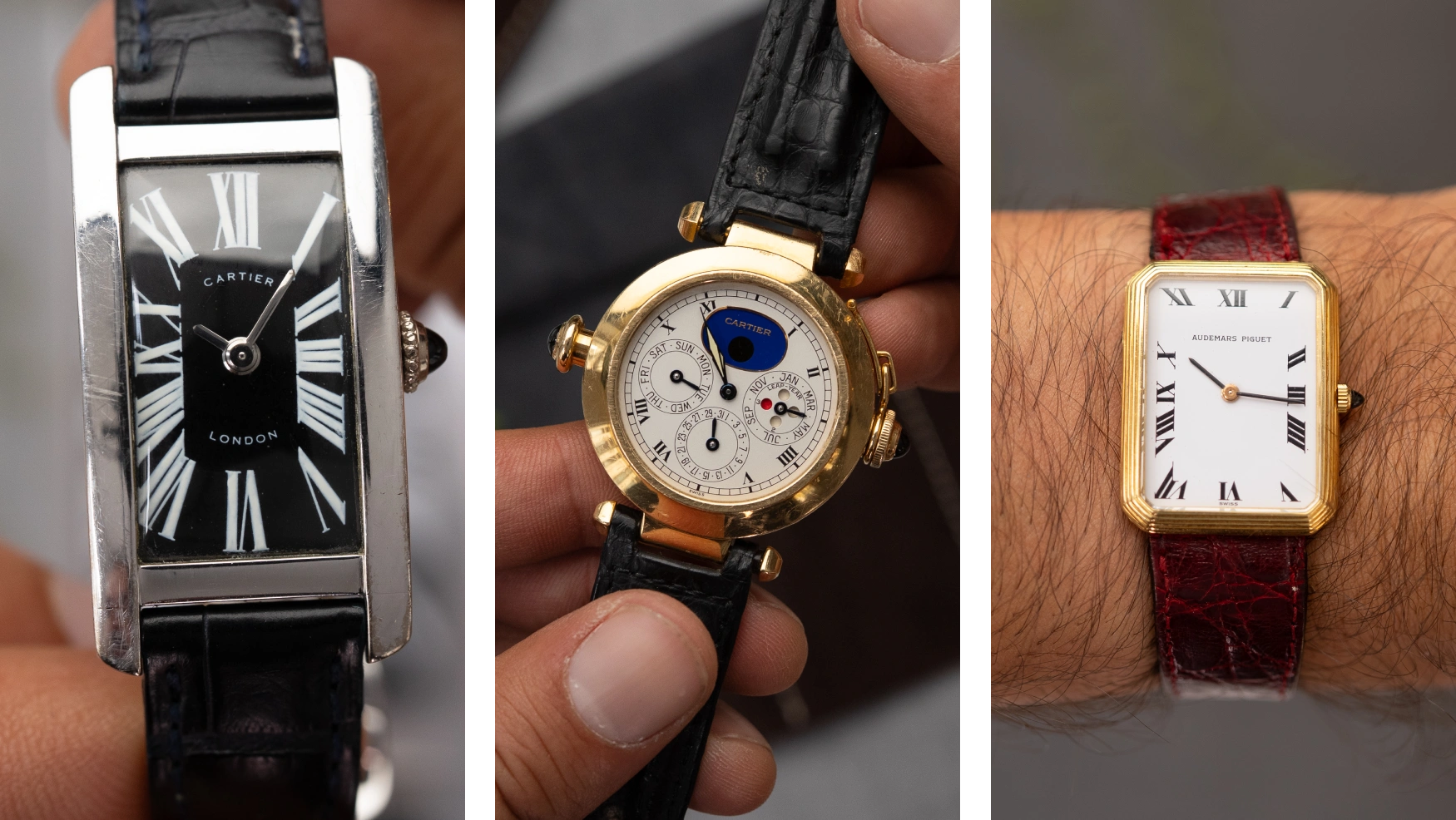
Vintage stunners, quartz oddities, and a highly unusual Cartier to hit Watches of Knightsbridge auction block
Borna BošnjakWith a helpful little break after the whirlwind that was the Geneva watch auctions in April and May, the wheels of the vintage watch world keep turning, and we look next to the June auction by Watches of Knightsbridge. Numbering nearly 200 lots, there’s plenty to choose from. You’d think that, as with most auctions, steel sports Rolex might continue to dominate – but with only 23 lots total, it leaves enough time in the limelight for other highlight-worthy pieces. As usual, we picked out a few headlining lots, but also a couple of hidden gems that you might’ve just overlooked.
Cartier Tank Cintrée London (Lot 29)
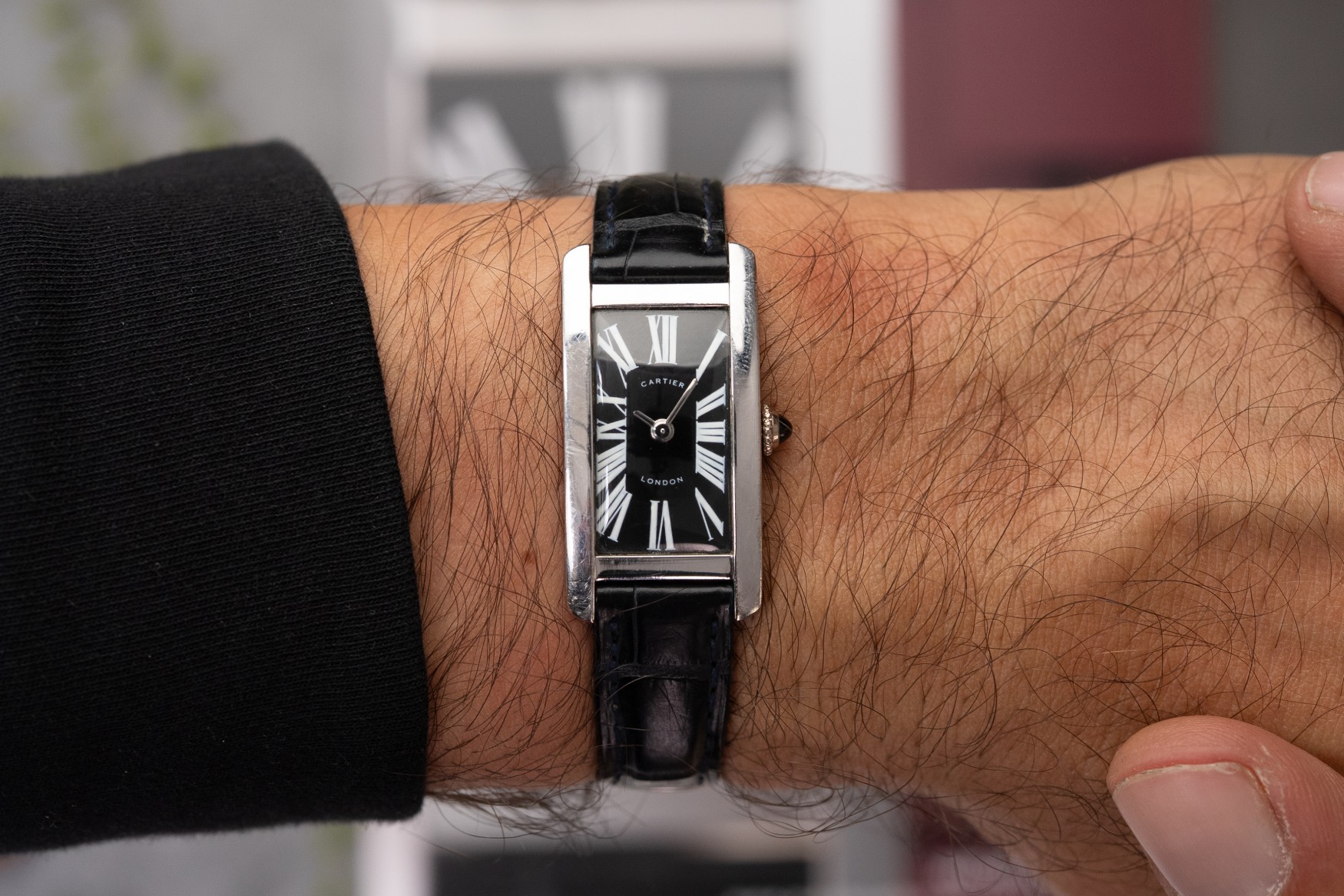
Any Cartier that carries “London” on the dial is pretty special, and this midsize Cintrée is no different. Though the Cintrée shape was imagined in the 1920s, the creativity of the brand’s London outpost in the 1960s couldn’t simply circumvent its (dare I say) iconic curved case and dial. But rather than iterate on its Art Deco shape, Cartier London modernised the Cintrée with elongated Roman numerals forming a neat rectangle in the middle of the dial, and replacing the “old-fashioned” Breguet hands with a sword handset. This particular London Cintrée stands apart with its white gold case, which is decidedly rarer than its yellow counterparts, as well as its original black dial. Stamped with a movement number suggesting a production year of 1968, it’s powered by the rectangular, manually wound Jaeger-LeCoultre calibre K840.
Estimate: £30,000 – £50,000
Cartier Pasha Perpetual Calendar Minute Repeater ref. W30012 (Lot 16)
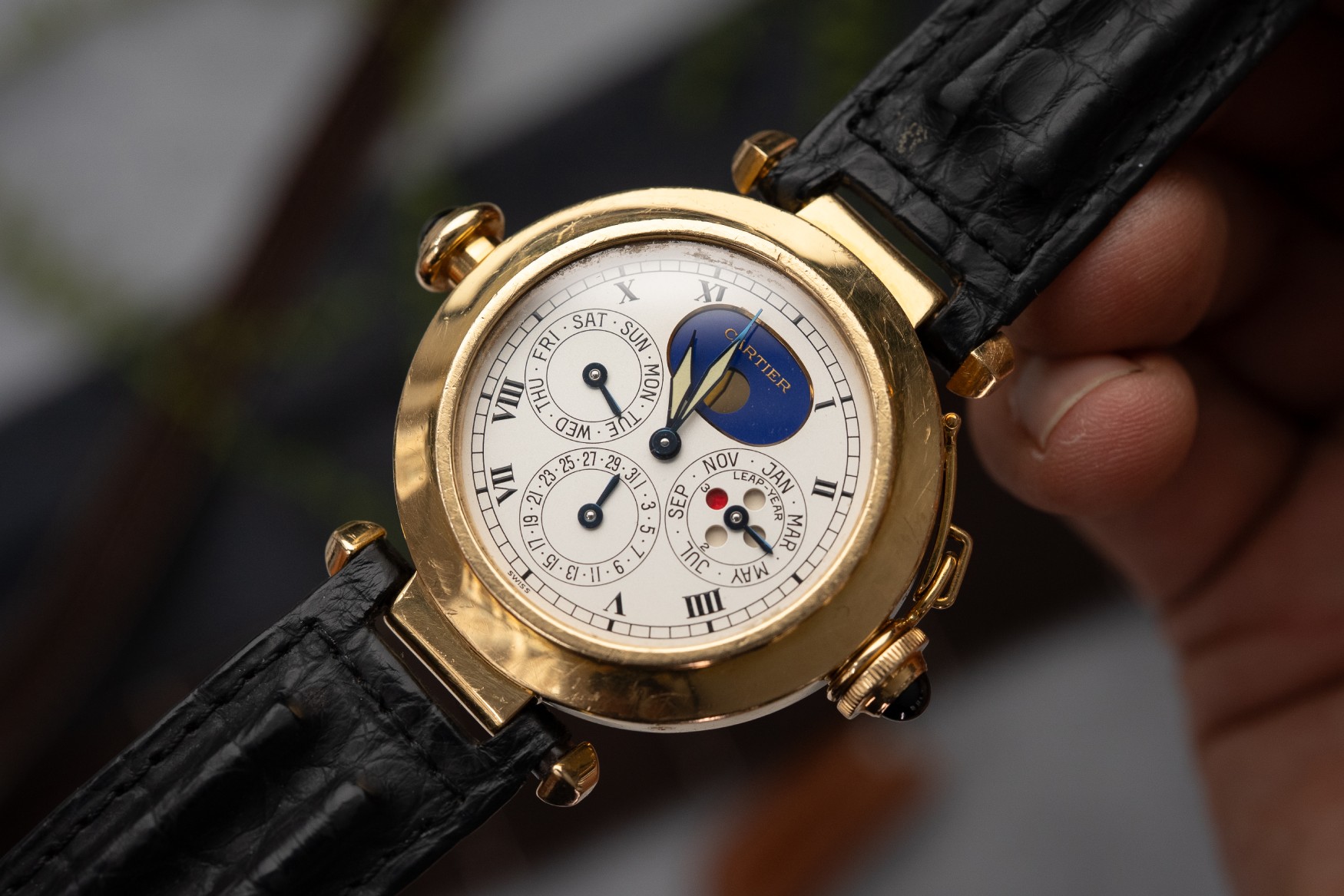
We’re still in the realm of Cartier, but we jump forward some 20 years and completely change design direction. The 1980s signified a big shift in Cartier’s modus operandi, as they no longer separately operated from their Paris, London, and New York offices. The unification didn’t stop design advancement, however, with a bigger focus on the more affordable and sporty. To bring this vision to life, Cartier recruited the now-famed watch designer Gérald Genta to create the Pasha. One of the designs was this: a Perpetual Calendar Minute Repeater. With symmetrically positioned, cabochon-set crowns (technically one of them’s a pusher, fine), the 38mm case housed a busy dial with that all-important lapis lazuli and gold moonphase.
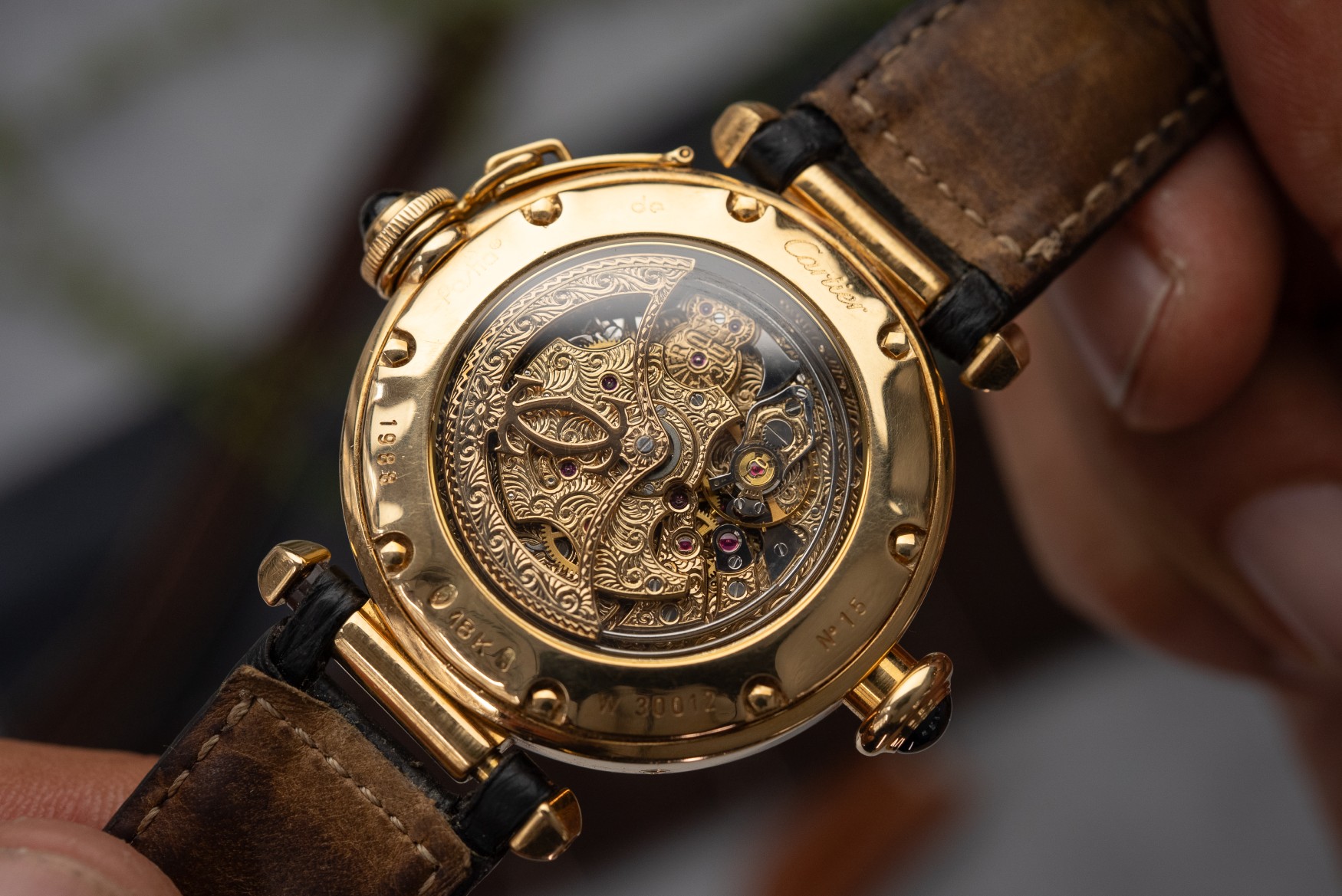
While the design was certainly out there, and remains to this day, one of its most notable features is the movement. It is an automatic variant (with a Cartier-branded skeletonised rotor) of the ultra-thin calibre Genta brought to market in 1982 for his ref. G2015, developed in-house by Michael Golay, featuring intricate engravings on all of the bridges. It was also impressive technically, measuring a mere 2.72mm in its hand-wound variant, and its repeater activated with the pusher at 9 o’clock instead of a slider. This example dates to 1988, and while not as rare as the run of five pieces in platinum, still presents with its original box, winder, corrector tool and warranty papers. Moreover, it’s an example of watchmaking at its very best from a bygone era, combining some of the most respected names in the industry.
Estimate: £15,000 – £25,000
Rolex Explorer “Blackout” ref. 14270 (Lot 143)
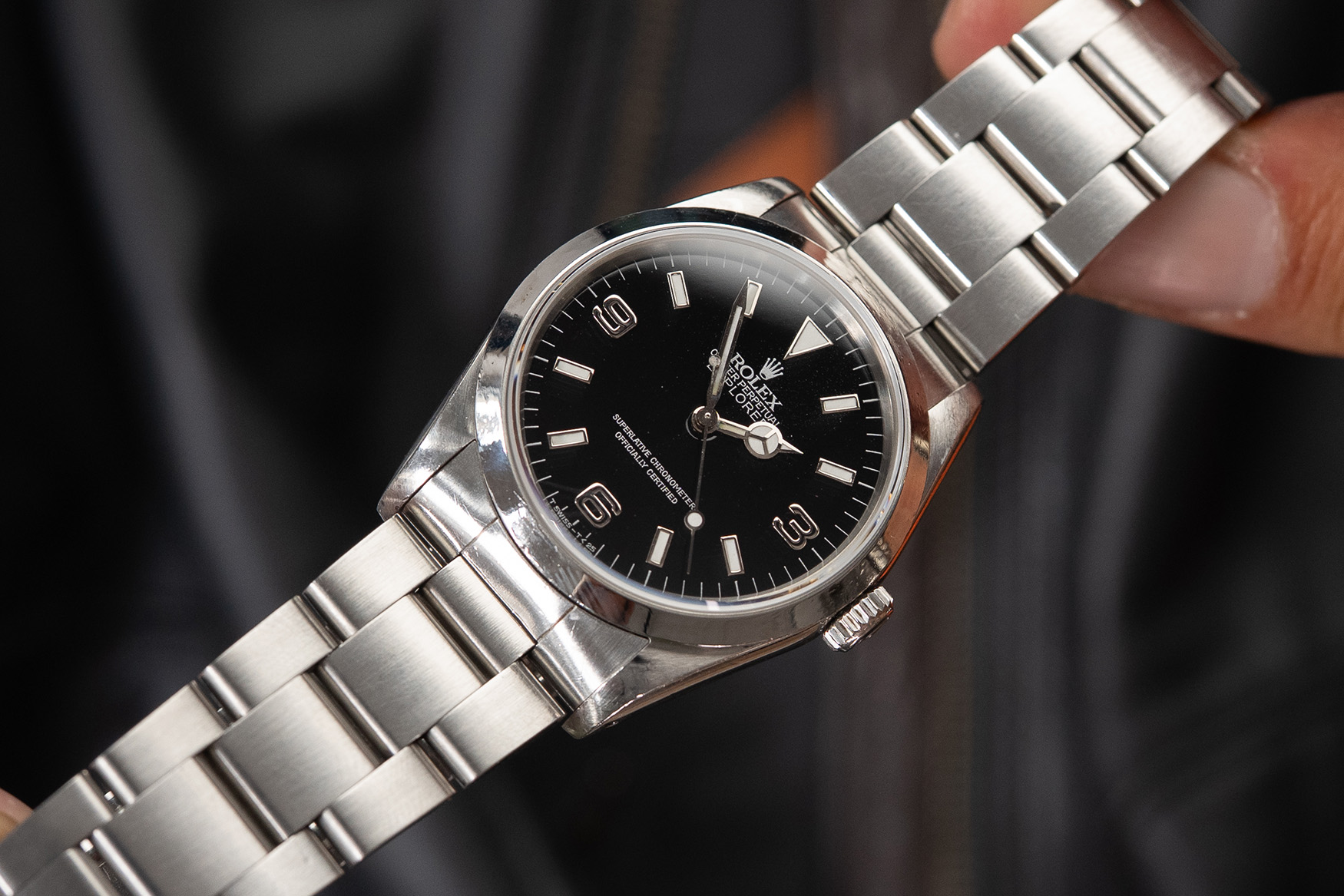
The next lot on the list jumps forward by only a couple of years, but once again does a 180 in terms of style. With its instantly recognisable Oyster case, a Rolex Explorer has long been what many consider to be the perfect daily all-rounder. The ref. 14270 we’re looking at here was notable for two things. First of all, it was the watch that took over from the Explorer ref. 1016, doing so by clearly distinguishing itself as a modern, luxury watch with applied numerals and a high-beat calibre, despite its 1989 introduction already being 36 years ago. Now that I’ve made everyone feel old, the first run of the 14270 is particularly desirable for having non-luminous 3, 6, and 9 numerals – hence the “Blackout” nickname. Being an E series, the watch offered by Watches of Knightsbridge is considered to be the rarest of Blackout variants, especially with its original seconds hand with a lume pip further towards the hour markers.
Estimate: £8,000 – £12,000
Patek Philippe ref. 3406 (Lot 131)
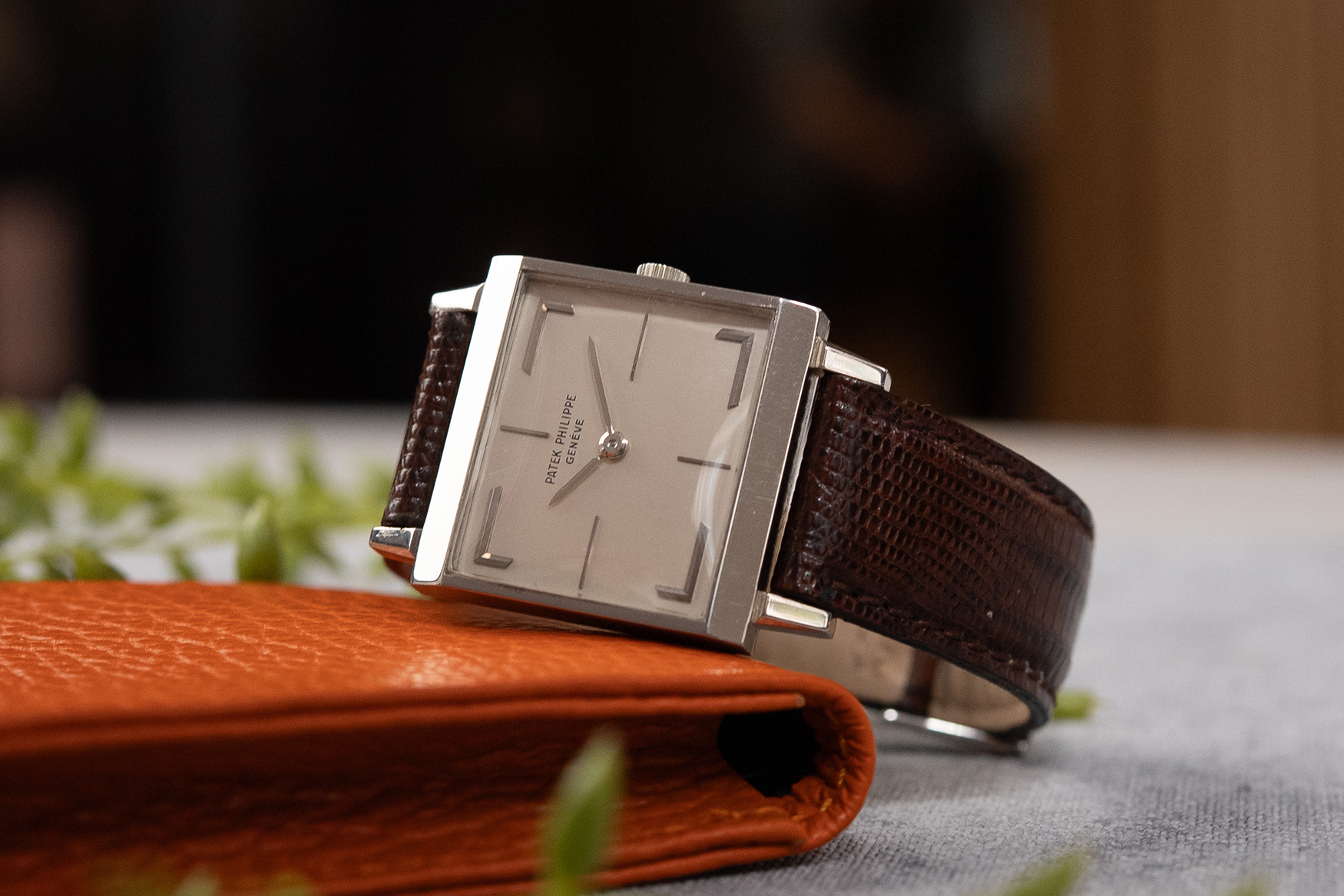
Not all Patek Philippe watches are bastions of hype, with a fair few mid-century references that might just surprise you with their quirkiness. The ref. 3406 was produced in the 1950s and 1960s, and its square case usually houses elongated indices with an Arabic “12”. But this particular example sports a frame-like layout, with four indexes pushed into the very corners. Apart from looking like it’s in excellent nick, I also don’t recall seeing this layout in white gold come up recently, as most 3406s sport yellow gold cases. It’s powered by the manually wound calibre 23-300, a well-respected movement used in many of the brand’s smaller pieces from the mid-1950s and into the ‘70s.
Estimate: £5,000 – £7,000
Audemars Piguet “Cristallor” (Lot 2)
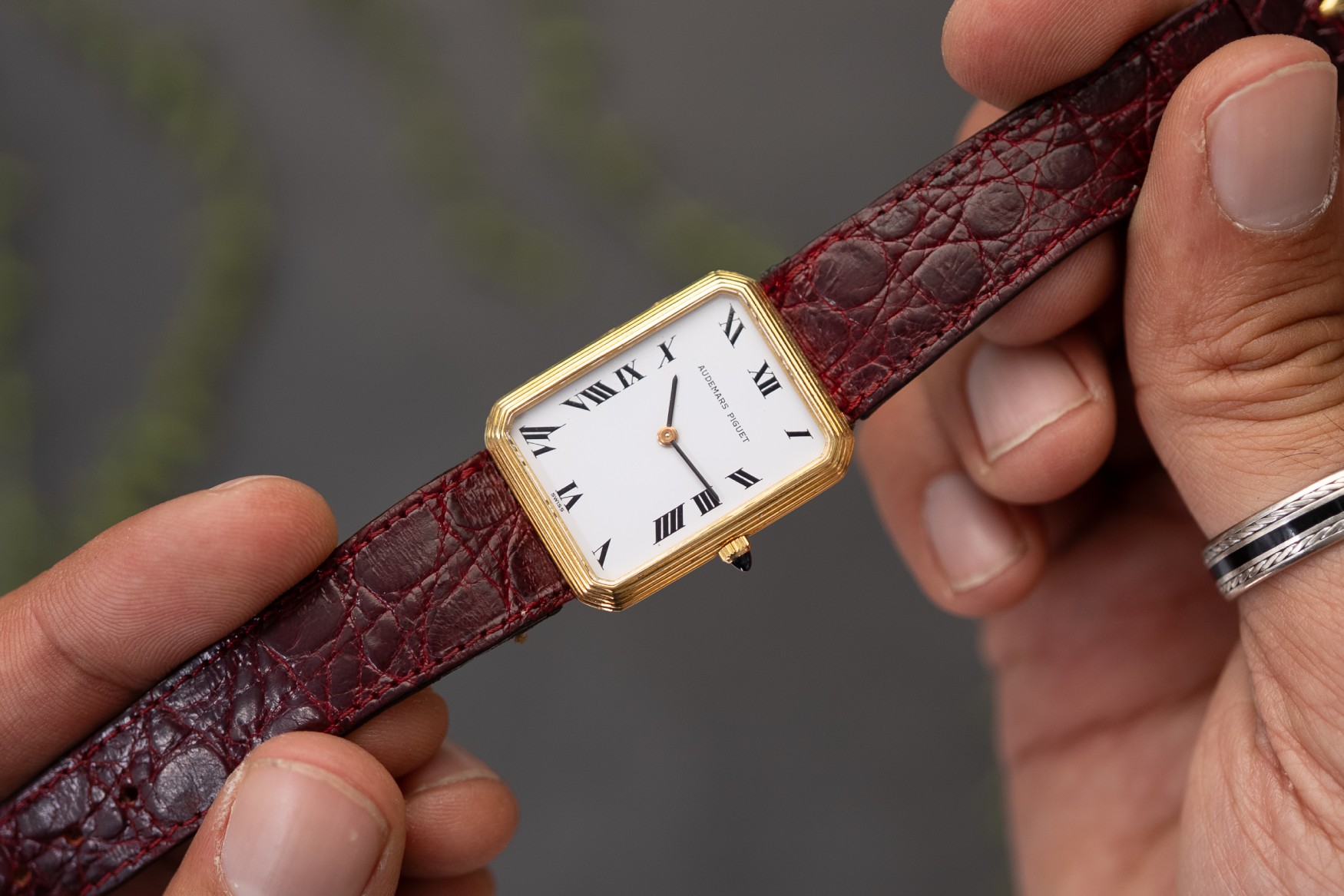
Coming from a time when recognisable reference numbers and model names weren’t the norm they are today is this stunning, rectangular Audemars Piguet dress watch. It’s been given the “Cristallor” nickname for its many-stepped bezel, coming from a similarly styled, dressy Cartier that is the original custodian of the moniker. With hidden lugs, this one is really all about the case, though the slim case does hide an Audemars Piguet manually wound movement, likely being the calibre 2090 that featured in many of the brand’s shaped watches of the period.
Estimate: £5,000 – £7,000
Jaeger-LeCoultre Master-Quartz ref. 23303-42 “Buzzsaw” (Lot 68)
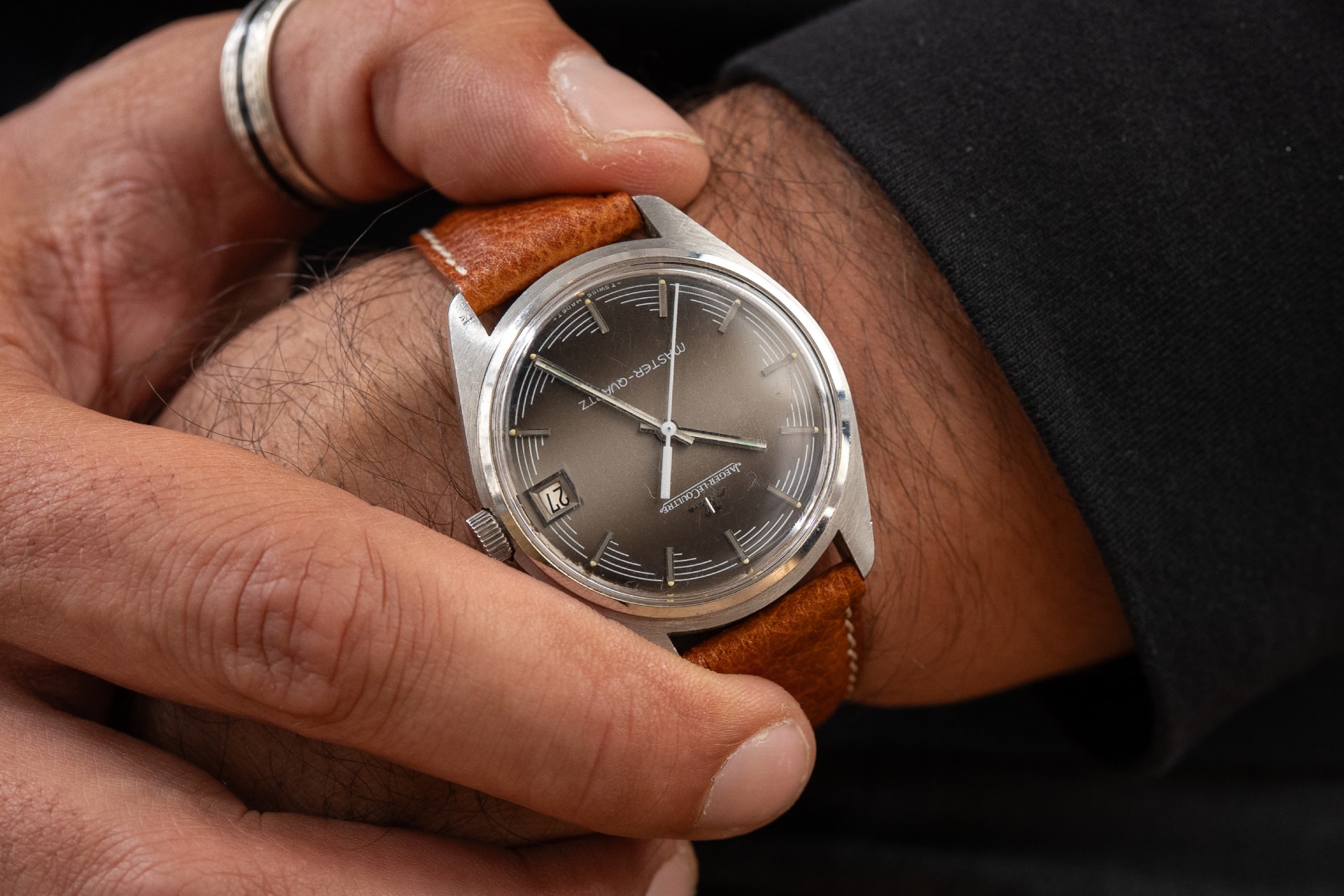
When you think of Jaeger-LeCoultre, you probably think of the Reverso, or one of the brand’s many high-end complications. But the Master-Quartz doesn’t feature a Heliotourbillon. In fact, it doesn’t even have a mechanical movement; instead hailing from a time when quartz seemed like the only way forward. Despite being part of the Beta 21-developing CEH, Jaeger-LeCoultre ended up using the Girard-Perregaux 352 for the Master-Quartz, likely owing to its superior dimensions allowing a sensible case size of 38mm.
As far as this particular Master-Quartz goes, its case is not of the more popular ovoid variety, but I picked it because of its dial. Its distinct pattern is usually referred to as a “buzzsaw” dial, a style that has garnered increasing popularity because of Universal Genève’s usage of it in the Unisonic. Both watches are rare and unique examples of alternative movement technology that eventually fizzled out in the luxury segment, giving way to mechanical once again. For me, the estimate alone is worth the dichotomy of a well-respected mechanical movement maker and a third-party quartz calibre.
Estimate: £500 – £1,000